
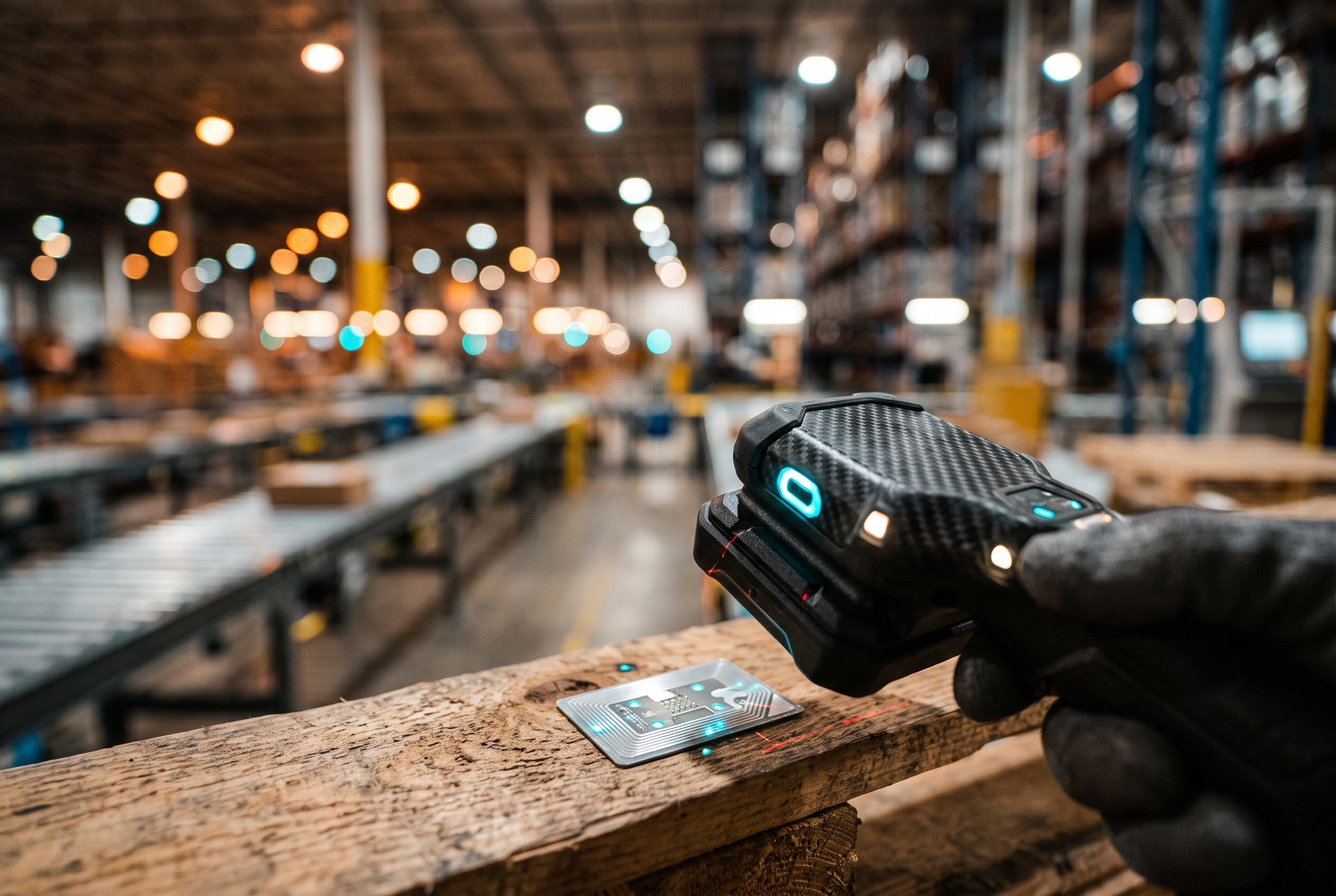
Businesses are moving beyond spreadsheets and static stock counts, using connected inventory management technology to turn physical warehouse activity into useful, timely decisions. From barcodes and RFID to artificial intelligence and autonomous monitoring, the shift matters because better data can mean fewer mistakes, faster replenishment, and a calmer day on the warehouse floor.
Inventory management is becoming a connected system
A modern inventory operation isn't simply a database with quantities in rows. It's a chain of events that begins with a physical item and ends with a decision, such as restocking a shelf, correcting a location, or releasing an order.
That chain typically includes identification, data capture, connectivity, processing, analysis, and action. Industry guidance on warehouse monitoring similarly emphasizes real-time visibility, because a stock figure is far more useful when teams know where an item is and what happened to it recently.
The small sensory details matter here. A scan beep, a handheld device, or a dashboard alert may seem ordinary, but together they create a running picture of the warehouse. When those signals are missing or delayed, even a sophisticated operation can feel like it's working through fog.
Barcodes, RFID, and sensors each have a job
The best inventory tracking technology depends on the environment, not on which acronym sounds most impressive. Barcodes and QR codes are affordable and familiar, while RFID can read tags without requiring a direct line of sight. Bluetooth-based systems may add more location information in settings where movement and proximity are important.
Warehouse technology providers increasingly combine identifiers with scanners, gateways, cloud platforms, and business applications. The result is a pathway from an item on a pallet to software that can update availability, flag an exception, or notify a team member.
That doesn't mean every company needs a high-tech makeover. A small stockroom may get excellent results from reliable barcode scanning and disciplined processes. More complex facilities, however, may benefit from RFID, connected sensors, computer vision, or automated monitoring, especially when manual counts are slow, costly, or difficult to repeat.
Why inventory events are more useful than static counts
A total stock number tells only part of the story. An event record can explain that an item was received at 9 a.m., moved to another zone, picked for an order, returned, or found in an unexpected location.
A useful event normally includes an item identifier, location, event type, time, and quantity. It may also record the device, employee, transaction, or source system involved. That detail gives operators a clearer trail when something doesn't match, and it helps software understand how inventory changes over time.
Connected warehouse platforms commonly use APIs, databases, message queues, and cloud services to move these events between systems. The less glamorous work, including validation, error handling, ordering, and duplicate prevention, is often what keeps the whole arrangement dependable. A flashy dashboard can't rescue a pipeline filled with repeated or mislabelled records.
AI can spot patterns, but it can't repair bad data
Artificial intelligence is finding practical roles in supply chain inventory, including demand analysis, replenishment suggestions, anomaly detection, and pattern recognition. Some systems also use computer vision or physical AI to observe warehouse activity and support more continuous monitoring.
These tools can be helpful when the data is consistent. A model might identify an unusual stock movement or suggest that a popular product should be reordered sooner. But if an item was assigned to the wrong location or a scan was attached to the wrong product, the recommendation may be confidently wrong, which is a particularly unhelpful kind of confidence.
That is why AI should usually be treated as a layer on top of strong inventory fundamentals. Clean identifiers, accurate event capture, clear ownership, and regular checks should come before ambitious forecasting. The smartest system in the room still needs the right facts.
Automation turns routine events into useful action
Inventory-event automation can remove some of the repetitive watching that drains warehouse teams. A low-stock event might create a replenishment alert, while a mismatch between an expected and actual location could open an investigation.
Warehouse automation providers also point to broader opportunities, from intelligent monitoring to robotics and software that coordinates supply chain decisions. The right starting point is usually a narrow, measurable task rather than a grand plan to automate everything at once.
Before choosing RFID, sensors, AI, or robotics, ask a few practical questions. Which events matter most? Where does the data originate? How quickly does it change? Who needs to act on it? What should happen when an event is missing or incorrect? These answers will reveal whether the operation needs a simple upgrade or a more connected architecture.
Reliable foundations make new technology worthwhile
A mature inventory platform needs more than speed. It also needs integration, scalability, security, resilience, and monitoring, particularly when inventory information feeds sales, purchasing, fulfilment, or manufacturing systems.
Start with a clear flow: identify the item, capture the event, connect the data, process it, analyse it, decide, and act. From there, teams can add capabilities in sensible stages, measuring whether each one improves accuracy, reduces delays, or cuts manual effort.
The payoff isn't just a more modern warehouse. It's a business that can trust its stock information when the pressure is on. And for anyone who's ever searched an entire storeroom for one supposedly available item, that trust feels surprisingly valuable.
It's a small data signal that can lead to a much smarter operation.
Disclaimer: This article may have been created with AI assistance and reviewed by our editorial team. It is provided for general informational purposes only. Readers should verify information independently before relying on this content.
