
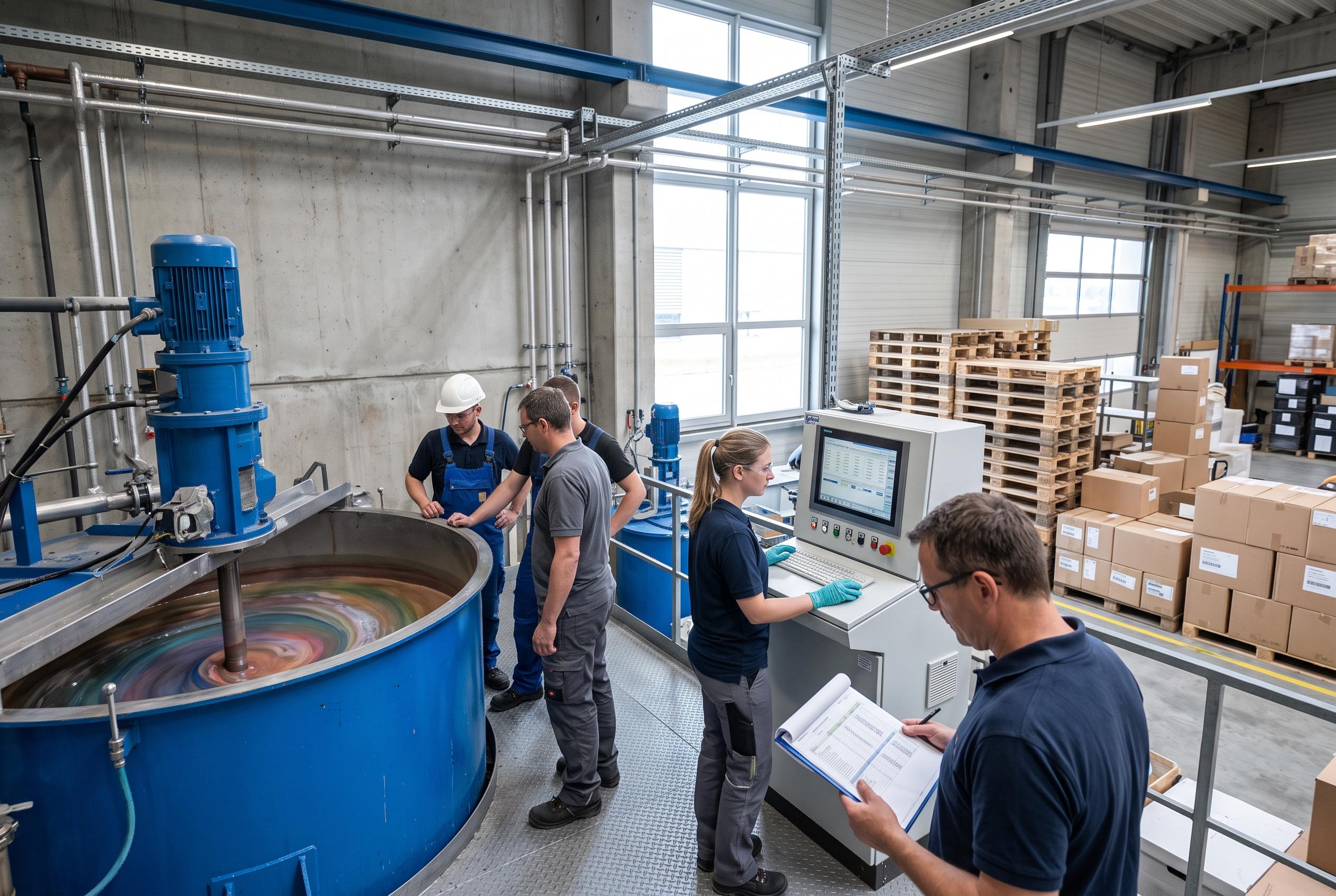
- BASF launches new certified biomass-balanced additives for architectural coatings
- Focus on pigment wetting, rheology, and application performance
- Market projected to grow over $3 billion by 2028, driven by sustainability trends
BASF Broadens Biomass-Balanced Additives as Eco-Friendly Coatings Shift Toward Certified Sustainability
BASF’s latest move into biomass-balanced additives for architectural coatings comes at a time when sustainability is increasingly more than just a marketing buzzword, it's becoming a key part of formulation strategies. In July, the company introduced Dispex AA 4145 MB, Rheovis PU 1333 MB, and Rheovis HS 1169 MB into its certified lineup. These products are geared toward pigment wetting, rheology management, and application performance, three areas that, according to BASF and industry reports, directly impact how paints perform both during manufacturing and when in use.
For those in the manufacturing side of coatings, these functions are crucial for keeping product quality steady. Pigment wetting, for example, affects how well pigments disperse in a formulation. Rheology control, on the other hand, influences viscosity, flow, and how smoothly paints can be applied. When any of these elements change, it can cause headaches for production teams, quality control, and even customers who expect a certain handling experience and coverage. That’s why biomass-balanced additives are being positioned not just as alternative raw materials but as inputs that can help lower the carbon footprint of formulations without sacrificing existing performance traits.
Now, this distinction seems important, especially in a market where sustainability goals are shaping sourcing choices more than ever. Coatings manufacturers might want to cut down on the carbon footprint of their products, but they still need additives that fit into their existing manufacturing setups. If a lower-carbon ingredient demands extensive reformulating, new equipment, or long qualification periods, the environmental gain may be less compelling from a commercial standpoint. BASF’s description of these three products emphasizes their compatibility with common formulation needs: pigment wetting, rheology control, and application performance.
This approach actually mirrors a broader industry shift. Instead of viewing sustainability claims as just branding tactics, companies are increasingly tying them to measurable inputs, certification standards, and supply chain transparency. For formulators, the challenge is balancing these environmental requirements with practical stuff, viscosity stability, flow, coverage, and operational consistency. Biomass-balanced additives aim to hit that sweet spot, blending environmental benefits with everyday performance.
It’s also worth noting that this development aligns with BASF’s larger corporate restructuring. In its second-quarter 2026 report, the company posted stronger earnings across most divisions, raised its full-year EBITDA forecast, and finalized the sale of its coatings business to Carlyle. Given this context, BASF still appears committed to coatings-related chemistry, just now in a slightly different configuration. Industry analysts see this new additive range as part of a bigger trend: a move toward certifiable, lower-carbon inputs that can be used in current systems with minimal reformulation burden.
The combination of portfolio restructuring and continuous innovation in coatings is notable. Even though BASF sold off its coatings business, it does not mean the company is stepping back entirely, additives remain vital for the development and manufacture of paint, regardless of how the parent company adjusts its broader business focus. In many ways, the biomass-balanced launch indicates ongoing participation in the technical supply chain, even as the corporate landscape shifts.
For buyers, this creates a more nuanced sourcing puzzle than a simple “Is it sustainable?” question. Procurement teams need to consider what exactly the additive does, how it’s certified, and how it plugs into their existing logistics and manufacturing routines. Products that support familiar formulation behaviors might be easier and quicker to qualify than ones that require rethinking everything. That’s especially true for coatings producers with established recipes, customer specifications, and strict quality controls, because minimizing disruption is often a priority.
The same goes for raw materials and specialty chemical suppliers. Any lower-carbon input needs solid documentation and a supply chain capable of backing up those claims. Certification, feedstock tracking, and chain-of-custody credentials are just as critical as the technical data on the additive itself. BASF’s rollout illustrates how sustainability isn’t just a marketing line anymore but is increasingly linked to both product performance and the systems that verify raw material origins and accounting methods.
Research from Fact.MR estimates that the architectural biomass-balanced additives market was valued at approximately $801.1 million in 2025 and could reach around $3.26 billion by the end of the forecast period, with a CAGR of roughly 13.6 percent. The report highlights the strongest demand in rheology modifiers, waterborne acrylic systems, and interior wall paints, areas where additive performance is key to managing application characteristics and meeting environmental expectations. Interestingly enough, these sectors are heavily reliant on high-volume coatings where stability and performance matter a lot.
This growth outlook sheds light on why companies are leaning into certified alternatives rather than considering them niche or specialty products. Rheology modifiers, for instance, are essential for controlling how coatings move and spread. Waterborne acrylics and interior paints, on the other hand, are formulation segments where performance, emission reductions, and end-user standards converge. All these factors suggest the market potential is rooted in mainstream coating systems, not just experimental or high-end applications.
Meanwhile, industry reports - like those from Grand View Research - underline that the wider coatings additives market is expanding as retailers and producers focus more on sustainable, environmentally friendly formulations. This broader trend supports BASF’s targeting of a segment with clear market momentum. It’s not just about one additive or one application but about a growing demand for inputs that help meet both environmental goals and quality expectations.
Of course, for this market to really take off, it’s not enough to rely on a favorable environmental image. Coatings manufacturers need to trust that an additive can be integrated into their production, manufactured reliably at scale, and consistently supplied. They also want clarity on how certification impacts their customer communications, product documentation, and procurement choices. The technical and commercial value of biomass-balanced chemistry hinges on how smoothly it transitions from a certified claim to a dependable finished product.
For buyers and suppliers alike, the real question isn’t just whether low-carbon chemistry sounds good, but whether certification, feedstock traceability, and qualification procedures can be managed without introducing delays or operational hiccups. Systems like ISCC PLUS and REDcert2’s mass-balance approaches are helping suppliers claim renewable content while maintaining the performance standards typically expected in traditional supply chains. That’s critical, especially as waterborne systems, VOC regulations, and environmental product declarations become central to spec compliance.
Mass-balance frameworks are particularly practical because they link renewable or alternative feedstocks with existing manufacturing infrastructure. Instead of building separate logistics networks, these methods enable certified inputs and conventional materials to flow through established supply chains, with clear accounting. For suppliers and manufacturers, this approach reduces logistical and operational hurdles associated with adopting lower-carbon materials. Still, buyers need to understand what each certification entails and what a renewable-content claim actually means under those systems.
Another factor is qualification cycles, something that can’t be overlooked. Coatings makers often need to test additives across various viscosity ranges, pigment sets, application methods, and storage conditions before they’re comfortable putting them into regular use. Even if an additive is designed to keep performance steady, firms need to confirm how it performs in their own production environments. That makes technical support, clear documentation, and a reliable supply chain all the more important.
Logistics plays an equally important role. If certified additives are hard to find, prone to inconsistent availability, or don’t fit into current purchasing channels, it can hinder adoption. Conversely, products that can be sourced through familiar supply channels and consistent delivery are more likely to be integrated smoothly. So, the success of biomass-balanced additives depends not only on their chemistry but also on procurement logistics, certification management, and supply chain execution.
The broader context shaping the market includes increasing emphasis on waterborne formulations, VOC restrictions, and eco-labeling. These factors place pressure on manufacturers to demonstrate genuine progress through transparent formulation details and product disclosures. In that environment, certified additives can form part of a bigger package of sustainability proof rather than just a standalone claim. They can help brands meet customer specifications without compromising on performance.
Ultimately, BASF’s expansion signifies more than a simple product announcement, it illustrates that sustainable, certified ingredients are becoming a standard consideration in architectural coatings. The move does not eliminate the need for technical validation or careful sourcing; rather, it complicates the purchasing landscape by adding performance, certification, carbon accounting, and logistics into the mix. In other words, brands will need to evaluate multiple factors collectively to make informed decisions, performance, compliance, supply reliability, and workflow compatibility all matter now more than ever.
Quick Takeaways
- - BASF has introduced Dispex AA 4145 MB, Rheovis PU 1333 MB, and Rheovis HS 1169 MB into its certified biomass-balanced lineup.
- - These additives focus on pigment wetting, rheology management, and application behavior.
- - Fact.MR projects that the architectural biomass-balanced additives market could grow from around $800 million in 2025 to over $3.2 billion by the end of the forecast period, with a CAGR close to 13.6 percent.
- - Certification, supply chain transparency, and logistics are critical for a broader industry shift toward adoption.
- - The overall trend points toward integrating sustainability into the core product development and supply chain processes in coatings.
Disclaimer: This article may have been created with AI assistance and reviewed by our editorial team. It is provided for general informational purposes only. Readers should verify information independently before relying on this content.
Sources:
