
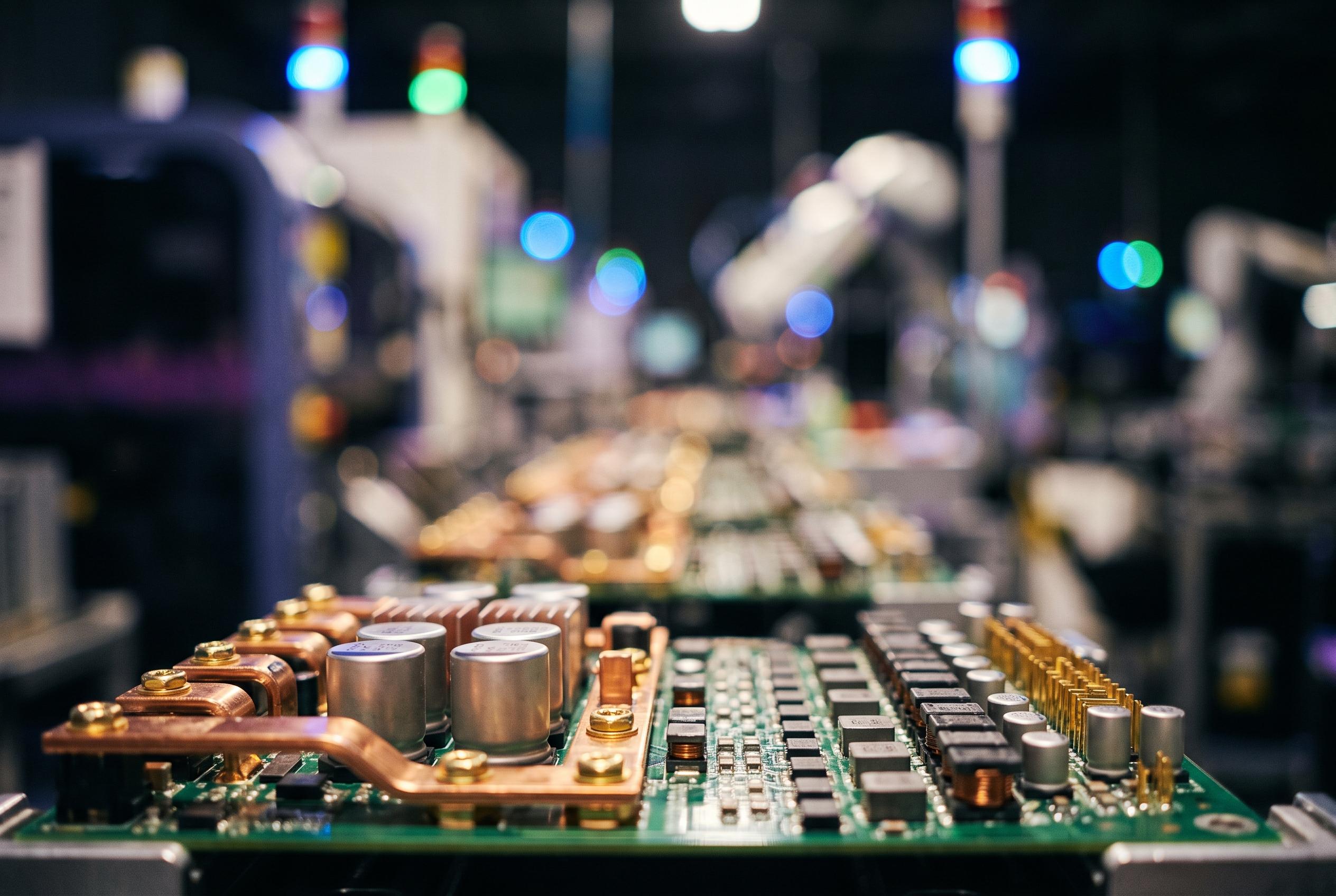
CCET is reshaping its electronics manufacturing business in Thailand with a five-year plan focused on AI servers, advanced power systems, quantum computing, satellites and smarter automation. The move matters because it could shift the company from conventional contract manufacturing toward higher-value technology products, while keeping storage devices and other established electronics at the center of its business.
CCET wants more than a traditional factory role
CCET's plan starts with a familiar foundation: electronics manufacturing services, or EMS. Storage products remain especially important, while printers, solid-state drives and smart wearables continue to contribute sales and profit. According to Kaohoon International, the company's geographically spread production network also gives it a broad customer base and some protection from relying on a single market.
But the more interesting story is where CCET wants to go next. The company is preparing to manufacture AI servers and cloud supply provider products, a shift that could give it a larger role in the infrastructure powering modern computing. The work has a distinctly industrial feel, with new lines, trial runs and production schedules replacing the flashier language usually associated with artificial intelligence.
CCET expects AI server operations to begin before the end of the third quarter of 2026. Manufacturing of cloud-related products in Thailand is scheduled for the second half of 2026, according to the company's roadmap reported by Kaohoon.
AI servers bring a bigger power challenge
As AI systems grow, the hardware supporting them needs more processing capacity and more electricity. That makes power supplies an important part of the opportunity, not just a supporting detail tucked behind the server racks.
CCET has already moved EV chargers into production. Meanwhile, common redundant power supply units and low voltage direct current systems are in trial production, with commercial manufacturing expected in the second half of this year. The products may sound technical, but their role is straightforward: reliable power is essential when a data center cannot afford an unexpected interruption.
The company and its subsidiaries are also developing high voltage direct current technology. CCET is targeting production by 2027, with the aim of improving energy efficiency in AI server systems and reducing power losses. That is a sensible direction as data centers face growing pressure to manage electricity use, costs and emissions.
Quantum computing is the ambitious piece
Quantum computing is the boldest part of the strategy. CCET has identified it as a core initiative intended to strengthen AI servers' ability to process large and complex workloads, and it has already produced a functional prototype.
The company is working with Taiwan's Industrial Technology Research Institute and leading Taiwanese universities on further research and development. Deloitte's analysis of quantum computing suggests the technology still faces significant challenges before broad commercial use, including hardware complexity, error correction and the need for specialised infrastructure.
That makes CCET's plan a long-term wager rather than an immediate revenue story. Still, the partnership approach is noteworthy. Working with research institutions allows the company to build expertise while the market is still developing, rather than waiting until quantum systems become mainstream and competing for talent and technology later.
Satellites, smart collars and robots widen the portfolio
CCET is also exploring low Earth orbit satellite opportunities through a long-term collaboration with a Taiwanese satellite services provider. The current focus is on technology development and testing whether a viable business model can be built. That cautious wording matters, because satellite ambitions can sound enormous long before they become commercially meaningful.
Elsewhere, the company is preparing to expand its smart pet collar business beyond New Zealand and Australia. The devices track location, mood and health, with Brazil among the potential next markets because of its large livestock industry. It's an unusual but practical example of how connected-device expertise can travel from consumer products into agriculture.
Educational gaming hardware and collaborative robots are also part of the expansion. The robots are being aimed at hospitals, restaurants, banks and other public-facing venues, where automation could support staff without necessarily replacing every human interaction. In practice, the winning products will likely be the ones that are useful, quiet and easy to manage, not simply the ones that look futuristic.
Thailand becomes the testing ground for smarter manufacturing
Behind the product announcements is a push to make CCET's own operations more intelligent. Its CCLM platform brings together data and artificial intelligence across manufacturing, procurement, customer service and support functions. AI agents can analyse information and issue proactive alerts, while data remains on local servers behind corporate firewalls, according to Kaohoon International.
That local approach could appeal to manufacturers that want automation without sending sensitive operational data outside the company. It also reflects a broader shift in industrial technology, where efficiency gains often come from better visibility into machinery, energy use and production capacity rather than from one dramatic robot installation.
CCET's wholly owned Cal-Comp Automation & Industrial 4.0 Service subsidiary is commercializing that expertise for customers in Southeast Asia, the United States and Brazil. Thailand will act as the group's development and testing hub, while a local control center monitors affiliated facilities. The strategy is ambitious, but the logic is clear: build the tools at home, prove they work, then deploy them abroad.
CCET's five-year roadmap is therefore less about abandoning its manufacturing roots than upgrading them. If the AI server, power, automation and quantum projects develop as planned, the company could become a more specialised technology partner, not just a factory behind the scenes.
The real test will be execution, timing and demand, but the direction is unmistakable. For CCET, the next chapter is being built around smarter machines, heavier computing and a much more strategic role for Thailand.
It's a small step from making electronics to helping power the next generation of technology.
Disclaimer: This article may have been created with AI assistance and reviewed by our editorial team. It is provided for general informational purposes only. Readers should verify information independently before relying on this content.
