
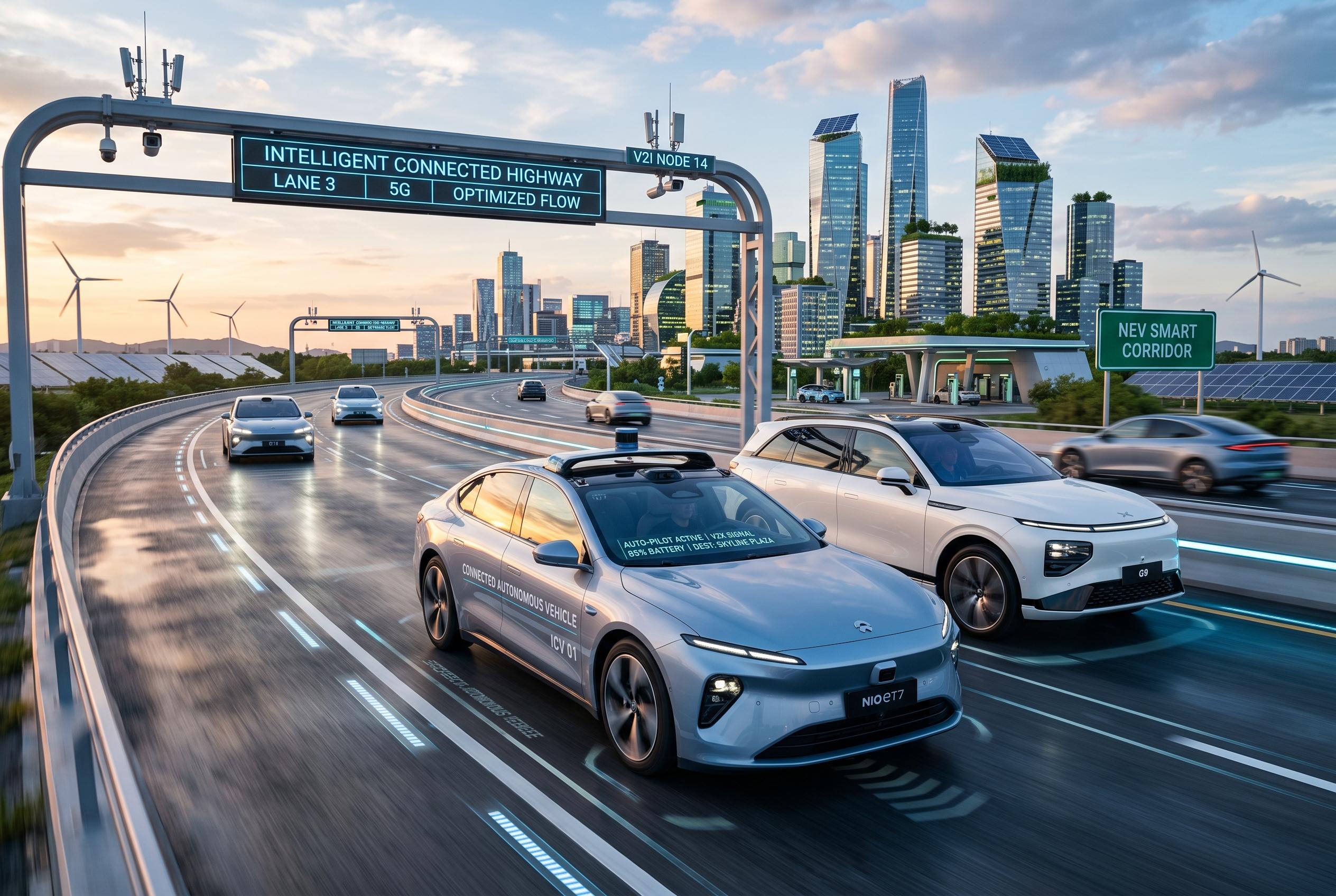
- China aims for widespread deployment of self-driving features across roads by 2030
- Safety standards, software regulation, and industry oversight to be tightened
- Policy supports domestic brands, enhances global influence, and manages industry capacity
China Outlines Roadmap for Smart Electric Vehicles and Autonomous Driving
China’s industry ministry has put together a roadmap aiming to make smart electric vehicles an even bigger part of the country’s industrial plans. Based on reports from official sources and industry observers, the plan envisions widespread deployment of self-driving features by the end of this decade and also aims to boost the global standing of Chinese automakers.
The strategy calls for expanding automated driving applications across highways, city expressways, and some urban roads. Interestingly enough, safety performance is emphasized as a key standard when developing and deploying this tech. That focus really highlights how important it is to combine vehicle manufacturing with software, electronics, mobile connectivity, data systems, and logistics infrastructure, as if they're part of a whole ecosystem.
This policy move is significant because it ties together multiple parts of China’s broader industrial goals. Electric vehicles aren’t just seen as transportation anymore, they’re part of a bigger tech system involving batteries, sensors, computing systems, communication networks, regular updates, and manufacturing standards.
By prioritizing intelligent, connected new energy vehicles, Beijing is signaling something clear: this sector will stay a top focus through the rest of the decade. It’s expected to influence how vehicles are sourced, how electronics are developed, autonomous systems are built, manufacturing is planned, and standards for road use are shaped.
Smart electric vehicles climbing the industry ladder
Looking at the details from the ministry’s plans for China’s 15th Five-Year Plan, it’s clear that intelligent connected new energy vehicles will continue to get a lot of policy attention till at least 2030. There’s a particular focus on software and autonomous driving, areas that are becoming increasingly central, shaping everything from vehicle design and sales to updates and daily use.
In the past, automotive competition mainly focused on engines, mechanical parts, high-volume production, and supply chain efficiency. But now, the race around smart electric vehicles is broader; electronics, artificial intelligence, sensors, operating systems, connectivity, and remote updates are all playing bigger roles in what makes a vehicle competitive.
It looks like China’s approach here is supporting this shift. Today, a vehicle isn’t just a traditional product, it’s more like a connected tech platform that can be updated and upgraded after it leaves the factory. This means manufacturers, suppliers, regulators, and users all face new challenges and opportunities.
For car makers, this means early-stage integration of hardware and software is crucial. Electronics suppliers might see growing demand for components related to sensing, processing, communications, and safety. Regulators, on their part, need to craft rules that cover software behavior, system updates, and how vehicles interact with infrastructure, so a lot of new ground to cover.
This policy also isn’t just about China’s domestic market. The country aims to increase its influence over global automotive standards and rules. Becoming a key player here could impact how autonomous systems are evaluated and how smart EVs get approved across different parts of the world.
Standards are especially important because they can determine market access. If manufacturers base their products on widely accepted safety and technical standards, it could make it easier to sell internationally. On the flip side, differing standards could complicate testing, certification, sourcing, and adaptation for local markets.
Pushing automated driving into wider use by 2030
The roadmap’s target to broadly roll out self-driving features means moving beyond just limited demonstrations and controlled environments. The plan pinpoints highways, urban expressways, and some city streets as areas where these systems could be more commonly used, that’s a pretty ambitious expansion.
But here’s an important nuance: not all roads or vehicles will necessarily offer the same level of automation. Instead, the approach suggests a gradual rollout across specific types of roads and approved operation zones. Why? Because automated driving depends heavily on factors like road design, traffic conditions, mapping accuracy, communication infrastructure, weather, hardware, and software performance, lots of variables at play.
Safety is highlighted as a core benchmark, understandably so. This puts pressure on companies to prove their systems are reliable and capable of handling real-world scenarios safely. It also provides regulators with a basis for deciding which tech can move from testing to wider deployment.
For consumers, this evolution could reshape how they understand vehicle capabilities. Buyers might start paying extra attention to onboard electronics, sensing systems, software updates, and connectivity, beyond just looking at battery range or charging speed.
But here’s the catch: the actual usefulness of a self-driving feature isn’t just about marketing or specs. Its real-world value depends on where it’s approved, what roads it’s allowed to use, how often the software is kept up to date, and whether drivers still assume certain responsibilities.
So, the China roadmap is both ambitious and cautious, technological progress is linked to safety testing, approval processes, and operating conditions rather than just a countdown to deployment.
Closer oversight on vehicle design and manufacturing
Besides promoting innovation, China’s policy signals a tightening of oversight in the automotive sector. Reports from sources like MLex point to stricter reviews for new vehicle designs, more rigorous testing requirements, and tighter checks during manufacturing.
The idea behind this is partly to curb risky competition and to address concerns about quality and safety, especially around autonomous driving. These tighter rules would influence how car companies introduce new models and how regulators vet vehicles during different stages of production.
The ministry also looks set to keep strengthening rules related to manufacturing standards, road safety, software updates, and approval of critical parts, things that are increasingly interconnected. For instance, a software update can change how a vehicle behaves, and a crucial electronic component can affect safety, reliability, or system performance.
This could slow down product launches somewhat since more comprehensive testing and checks are needed, yet, in a highly competitive market, companies might find it necessary to balance speed with compliance. Stricter approval processes could also mean paying closer attention to the origin, quality, and reliability of key parts, especially for autonomous-driving systems.
Even smaller-volume models aren’t immune; they too will need to meet the set safety and production standards, something that could influence how manufacturers manage their product lines, manufacturing capacity, and supply chains.
The policy emphasizes that vehicle manufacturing oversight is evolving from just hardware like bodies and batteries to include the entire digital ecosystem, software architecture, control systems, update routines, and the conditions under which automated functions are used.
Cleaning up the industry and managing excess capacity
Another part of the policy involves a more aggressive cleanup of the industry. China wants to better scrutinize vehicle and battery capacity, curb over-investment, promote mergers, and eliminate inefficient production capacity.
This is about making sure resources are allocated wisely across the electric vehicle industry. Growing capacity supports higher production, but too much or poorly managed capacity can create pressure on firms, suppliers, and the entire manufacturing system.
Encouraging mergers and shutting down inefficient plants sends a signal that growth alone isn’t enough. Companies will also be judged on efficiency, quality, financial health, and technological strength.
This broader approach could ripple through the ecosystem, battery factories, electronics makers, assemblers, logistics providers, and parts suppliers all interconnected. Decisions about capacity in one area can have a domino effect elsewhere.
At the same time, China aims to support a handful of local brands that could become among the top ten EV sellers worldwide. The government wants several Chinese automakers to build substantial global market shares, not just rely on a few players.
This focus means that quality, safety, innovation, and brand reputation will be key, since expanding internationally isn’t just about volume. It also involves navigating regulation, after-sales support, software updates, logistics, and consumer expectations in diverse markets.
Standards form a central part of the policy puzzle
Different government notices have shown how standards are now a core element in supporting the broader policy. For example, a new safety regulation for Level 3 and Level 4 autonomous systems is scheduled to kick in by July 2027.
This rule demonstrates a move towards formal oversight of automated driving, indicating safety standards will be set alongside tech development. Instead of leaving safety to individual manufacturers alone, the government aims to establish clear, consistent requirements.
Standards help set expectations for testing, performance, approvals, and autonomous feature usage. They also provide a framework for manufacturers working on vehicles, electronics, and software.
Moreover, China’s influence on standards could extend internationally, if domestic rules become widely adopted, they might shape global discussions on the design and regulation of smart EVs.
Altogether, the combination of strategic planning, tighter oversight, capacity management, and standards development creates a more structured environment for the industry. While competition will remain fierce, companies will operate under increased scrutiny surrounding safety, quality, and compliance.
What this roadmap could mean for the automotive world
The overall message in China’s roadmap brings together key themes: expanding smart electric vehicles, rolling out autonomous driving more broadly, supporting domestic brands, preventing overcapacity, and bolstering safety oversight.
The environment now is one where technology and regulation are evolving hand-in-hand. Automakers will need to compete in areas like vehicle design, battery tech, electronics, software, autonomous features, and market strategies internationally. Suppliers will face higher expectations around component quality and traceability. Consumers will notice more connected features, but also more rules about where and when they can use certain functionalities.
The real question isn’t just how fast autonomous driving will be rolled out, what’s really critical is whether manufacturers and authorities can develop systems that are safe, reliable, scalable, and adaptable to different road environments.
In essence, China’s goal is to position smart EVs as a cornerstone of its industrial competitiveness. Its success hinges on balancing innovation with safety, production efficiency with quality, and local growth with international cooperation.
Key Takeaways
- - China plans to enable widespread deployment of self-driving features by 2030.
- - Autonomous driving technology will expand across highways, city expressways, and selected urban roads.
- - Emphasis will be placed on safety, testing standards, and software oversight.
- - The policy includes tighter control over vehicle and battery capacity, alongside support for mergers and reducing inefficiencies.
- - China aims to cultivate multiple domestic brands into top global players.
- - A national safety regulation for Level 3 and 4 autonomous systems is expected to be implemented in July 2027.
- - These policies could influence sourcing, electronics, logistics, software development, and global standards.
Disclaimer: This article may have been created with AI assistance and reviewed by our editorial team. It is provided for general informational purposes only. Readers should verify information independently before relying on this content.
