
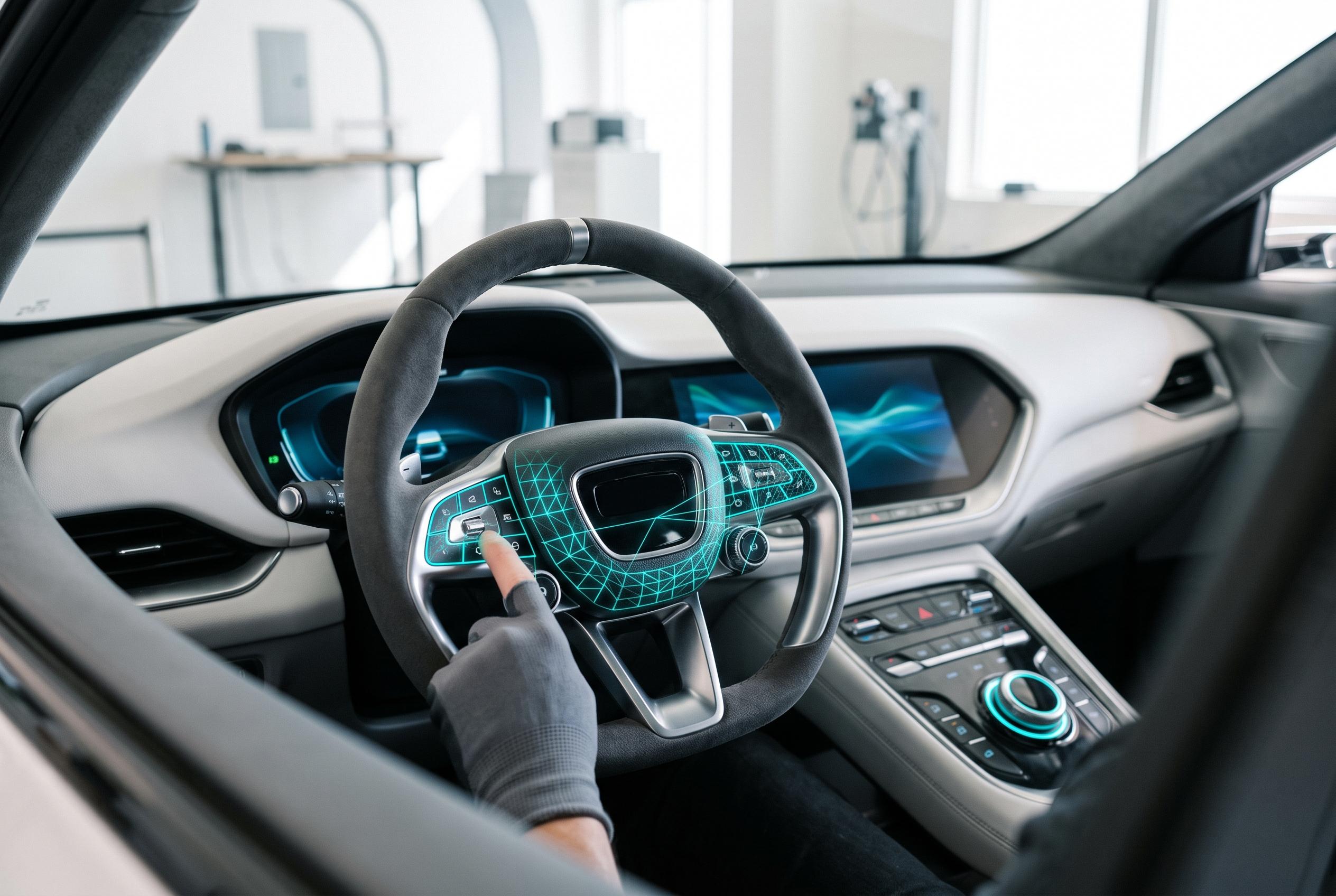
Drivers worried about buying a car with too many touchscreen controls finally have clearer guidance. China’s proposed rules would require physical backups for key functions such as lights, wipers, and defogging, while also tightening standards for hidden door handles and reclining seats. The changes matter most to shoppers planning ahead for 2027.
Touchscreen-heavy cars are meeting a safety reality check
A glossy screen can make a dashboard look wonderfully clean, but driving isn't a smartphone session. According to Paul Tan, China's proposed approach would push automakers to prove that virtual controls remain reliable, resistant to accidental touches, and easy to operate in real driving conditions.
That's the important distinction. The proposal doesn't outlaw touchscreens, and it isn't an immediate ban on minimalist interiors. Instead, it asks manufacturers to show that replacing physical buttons with touch-sensitive surfaces won't create a dangerous distraction or leave drivers helpless after a system fault.
For drivers, the concern is easy to understand. A phone can be held still while you search through a menu; a car may be bouncing over rough pavement while traffic changes around you. When a simple wiper adjustment becomes a tiny treasure hunt, the sleek design starts feeling less clever.
Which controls could need physical buttons?
The proposed rules focus especially on functions tied to immediate driving safety. Lights, windshield wipers, and defogging or defrosting controls would need usability and safety assessments across different driving scenarios, alongside physical controls.
Emergency equipment would receive even stricter treatment. Emergency escape devices, emergency braking controls, and drive-system power cutoffs would need physical operation and prominent identification, according to reporting from Sina Finance and related Chinese coverage.
That approach follows a sensible principle: a driver shouldn't have to remember a menu path during a sudden downpour, a fogged windshield, or an electrical failure. A reassuring click under your fingertip may not look futuristic, but in the right moment it can feel like the best feature in the car.
Hidden handles and lounge seats get their own limits
The touchscreen debate is only one piece of the proposed design crackdown. Chinese technology outlet IT Home reported that innovative door handles would need mechanical redundancy and enough room for hand operation, while fully hidden handles would not be allowed.
That doesn't mean every flush-fitting handle is automatically off the table. It does mean buyers should ask how the door opens when the battery is flat, the mechanism freezes, or the electronic release stops responding. A showroom demonstration on a sunny afternoon won't answer that question, so owners' reports from cold or wet climates can be surprisingly useful.
The proposal also takes aim at some of the more theatrical cabin features. Folding or flexible displays would not be permitted, while zero-gravity seating, rotating seats, and bed-style seat arrangements would be restricted during travel, according to HSW News. Comfort is welcome, but a moving vehicle still needs passengers positioned securely.
What the 2027 timeline means for car shoppers
The timing is crucial. The proposed requirements would apply to newly submitted products from January 1, 2027, with manufacturers expected to provide additional innovation-design data and safety verification. The reporting also points to testing that includes at least a year of environmental validation and no fewer than 30,000 kilometres of reliability testing.
Existing models aren't necessarily beyond scrutiny. Vehicles already listed for sale would have to submit additional technical and verification information by July 1, 2027. Models found to present safety risks could face production stoppages and recalls, according to reporting from Sina Finance.
For shoppers, though, this isn't a reason to assume every car bought today is suddenly non-compliant. The proposal is not yet final, and the precise scope may change before publication. In the meantime, the rules are best treated as a useful checklist rather than a promise about every vehicle currently in showrooms.
Try this simple touchscreen test before buying
Start with a blind-operation check during your test drive. Without looking down, try the headlights, wipers, front and rear defogging, and temperature adjustment. If you need to stare at the display or rely entirely on voice control, note that as a practical warning sign.
Next, ask the salesperson to demonstrate every emergency release and the drive-system power cutoff. Don't settle for a vague explanation. You want to see a physical mechanism, clear labelling, and a process you could remember under stress.
Door handles deserve a winter question, too: what happens if the vehicle loses power or the mechanism freezes? Finally, if the car has zero-gravity or bed-style seating, check that those functions lock out once the vehicle is moving. It’s a few extra minutes at the dealership, but it can reveal more than a polished product presentation.
The broader lesson is already influencing the market. Reuters-related industry coverage has noted growing resistance to screen-only controls, while some automakers have begun restoring physical buttons after customer criticism. For many drivers, the ideal cabin may not be fully old-school or fully digital. It may simply put the right control in the right place.
A smarter car doesn't need to make every action look futuristic.
Disclaimer: This article may have been created with AI assistance and reviewed by our editorial team. It is provided for general informational purposes only. Readers should verify information independently before relying on this content.
