
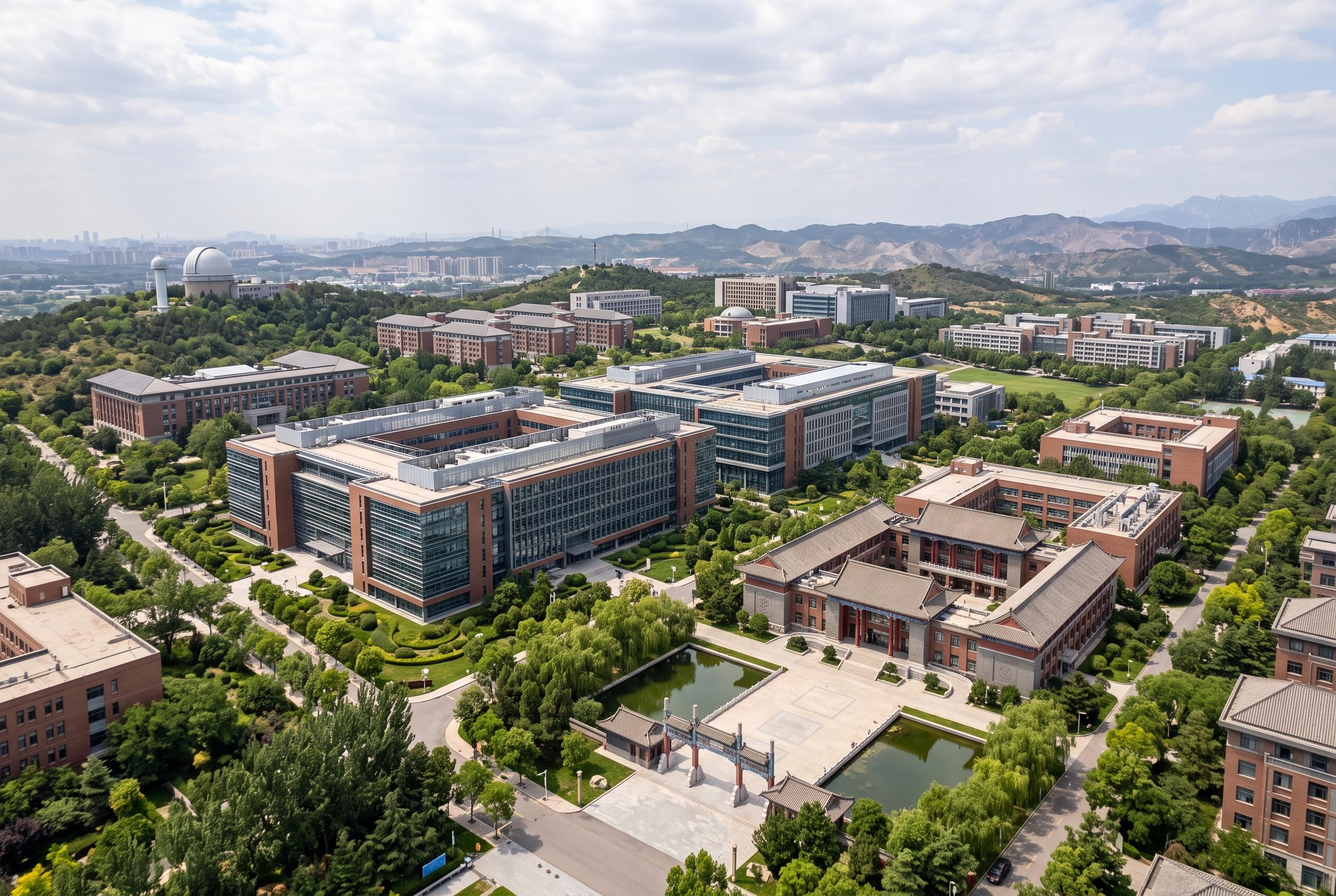
- China's manufacturing prowess is building a strategic edge, but advanced industries like semiconductors and aviation require deep scientific ecosystems.
- Investments in science and talent are closing the gap with Western leaders, though R&D and equipment limitations persist.
- Future tech leadership hinges on integrating research, capital, talent, and infrastructure, shifting the focus beyond factory scale.
China’s emergence as a manufacturing giant has already turned some global supply chains on their heads. The sheer scale, infrastructure, workforce, supplier networks, and industrial policies have positioned it as the go-to source for companies around the world. But maybe the more important contest now is shifting away from just raw manufacturing volume and heading towards the higher-value, tech-driven layers.
According to Science, the US and Europe still hold a bit of an edge in some of the most technically complex industries, think semiconductors and aviation. That said, that lead is shrinking, especially as China beefs up its scientific research, broadens its industrial footprint, and starts gaining more control over the key technologies that enable sophisticated production.
For businesses involved in electronics, mobile devices, logistics, industrial procurement, and global sourcing, this shift could cause ripple effects that go way beyond just factory floors. The next round of competition is probably going to depend a lot on how well countries can connect research, engineering, capital, supply chains, and mass production together.
China Has Turned Manufacturing Scale into a Strategic Weapon
Beijing has spent years transforming China’s manufacturing big and small into a real strategic advantage. Today, China is the dominant manufacturing hub for everything from high-end smartphones to electric vehicles. It’s also leading in solar panels, large batteries, and a wide range of industrial inputs, Science reported.
That position is supported by a bunch of reinforcement factors. China boasts a vast, capable workforce, dense networks of suppliers, extensive infrastructure, and consistent government backing. These elements have helped Chinese manufacturers produce at massive scales, all while linking component suppliers, logistics firms, engineering teams, and assembly lines within a tightly integrated industrial ecosystem.
The result? A manufacturing base that influences industries far beyond its borders. Companies sourcing electronics, mobile hardware, batteries, auto parts, or industrial components often rely on supply chains connected to Chinese factories or suppliers. Even if final assembly happens elsewhere, China’s role in providing parts, materials, equipment, or specialized services can still be crucial.
But, and here’s the thing, scale alone hasn’t been enough to keep China ahead in every high-end industry. The country still lags behind the US in areas like chip design and manufacturing, and wide-body aircraft production.
These are different kinds of challenges. They require not just factories and investments, but also long-term scientific expertise, highly advanced equipment, specialized talent, and managing thousands of technical dependencies with near-perfect precision.
Why Semiconductors and Aviation Are So Hard to Reproduce
The semiconductor industry is incredibly complex because it hinges on deep, technical integration. Producing chips involves coordination across chemistry, electrical engineering, computer science, materials tech, and specialized machinery.
Plus, it depends on specialized suppliers whose technologies are tough to copy quickly. Companies like ASML, for instance, supply lithography systems that are at the heart of the global chipmaking process. Gaining access to cutting-edge equipment, production expertise, design capabilities, and materials all plays a part in whether a chipmaker can reliably produce advanced semiconductors on a large scale.
Aviation, on the other hand, presents similar difficulties, but with different tech and production challenges. Building wide-body aircraft demands expertise in aerodynamics, materials science, propulsion, avionics, and intricate supply chains. Plus, these planes need to pass rigorous testing, certification, and system integration checks, all critical to success.
These examples clearly show why manufacturing capability isn’t the same as being a technological leader. A country might be able to churn out loads of consumer electronics or industrial products, but that doesn’t mean it can master industries where every individual component must meet exacting standards for quality and reliability.
Leading in semiconductors and aviation depends heavily on ecosystems that turn cutting-edge scientific research into reliable, mass-produced systems. These ecosystems need to connect labs, universities, equipment providers, designers, manufacturers, and the entire logistics web. And the R&D process can often span many years before any commercial benefits show up.
China’s Scientific Foundations Are Gaining Strength
While China still faces hurdles in some high-tech industries, its scientific position is evolving rapidly. Science noted that, a decade ago, many Western researchers regarded Chinese universities as strong in sheer output but weaker on impact.
That outlook is increasingly being challenged. Heavy government backing has helped change China’s scientific landscape. Its institutions are now attracting notable international scientists, generating highly cited papers in chemistry and engineering, and delivering breakthrough work in quantum communications, lunar missions, and nuclear fusion.
This matters because advanced manufacturing isn’t just about factories; it’s rooted in deep scientific knowledge. Breakthroughs in chemistry, materials, engineering, computing, and physics can eventually influence how new products are designed and produced. More importantly, having strong domestic scientific research means local companies can solve technical problems without always relying on external sources.
For global businesses, this isn’t just about what happens in labs. Scientific prowess can influence sourcing strategies, supplier development, product innovation, and the resilience of logistics networks. As China’s research and industrial sectors grow closer together, the country might get better at turning laboratory discoveries into commercial products.
That said, a stronger research base doesn’t automatically translate into market dominance. Breakthroughs still need to be engineered, funded, tested, manufactured, and distributed. But having a solid science foundation definitely provides China with more tools to compete in these technically demanding fields.
The Semiconductor Race Shows Both Ambition and Limits
The chip race shows China’s big ambitions but also the limits it faces. As reported by Tom's Hardware, China invested approximately $142 billion in chip subsidies from 2014 onwards, which is more than 3.6 times the roughly $39 billion invested by the US during that same period.
That kind of massive spending underscores how strategically vital Beijing views semiconductor tech. Chips are crucial in everything from smartphones and electronics to cars, industrial machinery, and communication systems. Basically, chips are a core part of modern tech infrastructure, so naturally, chip manufacturing has become a central focus of both tech policy and supply chain planning globally.
But, money alone hasn’t solved all challenges. Chinese chip fabs still grapple with restricted access to the most advanced tools and ongoing R&D gaps. Producing the most advanced semiconductors isn’t just about throwing money at it, it demands specialized machinery, deep manufacturing know-how, software, high-quality materials, top-tier engineering talent, and years, sometimes decades, of process refinements.
Beijing’s efforts have also seen their share of failures. Some so-called zombie fabs have cost tens of billions and still can’t produce at commercial scales. These failures highlight an important lesson: just building factories isn’t enough. To succeed, a semiconductor plant needs not just the physical infrastructure but also the right equipment, experienced workforce, a customer base, and the knowledge to operate consistently at high quality.
For electronics firms and other buyers, this creates a tricky environment for sourcing. Government subsidies might accelerate capacity growth, yes, but restrictions and technical bottlenecks often limit what’s available and how fast companies can get new products to market. As a result, companies have to weigh not just price and volume but also technology access, supplier stability, and the geopolitical risks that come with it.
Talent Is a Key Part of the Tech Race Too
Behind all these technological battles is the critical role of talent. The South China Morning Post reports that many Chinese engineers played major roles in shaping the US semiconductor scene and that many later returned home, which helped shift expertise back to China.
Why does this matter? Because the knowledge, whether in chip design, manufacturing, equipment, or process engineering, that comes from experience can’t simply be bought or built overnight. It’s accumulated over time through hands-on work.
Talent flows can also make or break national tech strategies. Engineers who have worked in advanced manufacturing bring not just technical know-how but also management skills and an understanding of how research and production should interact. When these skilled workers return to China, they help bolster domestic capabilities even if equipment restrictions are still in place.
Meanwhile, the US has tightened export controls, and lawmakers are debating even stricter bans on advanced chipmaking gear for Chinese companies. These policies aim to prevent strategic tech from flowing to Beijing, but they also create uncertainty for companies involved in international supply chains.
For suppliers and buyers, this environment complicates sourcing decisions. It’s no longer just about how much a supplier can produce; it’s also about navigating the surrounding regulations, export restrictions, and cross-border logistics.
Different Approaches to Quantum Tech Development
This competition isn't just about traditional semiconductors. Quantum technologies provide another interesting example of differing development models between the US and China.
According to the US-China Economic and Security Review Commission, the US favors a decentralized approach, relying on a diverse mix of universities, government agencies, and private companies. Conversely, China tends to align its scientific development more tightly with national industrial goals.
Neither approach makes quantum research easier, it’s inherently tough, but the way they organize funding, priorities, and commercialization makes a difference. A decentralized system, for example, can leverage a wide variety of institutions, while a more centralized one can focus research directly on specific national objectives.
This contrast reflects a broader reality in the global tech race: breakthroughs don’t just come from a single discovery but from the entire ecosystem that pushes those discoveries into market-ready products. Future competition may increasingly look like ecosystems of interconnected industries rather than isolated companies or technologies. Countries that succeed in connecting science, capital, talent, equipment, and mass production might gain an advantage, even if no one single company controls the entire chain.
What All This Means for Global Supply Chains
So, for companies involved in B2B buying and supplying, the key takeaway is that the next phase of tech competition won’t be decided just by factories or assembly lines. It’ll hinge on who can best combine scientific research, capital investment, and large-scale manufacturing, all at the same time.
Yes, China’s manufacturing strength remains a major force. Its extensive supplier networks, infrastructure, skilled workforce, and total production capacity still support a lot of the world's major industries. But at the same time, restrictions on high-end tech, plus ongoing gaps in certain technical fields, mean that just being big doesn’t automatically mean leading.
The US and Europe still lead in semiconductors and aviation, but China’s scientific advances and industrial investments are closing much of that gap. This evolving landscape could influence where companies source materials, how they form tech partnerships, develop products, and even plan logistics.
In other words, the landscape isn’t just about where products are assembled anymore. Going forward, competitiveness will depend on access to research, engineering talent, cutting-edge equipment, materials, key suppliers, and the entire system needed to move innovation from idea to consistent, reliable production.
Key Takeaways
- - Manufacturing scale remains one of China’s greatest advantages, but advanced technology requires deeper scientific and engineering capabilities.
- - Semiconductor and aviation leadership depends on specialized ecosystems that take years to develop.
- - Talent, research, equipment, capital, and logistics are becoming increasingly interconnected in global sourcing decisions.
- - Companies may need to evaluate suppliers based on technology access, resilience, regulatory exposure, and long-term capability, not only price and volume.
Disclaimer: This article may have been created with AI assistance and reviewed by our editorial team. It is provided for general informational purposes only. Readers should verify information independently before relying on this content.
Sources:
