
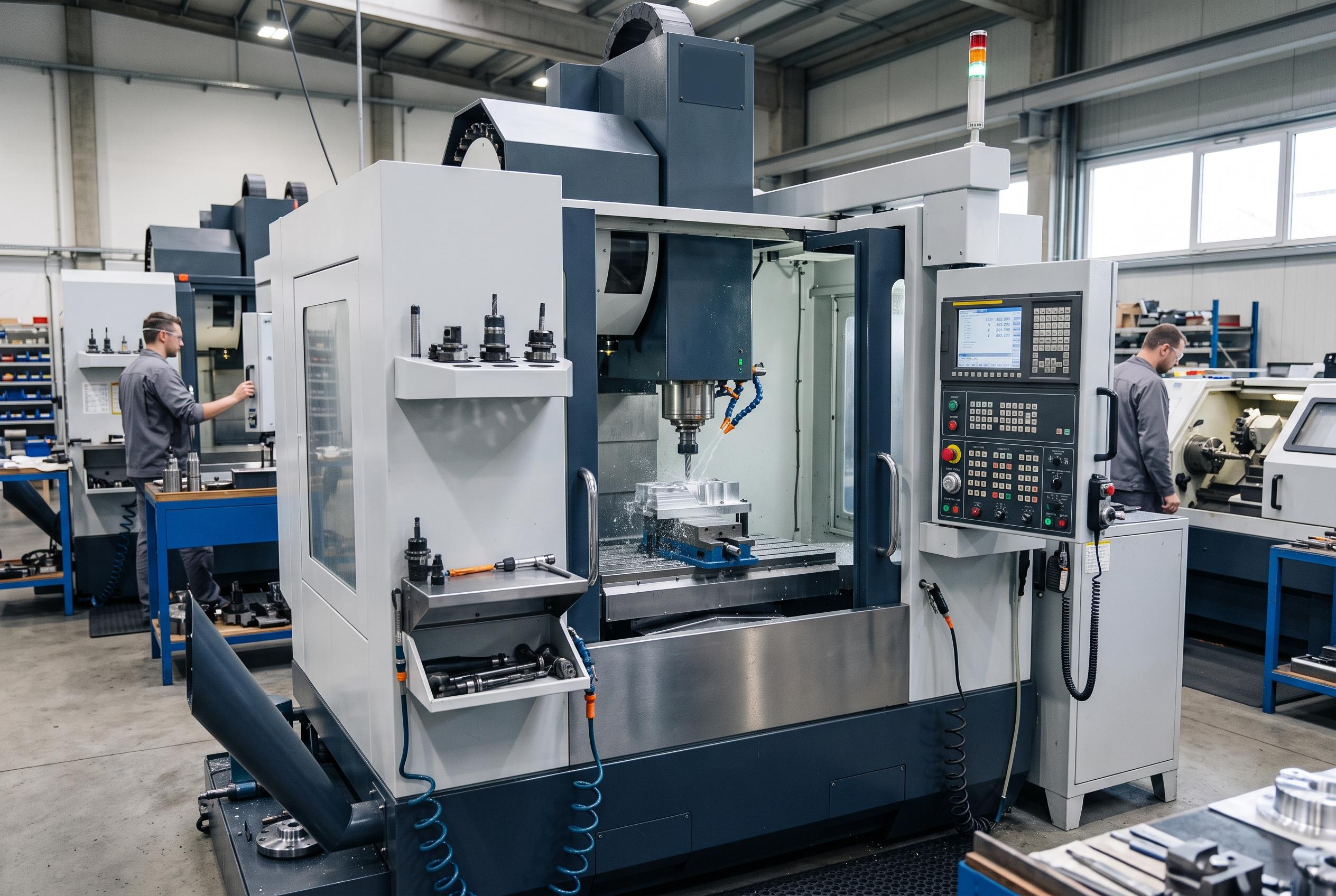
- CloudNC raises $20 million in Series B extension to expand AI tools
- CAM Assist supports CNC programming with existing CAM platforms
- New product Quote Agent aims to speed up quoting and decision-making
CloudNC Raises $20 Million to Grow AI Tools for Machine Shops
CloudNC has secured $20 million in a Series B extension, bringing the UK-based software company's total funding to $128 million. The capital comes as CloudNC aims to expand adoption of its AI-driven tools among machine shops and develop additional products.
Co-founder and CEO Theo Saville told TechCrunch that the last major funding round for CloudNC was four years ago.
CloudNC is mainly focused on CNC, or computer numerical control, machining. This process uses computer-controlled machines to cut or shape materials into precise components used in industries such as automotive, defense, and consumer hardware.
Its flagship product, CAM Assist, is designed to streamline the programming phase. The software integrates with computer-aided manufacturing platforms such as Autodesk Fusion and Mastercam. It helps programmers select tools, approach directions, cutting feeds, and speeds before drafting initial machine code for review and approval.
Instead of replacing factory expertise, CAM Assist is meant to help skilled machinists work more efficiently and productively. The software supports decision-making that still requires human review before machining begins.
For machine shops, the potential benefits include faster quoting and programming. Shops often need to decide how to hold a component, which tools to use, and how to create workable programs. Software that assists with these tasks could help shops respond more quickly while relying on experienced staff for oversight and critical decisions.
CloudNC says more than 1,000 machine shops worldwide use CAM Assist, with 80 percent of its customer base in the United States. The company employs 80 people, and the new funding will support wider adoption of CAM Assist, strengthen its go-to-market operations, expand into existing and new markets, and develop products including Quote Agent.
Quote Agent, which is aimed at manufacturers, is designed to help shops assess the estimated cost and risk of new projects so they can move faster to accept or reject work. The tool is set to launch next month.
Interest in AI for manufacturing continues to grow. In June, Limitless Labs, formerly known as LimitlessCNC, announced $20 million in Series A funding co-led by Dell Technologies Capital and Square Peg, with participation from Grove Ventures, Meron Capital, and Kinetica.
Limitless Labs has developed a system trained on the physics of metal cutting, CAD geometry, and real machine constraints. It aims to work with platforms such as Creo, Siemens NX, and Mastercam. The company said the funding would support US expansion, further AI-model development, and efforts to automate more of the CNC programming workflow.
The landscape shows why industrial AI is not just about general automation. It has to account for material behavior, machine capabilities, tooling, geometry, and other operational factors. AI systems must offer recommendations that are useful in actual shop settings.
Integration is also critical. Many machine shops depend on established design and manufacturing software. A tool that runs alongside platforms such as Autodesk Fusion or Mastercam may be easier to evaluate than one requiring a complete workflow overhaul.
Several pressures are shaping this market. Shops need to quote jobs faster, program more efficiently, and do more with the people and machines they already have.
Saville pointed to US manufacturers seeking to reshore operations while facing a shortage of skilled workers. In this environment, tools that assist with quoting, programming, and process setup could help manufacturers make better use of existing resources.
CloudNC also points to its own factory, software team, and experience learning from real machining. In manufacturing, the practical test is whether software works in real-world conditions rather than only in demonstrations.
Competitors are making similar claims about AI’s role in precision manufacturing, so the challenge will be how well these systems perform in real machine shops. That includes how seamlessly the tools fit into existing environments and how much oversight machinists need to provide.
CloudNC was founded in 2015 by Saville and Chris Emery, now the company’s chief science officer. The longer timelines for industrial tools mean companies may develop their products and customer bases over several years.
Adoption in manufacturing is influenced by cost, operational complexity, and whether new tools integrate with existing setups. Shops need to assess whether a product works within their current CAM environment and whether it boosts productivity without disrupting established processes.
Looking ahead, CloudNC will need to expand adoption and demonstrate how tools such as Quote Agent fit into machine-shop workflows. The company has customers worldwide, although 80% of its customer base is in the US.
The broader manufacturing technology landscape is competitive. Startups and established players are positioning AI tools as solutions for faster quoting, improved programming, and better use of existing machines.
For CloudNC, the funding supports efforts to expand its product ecosystem. CAM Assist helps users make decisions and draft initial machine code, while Quote Agent is aimed at another phase of the manufacturing process.
CloudNC emphasizes that its approach is intended to support skilled workers rather than replace them. In CNC machining, recommendations need to be evaluated in the context of specific equipment, materials, and operational goals.
As AI adoption grows in manufacturing, successful systems will need to fit factory hardware, software, and processes. For end users, the key question is whether these technologies can help them respond faster and more accurately while maintaining the precision modern manufacturing demands.
Takeaways
- - CloudNC’s latest funding will support the expansion of CAM Assist, go-to-market operations, and new products such as Quote Agent.
- - AI tools for CNC machining must account for real-world factors including materials, tooling, machine capabilities, and geometry.
- - Integration with established CAM platforms may be important for adoption because machine shops often cannot replace their existing workflows.
- - Human review remains central when AI recommendations affect precision manufacturing and production outcomes.
- - Competition in industrial AI is increasing as manufacturers seek faster sourcing decisions, more efficient logistics, and better use of existing equipment.
Disclaimer: This article may have been created with AI assistance and reviewed by our editorial team. It is provided for general informational purposes only. Readers should verify information independently before relying on this content.
