
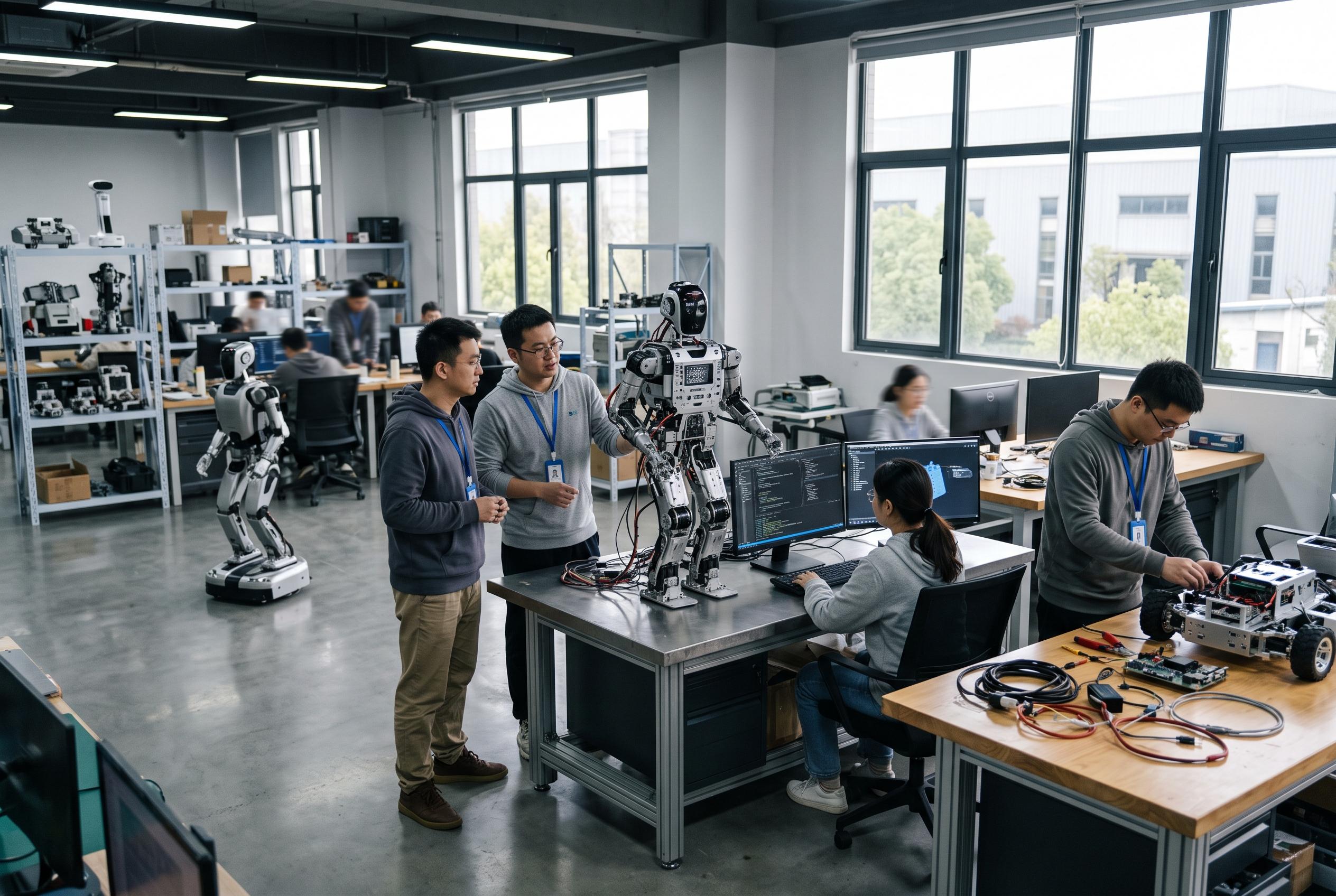
A Korean company is partnering with China’s MagicLab Robot Technology to bring humanoid robots, AI software, and brain-computer interface services to the local market. The deal matters because it goes beyond demonstrations, aiming for domestic manufacturing, rehabilitation applications, and commercial deployment from early 2027.
A humanoid deal built around more than a flashy demo
The partnership pairs a Korean software and services specialist with a Chinese robot manufacturer that already produces humanoids, quadruped robots, joint modules, and robotic hands. According to Edaily, the agreement covers hardware supply, Korean distribution, local production, and joint development of robot services.
That mix is important. Humanoid robotics often attracts attention through polished videos and stage demonstrations, but the harder question is what happens after the applause. A robot needs software, safety approvals, maintenance, trained operators, and a customer willing to put it to work. This agreement is aimed at that less glamorous, but far more valuable, stage.
Why local manufacturing could change the business case
Dynamic Solution plans to support domestic OEM production while helping with market information, customer introductions, and regulatory responses. Edaily reported that the two companies intend to develop cooperation in phases, beginning with distribution and production before expanding into software and service projects.
Local assembly could also make the technology easier to adapt for Korean customers. It may help with delivery times, after-sales support, and customer-specific configurations, although the commercial benefits will depend on certification, component availability, and the eventual production scale. In robotics, a clever prototype is one thing; a dependable service network is another.
MagicBot Z1 brings a substantial physical presence
The initial focus is expected to include MagicLab's MagicBot Z1. The humanoid is designed at 1,369 millimetres tall and 40 kilograms, with joint torque of 130 newton-metres and a rotational range of 320 degrees, according to the company information reported by Edaily.
Those numbers suggest a machine intended to demonstrate meaningful movement and physical capability rather than simply act as a talking display. Still, specifications alone don't reveal how safely the robot handles uneven floors, delicate objects, repetitive work, or crowded environments. Buyers will want to see endurance, reliability, control quality, and operating costs in real settings.
BCI and AI could give the partnership a sharper edge
Dynamic Solution's role is centred on brain-computer interface technology and AI software. The companies also plan to explore rehabilitation robot services based on BCI, which could create a more specialised path into healthcare and assisted movement rather than forcing the humanoid into every possible workplace.
That direction is worth watching because software and service design may determine where humanoid robots create practical value. A robot that can be updated, monitored, and tailored to a user's needs may ultimately be more useful than one with impressive hardware but limited integration. The best results will likely come from combining the robot's body with a carefully designed human interface.
The 2027 timeline puts execution under the spotlight
Dynamic Solution expects to complete robot delivery, Korean certification, and registration steps before pursuing BCI consortium projects and sales activities from the first quarter of 2027. The companies also plan to use joint development results as a springboard for future expansion into China.
That timetable is ambitious, but it gives the partnership a clear sequence. First comes import and compliance work, then demonstrations and customer development, followed by broader commercial deployment. As Dynamic Solution's chief executive Baek Myung-hoon indicated in comments reported by Edaily, the aim is to capture revenue opportunities while Korean businesses are still preparing for wider robot adoption.
The bigger test will be whether the partners can turn a cross-border hardware deal into repeatable, profitable services. For now, the agreement offers a grounded glimpse of where the humanoid market is heading: fewer science-fiction promises, and more focus on production, certification, software, and actual work.
A robot becomes commercially interesting when it can earn its place on the shop floor.
Disclaimer: This article may have been created with AI assistance and reviewed by our editorial team. It is provided for general informational purposes only. Readers should verify information independently before relying on this content.
