
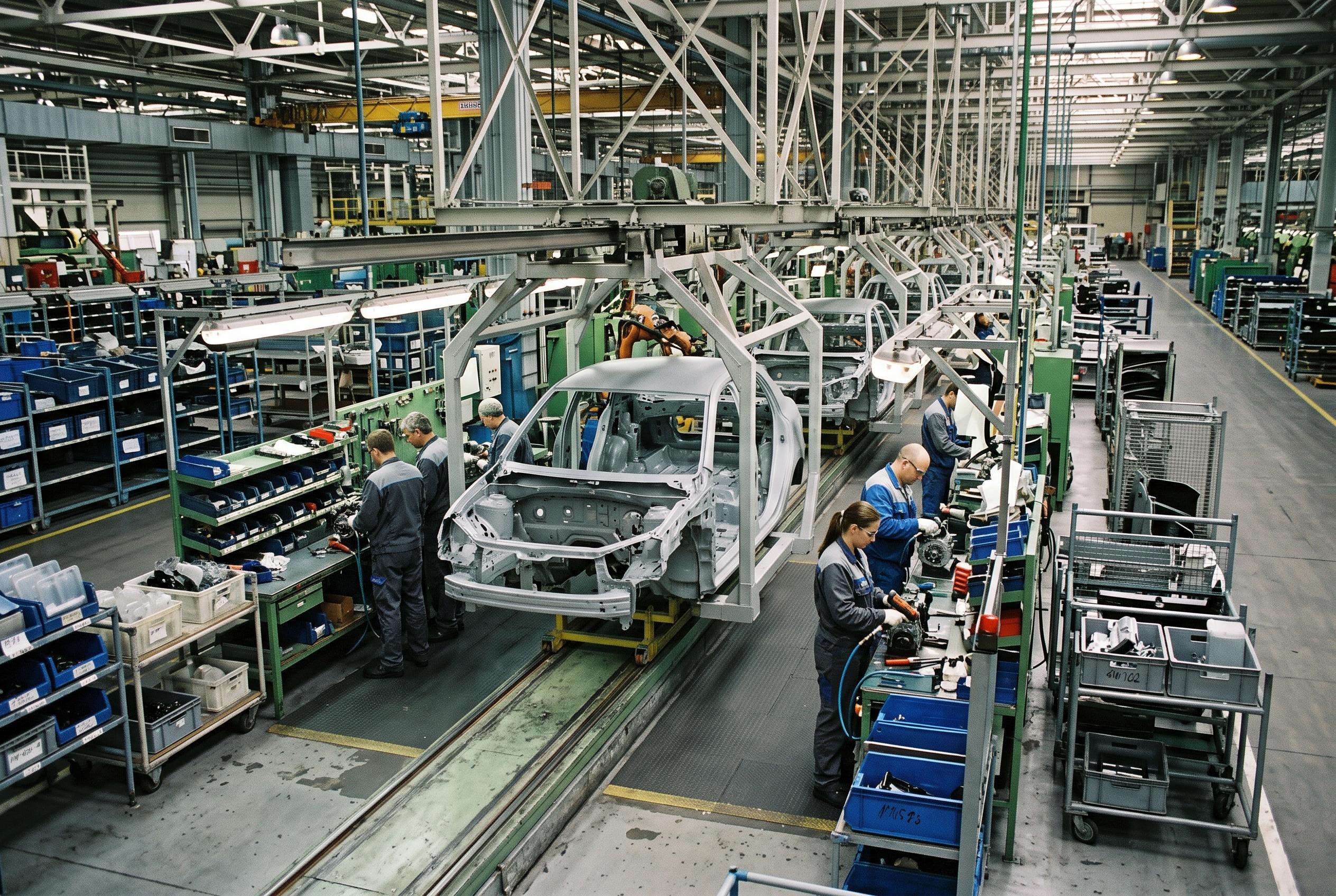
- Ford implements a modular, parallel production system for electric pickups at the Louisville plant.
- Tesla's 'unboxed' approach aims to drastically reduce factory size and accelerate autonomous vehicle production.
- Both strategies reflect a shift in EV manufacturing, but their market applications and risks differ significantly.
Ford and Tesla Are Placing Bets on Similar EV Manufacturing Ideas, But They’re Targeting Very Different Markets
Imagine a fleet manager looking over Tesla's Cybercab concept alongside Ford’s plans for a new electric pickup. They’d probably notice both companies seem to be going for a similar manufacturing tactic: break the vehicle into major chunks, build those chunks separately, and then put them together kind of late in the process.
Ford touts its Universal EV Production System, which is set up to segment work across three lines, covering the front, the rear, and the structural battery pack. Tesla’s “unboxed” approach for the Cybercab follows similar logic; big modules are assembled on their own before they’re finally brought together. The two projects are aimed at different vehicles and business models, but both are part of a wider trend, trying to rethink how electric vehicles are designed, sourced, assembled, and moved through the factory.
The appeal of this idea? Well, it’s straightforward. Doing things in parallel can shrink the size a plant needs, make some material flows simpler, and speed up how quickly a vehicle makes its way through production. Instead of pushing an almost-finished car down a long sequence of stations, automakers can work on several big sections at once, then combine them later.
For automakers, that kind of approach could change a lot, from how factories are built and what equipment is needed, to worker ergonomics and logistics planning. It might also influence how suppliers package and deliver parts. When a vehicle’s divided into big modules, the timing, location, and condition of those modules become pretty critical to the entire production system.
Ford has said its new system will first be used at the Louisville Assembly Plant for a midsize electric pickup with four doors. The company plans to invest about $2 billion into that location. They also say the goal is to improve ergonomics and slash costs. Other reports suggest Ford hopes to save time compared to its current output from Louisville. Anyway, that investment grounds Ford’s plan in a more traditional commercial context. They’re applying this new system to a vehicle market that already exists, electric pickups are expected to have buyers in both retail and fleet segments, including folks who care about operating costs, cargo space, charging needs, and how long they can keep the vehicle on the road.
That said, it’s not without risks. Building an electric pickup at a competitive cost still demands reliable sourcing, a steady battery supply, disciplined logistics, and enough customer demand to make the investment worthwhile. The product itself looks familiar, a pickup is a pickup, regardless of whether it’s powered by gas or electricity. Buyers understand what it’s for, even if the electric version has a different powertrain and ownership experience.
Tesla’s take on the same basic idea is a bit more dramatic. Their unboxed method is designed to churn out a two-door robotaxi built around large cast subassemblies. Tesla’s marketing emphasizes this approach, saying it could lower the factory size and boost throughput. Some analyses say Tesla claims it could cut line size by around half, and others suggest that, if scaled as Tesla hopes, this method could eventually reduce factory space and costs.
But the Cybercab’s production concept isn’t just about factory efficiency. It ties into Tesla’s broader vision of an autonomous, driverless taxi that’s relatively free of steering wheels or pedals. By design, the whole manufacturing setup is part of a bigger tech and policy play.
The business case for the Cybercab hinges on a lot more than just making the process efficient. It depends on autonomous driving software, regulations, and demand for robotaxi services moving forward. The tech has to be ready, the laws need to clear the way, and enough customers or fleet operators have to want it, before Tesla can really bring the vehicle to market. So, it’s a different sort of gamble for Tesla compared to Ford.
This contrast matters a lot for suppliers, factory planners, fleet operators, and companies involved in electronics and mobility. Ford is working on a modular manufacturing system for a vehicle they plan to sell in the near future, something to be ordered and driven now. Tesla’s applying a similar modular principle but for a vehicle whose commercial success depends heavily on future regulatory approval, software maturity, and operational models.
That means we should evaluate each company’s manufacturing strategy differently. Ford’s system can be judged by the usual standards: production time, factory costs, vehicle costs, quality, worker safety, and capacity. Tesla, meanwhile, also faces questions related to autonomy software, legal approval, and whether the robotaxi market will develop as planned.
Modular assembly isn’t new, building sections separately and joining them later has been a principle in advanced manufacturing for years. But what’s changing now is the scale and ambition with which automakers are applying it to electric vehicles.
EVs make modular manufacturing especially appealing because battery packs, electric drives, electronic systems, and body structures all need to be coordinated differently than in traditional vehicles. That doesn’t automatically make production simple, it’s flexible enough to rethink how crucial systems are assembled and how factory floor equipment is arranged.
It might also influence sourcing decisions. Large sections, front, rear, battery, might require suppliers to deliver more integrated modules, making assembly potentially easier but also raising the bar for quality, timing, and parts compatibility.
For fleet operators, all this impacts buying and operating strategies first. A regular EV or gas-powered truck can be judged based on range, payload, charging, maintenance, and total cost of ownership. But a robotaxi adds more layers, can the vehicle operate without a driver? Do regulations permit it? How would the service be managed smoothly day-to-day?
Similarly, logistics will differ. Ford’s electric pickup lines up with a familiar market space, with established roles for dealerships, fleet owners, and service networks. Tesla’s Cybercab, on the other hand, is tied to a mobility model that envisions vehicles as part of autonomous transportation networks, more of a tech experiment with potential, but no proven business model yet.
All this underscores a key point: similar factory principles don’t necessarily equal similar business risks. Both companies seem to want to build big vehicle sections in parallel and then piece them together later. They both see potential benefits like smaller factory footprints, improved material handling, and faster throughput. But the true value depends on what kind of vehicle comes out and how the market responds.
Ford’s electric pickup is targeting a market that already exists, with buyers and fleets looking for options now. The company says the system’s first implementation will be for a vehicle already heading into production, and there’s talk about extending this platform to support an affordable electric vehicle lineup beyond just one model.
Tesla’s Cybercab is more speculative. Its design hinges heavily on autonomous driving, and its whole commercial path depends on software readiness and regulatory advances keeping pace. Tesla’s trying to demonstrate efficient autonomous vehicle manufacture before the robotaxi market actually exists at scale.
That all raises the big question: what’s the sequencing? Tesla’s manufacturing system could actually help bring down the cost of a future robotaxi, but only if the broader market and regulations develop as hoped. Ford, meanwhile, is pursuing a manufacturing idea that’s aimed at a product already in a proven market.
The difference influences how each company should allocate capital. Ford invests in capacity for a product that they can sell through existing channels, markets they already know. Tesla invests in a process that could be transformative, but only if lots of beyond-the-factory factors line up.
In the end, you can’t just look at factory layouts and say one’s better. A smaller factory footprint or faster throughput can help cut costs, but only if that translates into reliable vehicles, competitive pricing, and steady demand. Factory design is just a tool, what matters most is the product that comes out and whether it can succeed.
For industry watchers, this comparison offers a good lesson. The same modular, parallel assembly idea can lead to very different commercial outcomes. Ford’s goal is mainly about making a specific vehicle more efficiently and supporting broader EV adoption, something many investors understand. Tesla’s, on the other hand, is tied to creating a new vehicle format and mobility service, with more uncertainty.
For fleet managers, the real concern isn’t just which company’s manufacturing process looks more advanced. It’s which one can connect manufacturing efficiency with a product that works operationally, arrives on schedule, meets legal standards, and offers a convincing total cost of ownership.
So, the manufacturing debate is only part of the story. The real question is whether these companies are investing in products with a clear and viable commercial future. Ford’s funding is geared toward a vehicle for an existing market. Tesla’s system could change how vehicles are built, but its success hinges on many factors beyond just the factory itself.
Disclaimer: This article may have been created with AI assistance and reviewed by our editorial team. It is provided for general informational purposes only. Readers should verify information independently before relying on this content.
