
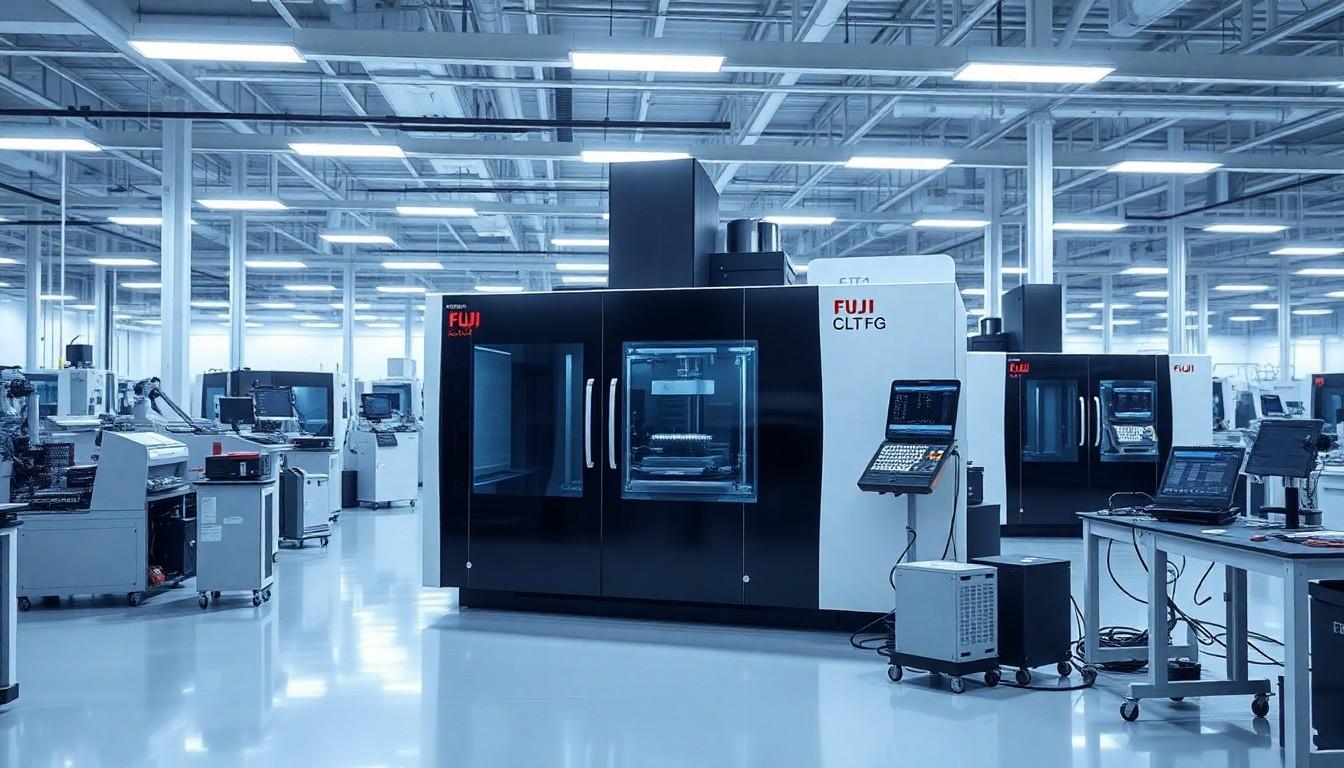
- Fuji's CLT-FG combines a compact footprint with versatile component handling for limited-space lines
- Designed to support high-mix, low-volume production with flexible installation and operation
- Aligns with industry shift toward adaptable, space-efficient manufacturing solutions
Fuji Corp. has developed the CLT-FG, an SMT pick-and-place machine designed for high-mix, low-volume production and manufacturing lines where floor space is limited. The machine combines a compact footprint with a placement head designed to handle a broad range of component sizes.
The CLT-FG has a machine body approximately one meter wide, allowing it to be installed in production areas where space is restricted. Despite its compact size, the machine is designed to place small chip components at high speed while also providing stable placement of larger components. This allows manufacturers to use the same machine across different product types and production runs with varying component configurations.
The machine is particularly intended for production environments where frequent product changeovers and fluctuations in demand require manufacturing equipment to be flexible. Its versatile placement head supports different component sizes, helping manufacturers handle changing production requirements without relying on equipment dedicated to a narrower component range.
Fuji has also used a streamlined machine and unit configuration in the CLT-FG to reduce the effort involved in installation and operation. Along with its approximately one-meter-wide body, this configuration gives manufacturers more flexibility when planning production-line layouts or adding equipment to existing facilities.
The CLT-FG is based on placement technologies and platform assets developed through Fuji’s experience in SMT equipment. The company says this technology base supports stable operation and reliable component placement across different production requirements. The machine has also been designed with compatibility with existing equipment and production assets in mind, which can help manufacturers integrate it into established manufacturing environments.
The need for this type of flexibility is linked to changes in electronics manufacturing. Shorter product lifecycles, greater product variety and fluctuations in demand are making it more common for manufacturers to produce smaller volumes and switch between different products and component configurations. At the same time, manufacturers need to consider machine performance, available floor space, and the installation and operational workload when expanding or modifying production lines.
For many electronics manufacturers, those pressures are not just technical but operational. Sourcing decisions increasingly need to account for how component mix, production volume and logistics constraints affect the entire manufacturing flow. In a market where mobile devices, consumer electronics and other fast-moving product categories can shift quickly, the ability to adapt a line without major disruption has become a practical advantage rather than a nice-to-have feature.
A compact SMT machine like the CLT-FG fits into this broader shift by supporting more agile production planning. When a factory must respond to changing customer demand, a smaller footprint can matter as much as placement capability. It can influence how lines are arranged, how equipment is added and how teams manage material movement across the floor. In that sense, machine design is connected not only to throughput but also to logistics and facility strategy.
This is especially relevant in high-mix, low-volume environments, where manufacturers may need to balance many product variants at once. A versatile placement platform can help reduce the need to dedicate separate equipment to narrowly defined tasks. That can simplify operations, support more flexible scheduling, and make it easier to reconfigure production as orders change. For companies working in electronics, that flexibility can be a key factor in maintaining responsiveness.
The CLT-FG’s focus on compatibility with existing assets also reflects an important trend in manufacturing investment. Many facilities cannot simply replace everything at once, so new equipment often needs to fit into established workflows. In those settings, equipment that supports integration with current production assets may help reduce operational friction and make modernization more manageable. That can be valuable when manufacturers are trying to improve capacity without creating unnecessary downtime.
From a business perspective, compact and flexible equipment can also support better use of capital. Instead of building around a single product category, manufacturers may look for systems that can serve multiple lines or production scenarios. That matters in industries where consumer preferences, product design cycles and sourcing requirements can shift rapidly. The result is a stronger emphasis on adaptability across the manufacturing ecosystem, from component procurement to final assembly.
The CLT-FG is therefore part of a broader conversation in electronics manufacturing about how factories can stay efficient while handling uncertainty. As products become more varied and production runs become more fragmented, equipment that can maintain stable placement across component ranges while occupying less floor space may offer a useful balance. For plant managers and production planners, that balance can influence everything from layout design to staffing and scheduling.
It also highlights how machine engineering and factory strategy now overlap more closely than ever. A placement machine is no longer evaluated only on technical specs. It may also be judged by how well it supports sourcing flexibility, how easily it fits into logistics workflows and how much effort it saves during installation and operation. In industries where both speed and precision matter, those broader considerations can shape purchasing decisions.
In practical terms, the CLT-FG appears aimed at helping manufacturers keep pace with a more dynamic production landscape. Whether the goal is to support a diverse electronics portfolio, manage mobile product variations or make better use of limited facility space, the underlying idea is the same: equipment should help production teams adapt without sacrificing reliability.
The machine’s combination of compact design and broad component support also reflects a growing demand for line efficiency in smaller or more specialized factories. These sites often cannot rely on expansive layouts or highly segmented equipment. Instead, they benefit from machines that can perform multiple roles while remaining easy to place within existing operations. That can reduce complexity and make production planning more straightforward.
As the electronics sector continues to evolve, this kind of equipment design may become even more relevant. Manufacturers are increasingly looking for ways to align machine capability with changing product demand, shorter launch cycles and tighter space constraints. The CLT-FG fits that direction by addressing both performance and practicality in a single platform.
Takeaways
- - Compact SMT equipment can be especially valuable when production space is limited.
- - High-mix, low-volume manufacturing benefits from flexible placement capabilities.
- - Compatibility with existing assets can reduce the burden of installation and integration.
- - Electronics manufacturers increasingly need equipment that supports changing sourcing and logistics needs.
- - Adaptability is becoming as important as speed in modern production planning.
FAQ
Why is a compact footprint important in electronics manufacturing? It helps factories fit new equipment into limited floor space and reorganize production lines more easily.
What is high-mix, low-volume production? It is a manufacturing approach where many product types are made in smaller quantities, often with frequent changeovers.
Why does placement flexibility matter? It allows one machine to handle different component sizes and production requirements without relying on highly specialized equipment.
How does this relate to sourcing and logistics? More flexible equipment can make it easier to respond to component availability, production changes and material movement across the factory.
Disclaimer: This article may have been created with AI assistance and reviewed by our editorial team. It is provided for general informational purposes only. Readers should verify information independently before relying on this content.
Click here for the original announcement.
