
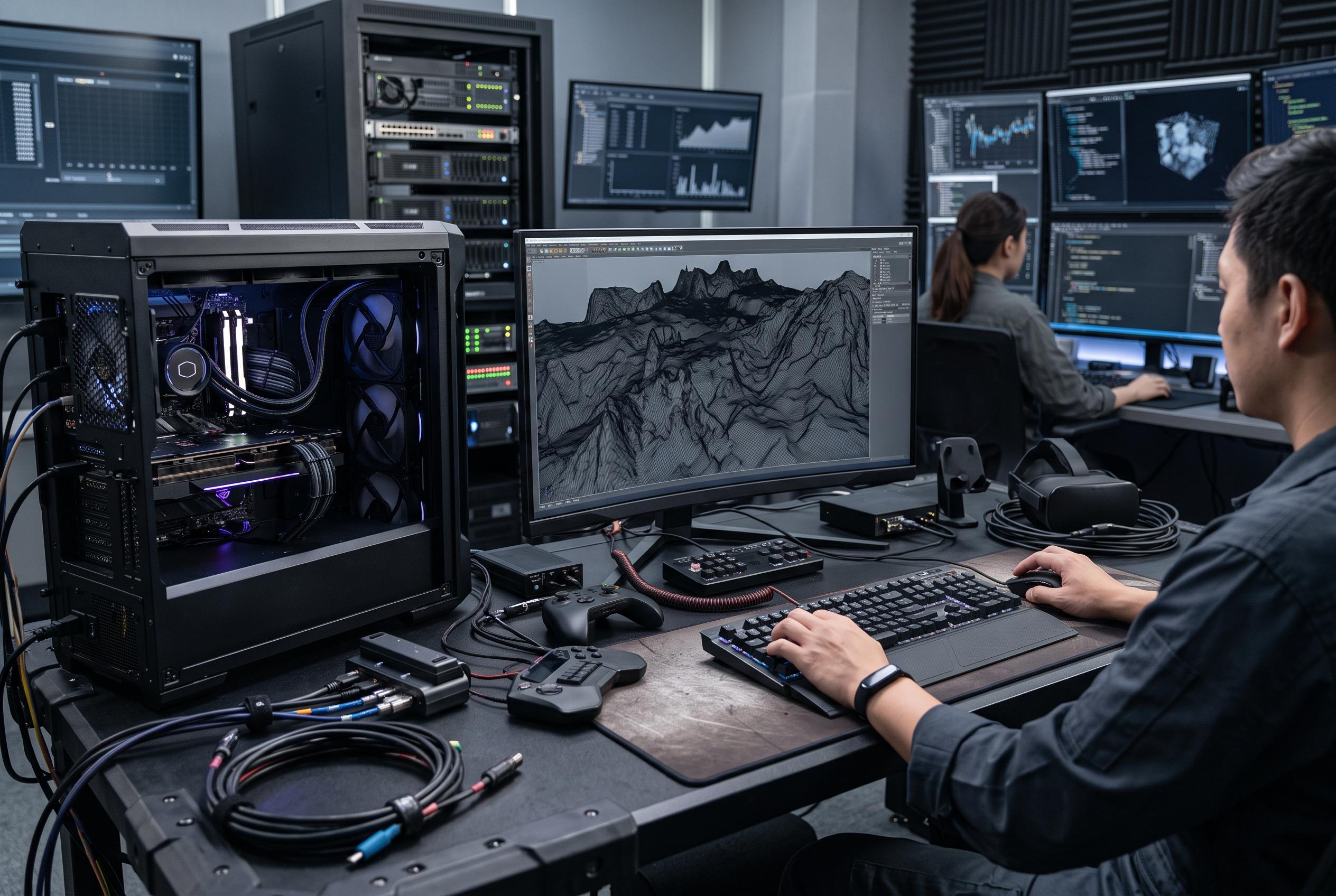
Game studios are using generative AI to speed up research, prototyping, coding, and routine production tasks, but human judgment still drives the final experience. That matters for developers and players alike, as new tools promise faster workflows while raising familiar questions about originality, quality, ownership, and the real cost of automation.
AI is speeding up the boring parts of game making
The most convincing use of generative AI in game development isn't a machine producing a finished blockbuster. It's the quieter work between big creative decisions, where teams need rough options, quick references, or help clearing a technical bottleneck.
According to the 2026 State of the Game Industry report, 36% of more than 2,300 respondents said they used generative AI at work. Research and brainstorming were the most common applications, followed by administrative duties and coding assistance. Prototyping also featured prominently, suggesting that many teams see AI as a way to test ideas before investing heavily in them.
That distinction is important. A generator might suggest a texture, draft a small script, or help create placeholder animation, but somebody still has to decide whether the result belongs in the game. The output may be fast, yet it can also feel generic, inconsistent, or oddly polished in the wrong places.
Why replacing developers is a flawed shortcut
The industry's caution is easy to understand. Games are built from thousands of connected choices, and a technically functional asset can still clash with a game's tone, art direction, or systems.
The boss of Warhorse Studios, the developer behind Kingdom Come: Deliverance 2, argued that using AI to replace game developers is fundamentally misguided, according to GamesRadar. The criticism reflects a broader concern: reducing development to a set of automatable tasks overlooks the experience, taste, and collaboration needed to turn separate pieces into a coherent world.
CreativeBloq offered a different but related perspective in its coverage of an indie game made without generative AI, but featuring substantial contributions from real people and creators. That approach underlines a growing appetite for visible human authorship, particularly as players become more curious about how their entertainment is made.
For players, the result may be less dramatic than the marketing suggests. AI could mean faster iteration behind the scenes, but it doesn't automatically mean better characters, sharper writing, or more memorable worlds.
Project-aware tools bring AI closer to the editor
A general chatbot has limited knowledge of a studio's current build. A tool embedded in a game engine can be more practical because it may understand scenes, components, packages, scripts, and target platforms.
Unity's documentation describes systems that can assist with asset creation, code, troubleshooting, and automation inside the editor. That context can save developers from explaining the same project details repeatedly, which is a small convenience that becomes significant across a long production cycle.
Still, context isn't the same as understanding. Developers must review suggested code, test changes, check dependencies, and make sure a quick fix hasn't created a quiet problem elsewhere. In a live project, one seemingly harmless shortcut can produce a very unglamorous chain reaction.
Player-facing AI adds another layer. NVIDIA's ACE tools are designed for conversational characters, interactive assistants, and autonomous allies or enemies, but a language model alone can't deliver a convincing game character. Speech, animation, retrieval systems, safety controls, latency, and deployment all affect whether the experience feels responsive or strangely wooden.
The hidden bill behind an AI-powered demo
Generative AI can reduce some forms of friction, but it doesn't make experimentation free. Tom's Hardware reported that a free Steam demo was generating an AI bill of around $1,000 per day, forcing its developers to take out a bank loan.
That example is a useful reality check for studios and hobbyists. Every player interaction can carry a cost when a game relies on cloud-based models, especially if a demo attracts more attention than expected. A successful launch can therefore create an awkward problem: popularity arrives first, while the infrastructure bill follows close behind.
It also explains why many teams are weighing local models, stricter usage limits, cached responses, or more traditional scripted systems. The best approach may be a hybrid one, using AI where it adds variety or saves time, then relying on predictable systems for everything that needs to be affordable, stable, and easy to test.
Developers are debating value, not just novelty
The enthusiasm around generative AI has been matched by unease. The 2026 industry survey found that 52% of respondents believed the technology was having a negative effect on the games business, while only about 7% viewed its impact positively.
Concerns span copyright, training data, bias, energy consumption, job security, and the ownership of creative work. GamesRadar also reported remarks from Hideo Kojima questioning the idea that asking AI to reproduce an existing game makes someone a creator. The point lands because imitation is not the same as authorship, no matter how quickly a system produces a familiar-looking result.
For consumers, the practical lesson is to look beyond the word AI. Check whether a studio explains how the tools were used, whether real developers shaped the final work, and whether the result feels considered rather than merely generated. Meanwhile, when buying games or entertainment credit, official stores and reputable digital marketplaces remain the safer route, with platform and regional compatibility checked before purchase.
The likely future is supervised, not fully automated
Generative AI is settling into game development as a support layer. It can help teams move from blank page to rough idea, reduce repetitive coding, and make project information easier to navigate, but it still depends on people to set direction and spot mistakes.
That may be less flashy than the promise of instant game creation, yet it sounds more plausible. The strongest studios are likely to treat AI as one tool among many, alongside designers, programmers, artists, writers, testers, and producers who know when a shortcut is useful and when it simply makes more work later.
The future of AI in game development will probably be judged not by how much it can generate, but by whether it helps teams make better games without losing the human details players remember.
It's a faster workflow only when people remain firmly in control.
Disclaimer: This article may have been created with AI assistance and reviewed by our editorial team. It is provided for general informational purposes only. Readers should verify information independently before relying on this content.
