
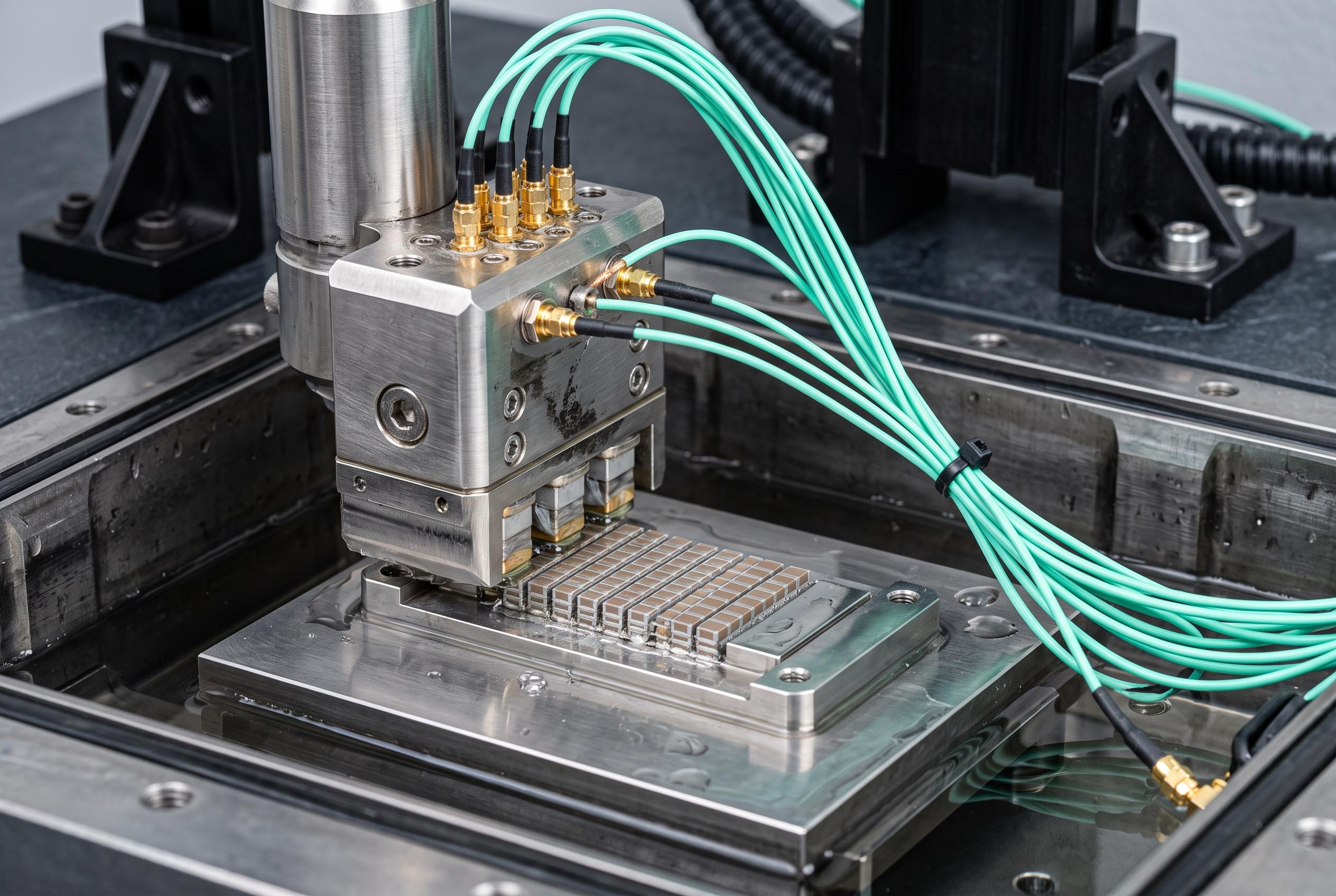
Manufacturers are watching Hanwool Semiconductor’s AI MLCC inspection equipment as demand rises for high-capacity components used in AI servers and data centers. The South Korean company says its production lineup now spans surface inspection, ultrasonic non-destructive testing, measurement, and precision mounting, with faster screening designed to protect quality as components become smaller and more densely layered.
AI Servers Are Driving a New MLCC Quality Race
The strongest force behind Hanwool Semiconductor's push is simple: AI servers need more components, and those components have to work reliably under intense operating conditions. Industry reports cited by TechNewsReel and other technology outlets point to a global MLCC market expected to expand from about $15 billion last year to roughly $21.9 billion by 2030.
An AI server mainboard may carry around 12,000 MLCCs, compared with approximately 6,500 in more conventional systems. That nearly doubles the number of potential failure points, making a fast and accurate inspection line more than a convenience. It becomes a core part of manufacturing economics.
For equipment makers, the challenge is familiar but unforgiving. Components are getting smaller, layer counts are rising, and defects hidden inside the ceramic structure can be difficult to identify with a simple camera. A tiny flaw can have an outsized effect once thousands of parts are working together.
Six Cameras Give Tiny Components a Full Check
Hanwool's headline system uses six cameras to view every exterior surface of an MLCC. Its software looks for cracks, chipped corners, and plating defects, then separates accepted and rejected parts using air jets. The process is quick enough to feel almost invisible on a busy production line, but the inspection is doing detailed work at miniature scale.
The company says the system can process more than 13,000 0603-size components per minute and achieve 98 percent defect-detection accuracy. Hanwool has also said it aims to raise throughput to about 15,000 units per minute before the end of the year, according to coverage from Asiae and TopDaily.
That combination of speed and coverage matters because inspection can easily become a bottleneck. A machine that spots defects accurately but slows production may frustrate operators, while a fast system that misses flaws can create expensive downstream problems. The useful middle ground is rapid screening that doesn't force quality teams to choose between volume and confidence.
Ultrasonic Testing Looks Beneath the Surface
Visual inspection can reveal a damaged edge or faulty electrode coating, but it can't see everything. Hanwool's ultrasonic non-destructive inspection equipment is intended to identify internal delamination, microscopic cracks, and distortion between ceramic layers without breaking the component apart.
The principle is straightforward. Ultrasonic signals pass through the MLCC, and the system analyses how those signals travel and reflect inside it. Changes in the pattern can indicate hidden structural problems. Hanwool says its parallel ultrasonic measurement design improves processing speed, an important detail for factories that need internal testing to keep pace with external inspection.
The technology is particularly notable because Japanese suppliers have traditionally held a strong position in this category, according to reports from Semipulse and Chosun Biz. Domestic alternatives could give South Korean manufacturers more sourcing flexibility, although real-world adoption will ultimately depend on long-term accuracy, uptime, and service support.
One Platform Connects Inspection With Factory Control
The equipment lineup is tied together by HaWAIe GateLink, Hanwool's inspection and control solution. It links the inspection hardware with AI-based decisions, then coordinates the precise removal of defective components. In practical terms, that means the system isn't just identifying a bad part; it's helping ensure the right part is removed at the right moment.
The platform also includes predictive-maintenance capabilities. By monitoring equipment behaviour, it is designed to flag potential problems before a breakdown stops production. That could be especially valuable in high-throughput facilities, where even a short interruption can disrupt schedules and create costly backlogs.
The broader trend is clear: factory automation is moving away from isolated machines and toward connected systems. As Asiae reported, Hanwool plans to expand the platform's use across MLCC production equipment. For manufacturers, that kind of shared control layer may eventually be as important as the cameras and sensors themselves.
What Manufacturers Should Watch Next
Hanwool's all-in-one approach gives it a distinctive pitch. Instead of supplying only a visual inspection machine, the company says it can cover the post-processing chain from appearance checks and internal testing to measurement and precision mounting. That could simplify integration for customers building or upgrading MLCC lines.
Still, headline specifications aren't the whole story. Buyers will want to examine false-rejection rates, maintenance requirements, software compatibility, training, and performance across different MLCC sizes. The fastest machine on paper isn't necessarily the best fit if operators find it difficult to tune or if service response is slow.
Hanwool's next test will be turning its reported capabilities into repeatable factory results. If it can maintain accuracy while increasing throughput, its technology could become increasingly relevant as AI infrastructure expands. For the people running those lines, the goal is refreshingly practical: fewer hidden defects, less downtime, and a steadier flow of tiny components.
A small ceramic capacitor may not look dramatic, but in an AI server, reliability starts with details this small.
Disclaimer: This article may have been created with AI assistance and reviewed by our editorial team. It is provided for general informational purposes only. Readers should verify information independently before relying on this content.
