
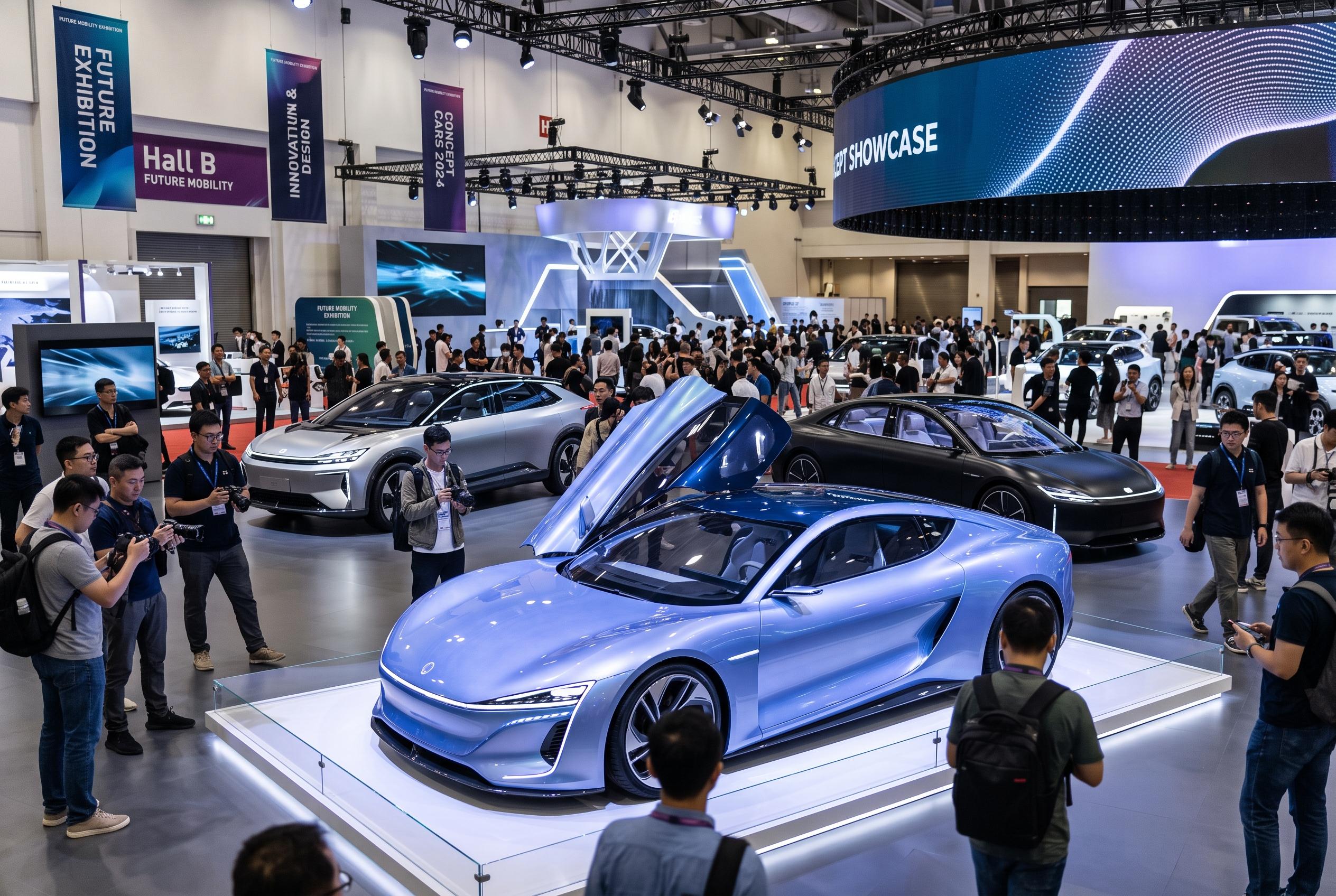
- Observing details like cabin accessibility and surface finishes can reveal how close a concept is to production
- Differentiating visionary concepts, prototypes, and previews helps understand development stages
- Event formats and visitor interactions provide clues about automakers' strategic intentions
Auto shows these days are really no longer just platforms for revealing good-looking sheet metal. For manufacturers and suppliers, they’ve kind of become battlefields where strategy, engineering discipline, and product timing are displayed right alongside styling. The real challenge for visitors is figuring out how to tell pure spectacle from clues that hint at future production models, looking at details like how a vehicle is packaged, the software it runs, materials used, and how the brand frames the car’s role within its broader mobility vision. According to ConceptCarz, this change reflects how concept cars are now used not just to test reactions to new ideas but also to signal where an automaker is heading.
Concept vehicles tend to fall into different levels of maturity, superimposed on a sort of spectrum. Industry insiders describe visionary concepts as long-range ideas with the freedom to experiment with shape and interior layout, so, basically, it’s a broad playground. On the other end, advanced prototypes are much closer to actual production vehicles, often equipped with working parts and architecture that’s believable and practical. Design previews generally aim to give us a glimpse, an early look at what an upcoming model's styling might be, so there's a clear distinction there. That difference really matters because, as a vehicle gets closer to hitting the production line, more things like crash structures, aerodynamics, homologation rules, and interior interfaces tend to already be aligned with industrial standards.
But there are other signals, less obvious perhaps, but often even more telling. Experts suggest that keen observers should keep an eye out for details such as accessible cabins, seals that seem production-ready, realistic glass thickness, finishes that can be duplicated, and controls that seem designed with regulation compliance in mind, rather than just fantasy. On the digital front, the pace of the user interface, the quality of graphics, and the integration of voice commands or driver-assistance tech can really reveal how far along software development is. When a stand features branded platforms, familiar suppliers, charging demos, or detailed ADAS explanations, it often indicates that the project is well into a serious industrial pipeline, so that kind of stuff is worth noticing.
The entire format of the auto show itself can actually tell us quite a bit, maybe just as much as the cars on the pedestal. Reports on how the industry is evolving note that many shows have morphed into hybrid mobility forums. They now mix immersive installations, tech zones, training sessions, and co-design workshops, making the event less about just cars and more about connected services, over-the-air updates, infotainment ecosystems, and energy solutions. For suppliers, this is big because it hints at where new contracts could be headed, whether in software, charging infrastructure, interfaces, sensors, or materials. It’s a shift that really signals new opportunities, and that’s valuable insight.
And then, of course, how visitors interact really is among the clearest indicators of a manufacturer’s true intentions. Long lines for cabin access, guided demos with engineers, questionnaires, active feedback sessions, these all suggest a company is serious about moving beyond just applause. Meanwhile, if a display remains locked behind glass, just a static piece, that typically points to exploration rather than an imminent launch. The best approach for buyers, suppliers, and strategists? Think of each exhibit as a puzzle piece; the more technical, regulatory, and industrial signals that line up, the more likely it is that the concept could turn into a real program, instead of just a branding exercise. It’s a subtle but important way to interpret the bigger picture.
Key Takeaways
The most useful way to read an auto show is to look beyond the first visual impression. Styling attracts attention, but production intent is often revealed through less dramatic details. A cabin that can be entered easily, components that appear serviceable, and surfaces that seem suitable for repeat manufacturing can all suggest a greater level of development. These clues do not guarantee that a vehicle will reach the market, but they can help distinguish a practical preview from a highly experimental design exercise.
The distinction between a visionary concept, an advanced prototype, and a design preview is also important. Each serves a different purpose. A visionary concept may explore a distant possibility without being constrained by today’s manufacturing or regulatory requirements. An advanced prototype can demonstrate a more credible technical package, while a design preview may focus primarily on communicating the appearance of a future model. Visitors who understand this spectrum are less likely to treat every concept as an imminent product announcement.
Technology deserves equal attention. Displays involving mobile connectivity, voice controls, driver assistance, charging, software platforms, and over-the-air services can indicate that an automaker is thinking about the vehicle as part of a larger digital and energy ecosystem. This matters not only to consumers but also to electronics companies, software developers, logistics providers, charging businesses, and other potential partners. In that sense, the auto show can function as an early map of future sourcing and collaboration priorities.
The surrounding presentation can provide another layer of information. A vehicle accompanied by engineering demonstrations, supplier references, technical explanations, or structured feedback opportunities may be part of a more deliberate development process. By contrast, a display focused almost entirely on spectacle may be intended mainly to shape brand perception or invite broad public discussion. Neither approach is necessarily more valuable, but they communicate different levels of commitment.
For consumers, these observations can make show visits more informative. Instead of asking only whether a concept looks exciting, visitors can consider whether its features appear usable, manufacturable, compliant, and supported by a credible software experience. They can also pay attention to how the brand describes the vehicle’s role in everyday lifestyle, mobility, ownership, and energy use.
For industry observers, the same method can reveal possible areas of growth. If several exhibits emphasize connected electronics, battery systems, digital interfaces, charging, materials, or mobility services, those themes may point toward changing priorities across the sector. They may also suggest where suppliers should focus research, sourcing relationships, production capabilities, and logistics planning.
Ultimately, no single clue is decisive. A polished interface could still be a demonstration, and a practical-looking prototype could still be cancelled. The strongest interpretation comes from combining signals: physical realism, software maturity, supplier participation, regulatory awareness, visitor engagement, and the broader story presented by the manufacturer. Auto shows remain places for imagination, but they are increasingly also places where industrial direction becomes visible.
Disclaimer: This article may have been created with AI assistance and reviewed by our editorial team. It is provided for general informational purposes only. Readers should verify information independently before relying on this content.
Sources:
