
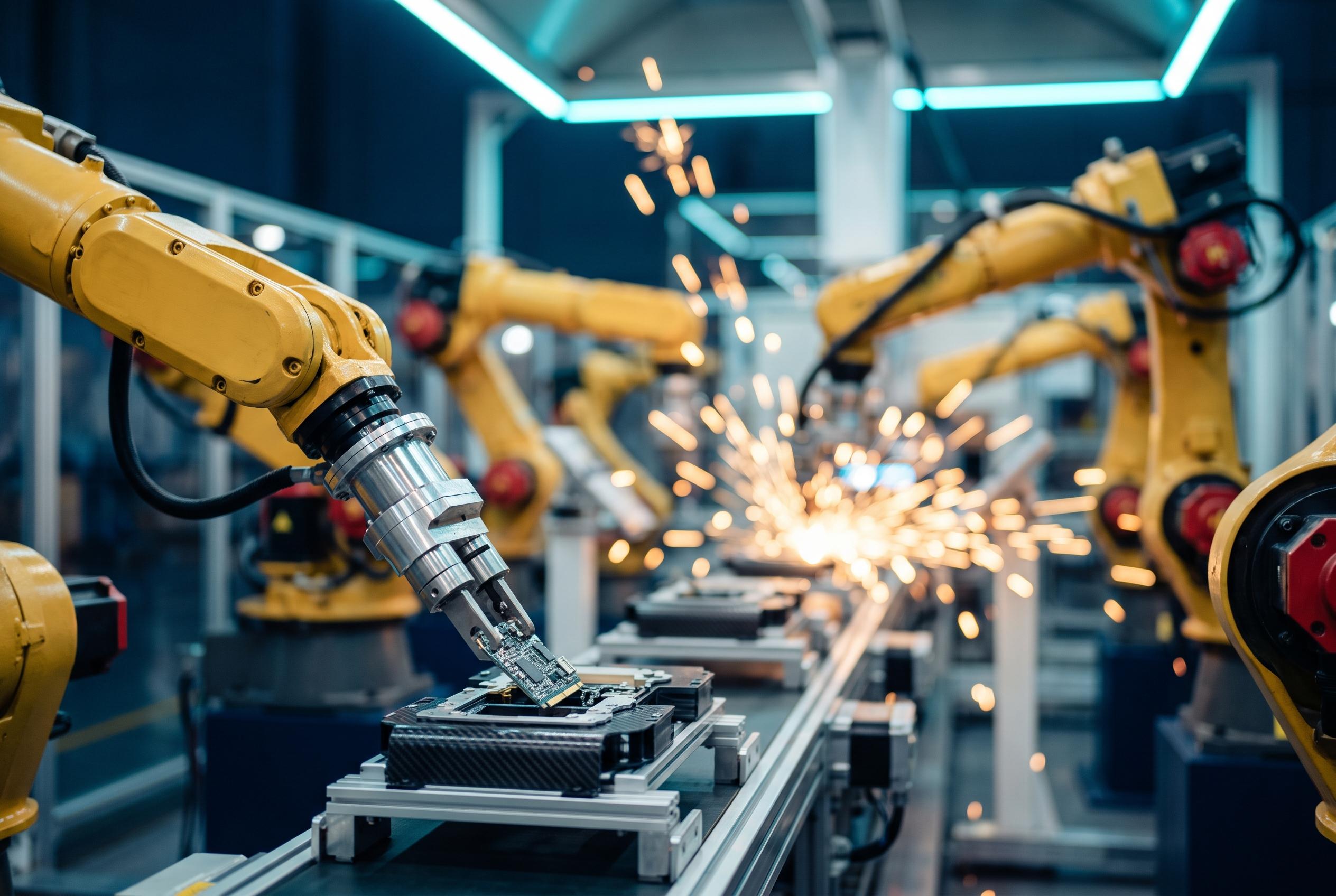
China's industrial robot market is accelerating, with 354,000 machines installed in 2025, giving the country 59 percent of global installations. The surge reflects factory modernization, workforce pressures, strong domestic manufacturers, and national policies designed to move robotics into more industries. For businesses and workers alike, the shift signals a faster, broader automation race.
Essential Takeaways
- - Record-setting scale: China installed 354,000 industrial robots in 2025, up 20 percent year over year.
- - Global dominance: The country accounted for 59 percent of industrial robot installations worldwide.
- - Beyond car factories: Demand is expanding into sectors that have historically used less automation.
- - Policy meets pressure: Industrial modernization, demographic change, and government strategy are all pushing adoption.
- - A maturing home market: Chinese robotics companies are becoming more competitive and winning a larger share of domestic business.
China Just Set Another Robotics Record
China's factories added 354,000 industrial robots in 2025, according to figures from the International Federation of Robotics reported by several industry publications. That's roughly 60,000 more machines than the country's previous annual record, a remarkable jump for a market that was already the world's largest.
The scale is easier to grasp in global terms: China represented 59 percent of all industrial robot installations during the year. As Reporter World News noted, the gap between China's market and other major robotics economies has widened considerably. The factory floor is no longer a distant testing ground for automation; in China, it has become the main event.
Why Are Chinese Companies Buying So Many Robots?
The answer isn't simply that manufacturers want faster production. According to the IFR's secretary general, Susanne Bieller, industrial modernization, changing demographics, and national policy are working together to lift demand.
Manufacturers are also facing pressure to produce more consistently while managing labor shortages and rising expectations around efficiency. Robots can handle repetitive, precise tasks without tiring, which makes them especially attractive in busy production environments where a quiet mechanical arm may be more dependable than a constantly changing workforce.
The result is a broad commercial push rather than a single-industry boom. Automotive manufacturing remains an important customer, but the next wave of growth is expected to come from industries that have been slower to automate.
Domestic Robotics Firms Are Gaining Ground
China's robotics story isn't only about the number of machines installed. It's also about who makes them. Bieller said Chinese companies have become increasingly competitive over the past decade, while their share of the domestic market has risen sharply.
That matters because a strong local supply chain can make automation easier to finance, install, maintain, and customize. Businesses may be more willing to experiment when equipment and technical support are readily available nearby, rather than relying entirely on overseas suppliers.
Industry reports from Robot Today and La Merce likewise highlight the significance of China's installation figures. Together, the numbers suggest a market moving from early adoption toward a deeper ecosystem, with manufacturers, software developers, integrators, and factory operators all becoming more closely connected.
The Next Growth Spurt May Come Outside Automotive
Automotive plants are often the visual shorthand for industrial automation, filled with robotic arms welding, painting, and assembling vehicles. But China's biggest opportunity may lie elsewhere.
Bieller pointed to substantial potential in industries that have not invested in automation at the same level as carmakers. That could include electronics, logistics, food processing, metals, and other manufacturing operations where repetitive handling or quality control can be improved with machines.
For companies considering industrial robots, the practical question isn't whether automation is fashionable. It's whether a specific task is repetitive, hazardous, difficult to staff, or expensive to perform inconsistently. Starting with one well-defined process can be more sensible than attempting a dramatic, factory-wide transformation overnight.
Policy Is Helping Turn Robotics Into Infrastructure
China's national strategy is another major part of the story. The country's industrial policies are designed not just to encourage robot production, but also to identify sectors where automation could deliver the greatest economic benefit.
That approach can speed up adoption by giving businesses clearer direction and by encouraging investment in the technologies needed to support robots. The IFR's global reporting also places China's rise within a wider expansion: millions of industrial robots now operate in factories around the world, according to the federation's latest industry updates.
Still, policy alone can't guarantee success. Robots need trained operators, reliable software, safe workflows, and sensible return-on-investment calculations. The most convincing deployments will be the ones that make work safer and production smoother, rather than simply adding expensive machinery for show.
What China's Lead Means For The Global Market
China's dominance will put pressure on robotics companies everywhere to compete on price, capability, integration, and after-sales service. It could also accelerate innovation as manufacturers learn from one of the world's largest and most demanding automation markets.
For workers, the outlook is more complicated. Automation may reduce demand for some repetitive roles, but it also increases the need for technicians, programmers, maintenance specialists, and managers who understand how people and machines can work together. That transition won't feel equally comfortable in every factory.
The bigger takeaway is that robotics is becoming less of a niche technology and more of a basic industrial tool. China's latest figures show just how quickly that change is unfolding.
China's robot boom is reshaping factories today and setting the pace for automation tomorrow.
Disclaimer: This article may have been created with AI assistance and reviewed by our editorial team. It is provided for general informational purposes only. Readers should verify information independently before relying on this content.
