
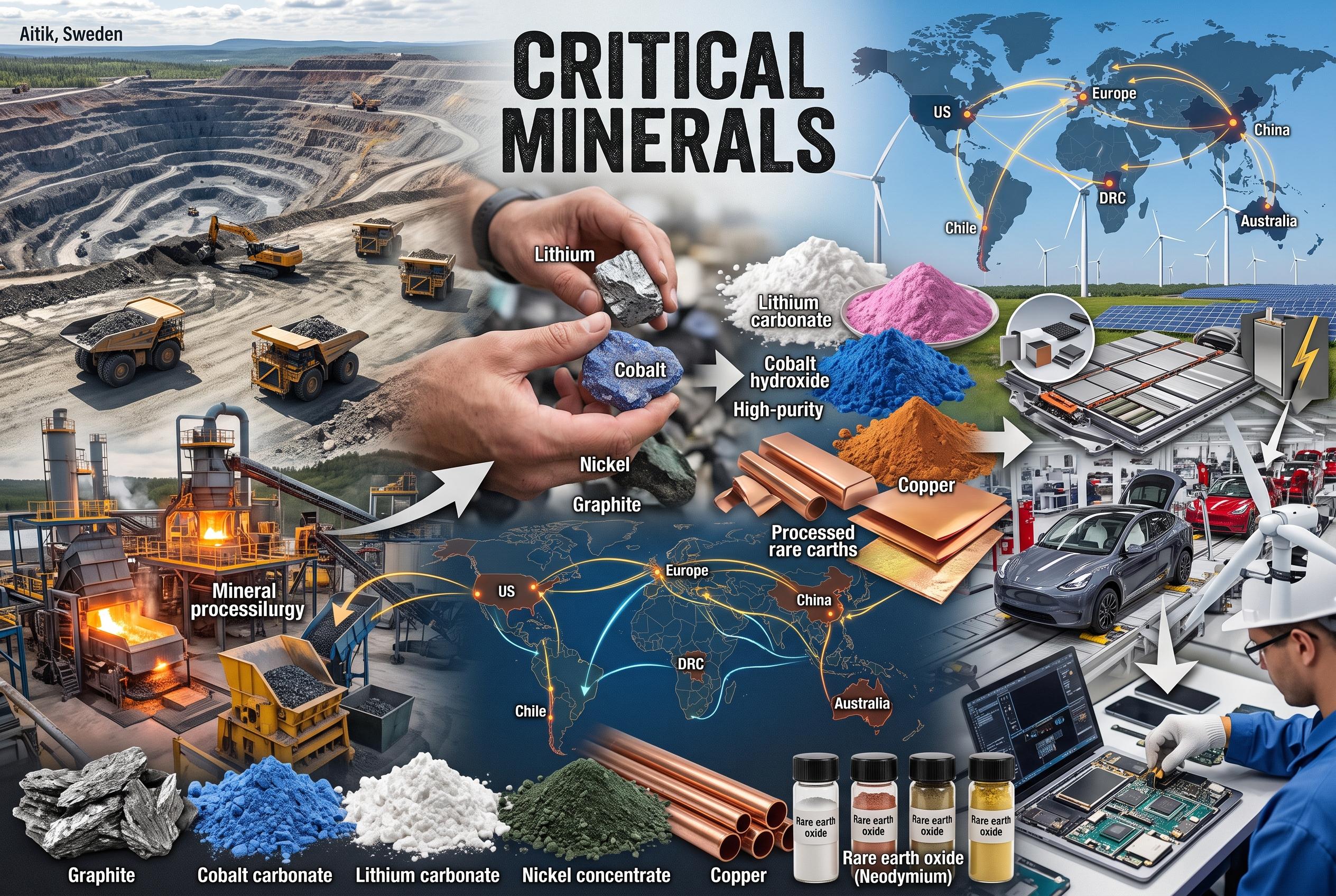
- Indonesia seeks strategic partnerships with Latin America and the Caribbean to bolster critical minerals processing.
- Focus on value-added processing, midstream investments, and technological cooperation in mining.
- The upcoming Santiago mission aims to foster regional energy and mining collaborations.
Indonesia Looks to Build Critical-Mineral Partnerships with Latin America and the Caribbean
Indonesia is ramping up efforts to link its mineral-rich economy with Latin America and the Caribbean. The goal is to forge partnerships that could shape the way critical minerals are mined, processed, traded, and ultimately used in higher-value industries throughout emerging markets. It’s quite an ambitious move, and it seems like Indonesia wants to influence more than just raw material exports.
Last Monday, during a briefing in Jakarta, Grata Endah Werdaningtyas, who’s the director general for American and European affairs at the Foreign Ministry, mentioned how Indonesia naturally considers Latin America and the Caribbean as good partners. Both regions are heavy hitters when it comes to supplying raw materials, which makes them prime candidates for collaboration in mining, processing, electronics, clean-energy tech, and related supply chains.
This effort reflects a bigger shift happening all over the world. Countries aren’t just focusing on extracting resources anymore. There’s a growing emphasis on refining, manufacturing, and making sure logistics networks are solid between producers and industrial markets. For Indonesia, it’s about transforming their domestic mineral resources into a stronger industrial base instead of just exporting unprocessed ore.
Building partnerships around critical minerals
This diplomatic push comes at a time when the International Energy Agency (IEA) describes Latin America and the Caribbean as key sources of lithium, copper, silver, and graphite, crucial materials for the energy transition and advanced manufacturing.
According to the IEA’s 2026 forecast, the region holds sizeable shares in global production and resources, reinforcing its importance in supply chains that support batteries, renewable energy systems, and high-tech industries. It’s clear that these resources are becoming even more relevant to sectors dependent on secure mineral access. Think about batteries, electronics, smartphones, and green energy equipment, all require complex, tightly connected supply chains linking mines, processing facilities, manufacturers, and consumers. So, where a country fits into these chains, well, that’s more important than ever after the initial extraction.
Indonesia isn’t just interested in raw materials anymore. Their focus on Latin America and the Caribbean signals a desire to promote value-added processing, midstream investments, and technical cooperation in mining and clean-energy tech. They want a more integrated approach, where countries work together across multiple stages of the supply chain, not just raw extraction. You see, partnerships that emphasize processing and industrial development can be especially beneficial for emerging markets. They’re a way to share industrial expertise, attract investments, and promote technological development, finally spreading economic activity beyond just mining.
Indonesia’s downstreaming plan
In Indonesia’s case, all this talk fits into a broader plan to move away from just exporting unprocessed ore, aiming to add more value locally. The country controls a major chunk of the world’s nickel reserves, and they’ve already used export restrictions to push investments into refining and battery-materials production domestically.
This approach, often called downstreaming, is about ensuring that mineral resources fuel domestic industries too, rather than only leaving with raw exports. They want to turn natural resources into jobs, higher productivity, and more global competitiveness. And honestly, this strategy has already attracted some capital. But, of course, there are hurdles, regulations, environmental concerns, and supply chain complexities, because moving downstream isn’t just about having reserves. It depends heavily on investment, infrastructure, skilled workforce, consistent rules, and reliable logistics.
Refining and processing minerals here alters the economic landscape, but it also shifts responsibilities onto the country, more sophisticated industrial systems are required. Companies and governments need to coordinate investments, tech, transport, and market access. And as activity in processing grows, environmental and regulatory questions tend to pop up more often.
So, Indonesia’s model could be a model for its Latin American and Caribbean partners, but it’s probably more than just exchanging commodities. Their main focus, value-added processing, midstream tech, and technical cooperation, points to a holistic industrial partnership.
Eyes on Brazil and Chile
Jakarta officials are now eyeing Brazil and Chile as key partners to extend Indonesia’s downstreaming model. The ministry explains that their plan includes processing with added value, midstream investments, and joint tech efforts in mining and clean energy. The emphasis, really, is on those middle steps, refining, converting, and preparing materials for industrial use.
That midway stage is crucial because it’s where raw materials start gaining extra economic worth. The process paths for batteries, electronics, and green energy gear often involve multiple processing phases. Collaborating during those stages could help producers ramp up their manufacturing skills and become more competitive in global supply chains.
Indonesia also has vast reserves of cobalt, bauxite, tin, copper, and rare earth elements, which broadens their industrial ambitions beyond just nickel. These resources offer new avenues for cooperation focused on sourcing, processing, and trading minerals, especially with countries eager to improve how they handle this critical stuff.
All in all, their goal is to turn mineral riches into jobs, productivity, and stronger international standing. Because, at the end of the day, the materials that power our phones, electric cars, and solar panels are all part of a long chain that starts with extraction and needs efficient processing, manufacturing, and distribution.
For Indonesia, ramping up participation in these critical supply chains could connect their abundant resources with more profitable sectors. For Latin American and Caribbean nations, this kind of cooperation might open doors to industrial development, technology sharing, and better resource management. Neither side’s outcomes are set in stone, but it’s clear they’re exploring ways to tap into more of the value created after mining.
The Santiago business mission
The next big step is the Indonesia-Latin America and Caribbean Business Mission scheduled for October 1–2, 2026, in Santiago, Chile. The ministry says it will feature an energy and mining forum, giving Indonesian companies a chance to showcase partnership opportunities to regional counterparts, highlighting the commercial side of this diplomatic effort.
It’s meant to be a platform for meaningful discussions around energy and mining, emphasizing that this relationship isn’t just about government diplomacy but also about real business collaboration. They want to look at investments, processing opportunities, and technical capabilities, that kind of stuff.
Connecting companies directly is vital because government policies can set the scene, but real collaborations happen when businesses find projects and partners themselves. The big question for both regions: how to shift from just producing resources to creating fully integrated value chains. That could mean talking about processing capacity, investments in midstream tech, mining innovations, and green energy applications, all in one go. Logistics, too, how to transport materials efficiently between distant markets.
Choosing Santiago as the venue makes sense, since Chile is one of the Latin American countries Indonesia is eager to partner with. It’ll be a chance for Indonesian companies and regional counterparts to get together and explore specific opportunities within energy and mining.
A broader shift for emerging-market supply chains
Indonesia’s outreach to Latin America and the Caribbean isn’t just a one-off thing; it’s part of a wider effort by emerging markets to take more control of critical-minerals supply chains. Countries that export raw materials often have limited gain, an issue Indonesia’s downstreaming policy is trying to address by pushing to develop local refining and battery materials industries. Their plan to cooperate with Latin American and Caribbean nations extends that idea beyond their own borders.
The focus on value-added processing also underscores how minerals are now deeply linked with advanced manufacturing. Lithium, copper, silver, graphite, nickel, cobalt, bauxite, and rare earths, these materials are essential for batteries, electronics, renewable energy tech, and mobile gear.
However, developing these resources isn’t just about opportunity, it comes with challenges: regulations, environmental impacts, supply chain complexities. Building lasting partnerships depends on more than just attracting capital; it requires a stable policy environment and infrastructure.
This upcoming Santiago mission will be another chance for companies and officials alike to explore how to strengthen these supply chains, emphasizing partnership opportunities and capturing more value post-extraction. Indonesia’s approach is both diplomatic and industrial: promote closer ties with resource-rich countries, while advancing a processing-focused, investment-driven economic model. Meanwhile, Latin America and the Caribbean are being seen as key strategic partners in a changing global mineral landscape.
Frequently asked questions
Why are critical minerals important?
Critical minerals are essential inputs for batteries, electronics, renewable-energy systems, electric vehicles, and other advanced technologies. Reliable access to these materials is increasingly important for industrial competitiveness and supply-chain security.
What does Indonesia’s downstreaming strategy mean?
Downstreaming refers to processing raw minerals domestically before export or further manufacturing. The strategy aims to create more local value through refining, industrial development, employment, and technology transfer.
Why are Brazil and Chile potential partners?
Brazil and Chile are significant resource-rich economies in Latin America. Cooperation could cover mineral sourcing, processing, clean-energy technology, investment, and logistics.
What could the Santiago business mission achieve?
The October 1–2, 2026, mission is expected to connect Indonesian and regional companies through an energy and mining forum. It could help identify investment opportunities and encourage practical partnerships across critical-mineral supply chains.
Disclaimer: This article may have been created with AI assistance and reviewed by our editorial team. It is provided for general informational purposes only. Readers should verify information independently before relying on this content.
Sources:
