
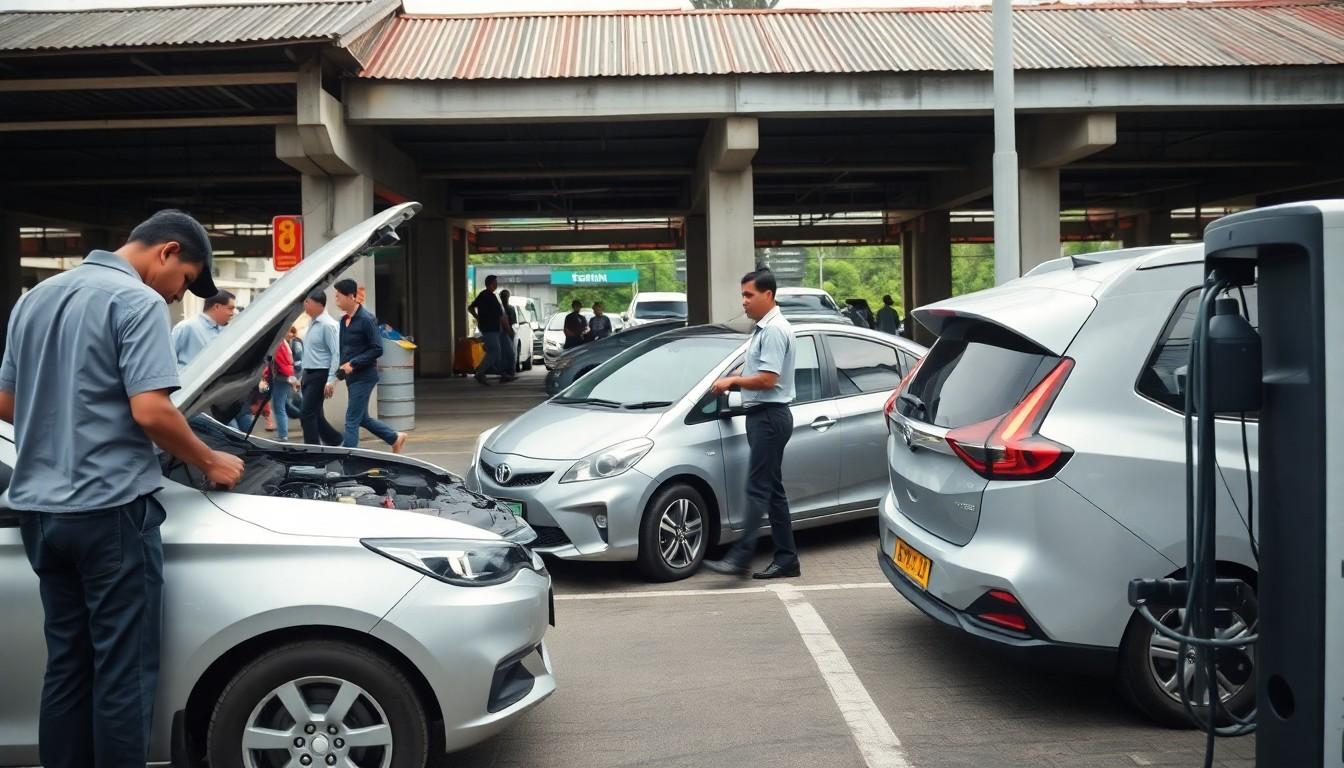
- Indonesia’s large ICE vehicle fleet sustains steady aftermarket demand
- EV adoption is gradual, concentrated in major cities, with hybrids emerging
- Astra Otoparts develops a dual approach in manufacturing, charging infrastructure, and international partnerships
Indonesia’s Automotive Shift Creates a Two-Path Opening for Astra Otoparts
Indonesia’s car market is going through quite a slow change rather than a complete departure from its reliance on internal combustion engines. That gradual shift is influencing how PT Astra Otoparts Tbk is positioning itself, trying to benefit both from existing vehicle technologies and from the slowly growing electric vehicle (EV) scene.
Based on a discussion between Messe Frankfurt and President Director Yusak Kristian Solaeman, Astra Otoparts is still serving Indonesia’s big fleet of internal combustion engine (ICE) vehicles, but is also expanding its involvement in EV parts, charging stations, and partnerships with manufacturers abroad.
This approach really mirrors how Indonesia’s mobility landscape is structured. EVs are gaining some ground, especially in major cities, but traditional vehicles still dominate daily transport and the country’s broader automotive scene. For Astra Otoparts, that’s not just about replacing one technology with another, but also about pulling together services for the aftermarket, parts production, distribution, and new-energy infrastructure.
Their game plan is built around two interconnected markets. The first is the familiar world of replacement parts and maintenance. The second is the fresh and upcoming market for EV components, charging stations, and localized manufacturing. These two areas give a solid base for future growth, especially as vehicle ownership, consumer preferences, and technology keep changing.
Big Vehicle Fleet Keeps Demand for Repairs Alive
Indonesia’s still one of Southeast Asia’s key automotive markets. The economy there has been growing steadily at around 5 percent annually, and vehicle ownership, although still low compared to several more mature ASEAN markets, leaves room for long-term expansion. But at the same time, the current fleet of vehicles remains a major player.
Astra Otoparts estimates that over 11 million vehicles sold in Indonesia in the last 12 years are still on the road today. That huge number means there’s a robust market for replacement parts for both two-wheelers and four-wheel vehicles. As these vehicles stay in service, owners need regular maintenance, repairs, and spare parts, which keeps demand steady even without new vehicle sales.
The company was founded in 1976 and now operates through two main business segments, manufacturing and trading, with 55 entities and business units, and employs over 30,000 people, according to its own information. Its size gives Astra Otoparts a broad reach across the automotive value chain, from production and distribution to retail and aftermarket support.
This focus on the existing vehicle fleet is especially important right now, as new vehicle technologies are emerging. Even with the rise of electric models, ICE vehicles aren’t disappearing overnight. Their still-large number and age in Indonesia give Astra Otoparts a reliable source of demand while it also builds capabilities for the evolving mobility landscape.
Aftermarket Remains Key to the Business
Astra Otoparts is increasingly focusing on the aftermarket, where aging vehicles still generate regular needs. In urban Indonesian settings, the vehicle market averages around 10 to 14 years old. Out on the islands, vehicles can remain in use for up to 20 years. These differences reflect the varied conditions and needs across the country.
This creates a wide and diverse customer base for maintenance and replacement parts. Owners may want products and services well after they’ve bought their vehicles, especially since many keep using the same car or motorcycle for years and years.
Their aftermarket network includes Astra Otoservice workshops and the Shop&Drive retail chain. Plus, they operate a broader supply system with regional hubs, dealers, and local parts shops. This network links production and distribution with customers all over Indonesia.
Logistics is especially vital in a country made up of over 17,000 islands. Moving parts around depends not just on how much they can produce but also on distribution channels that can effectively transport products to regional hubs and dealers. A strong supply chain helps Astra Otoparts handle different demands, from big cities to more remote areas where vehicles tend to remain in service longer.
The aftermarket also helps the company maintain a direct connection with vehicle users. Through its workshops, retail locations, and parts distribution, Astra Otoparts stays tuned to customer needs and keeps its foothold in the traditional ICE market.
The Electrification Path Is Slowly Unfolding
At the same time, Astra Otoparts is expanding its role in EVs via Astra Otopower, its EV charging network. Building out charging stations helps establish a presence in this part of the mobility ecosystem, but it also gives the company insight into how customers are using EVs.
Mr. Yusak shared that data from these charging points is helping shape the company’s understanding of customer behavior and market trends. These patterns can help Astra Otoparts better understand charging usage and evolving customer needs.
This information is useful in Indonesia, where the landscape differs a lot across regions. The country’s geography, made up of thousands of islands, diverse terrain, and uneven infrastructure, means charging needs in city centers might not match what’s needed in more remote zones. Driving distances, road networks, and local supply all influence how people choose EVs.
So, a charging network isn’t just a support service; it’s a way for Astra Otoparts to get involved in developing Indonesia’s EV scene. As it gathers more data on customer habits, the company can better understand the real-world conditions that influence EV adoption.
EV Growth Currently Focused in Major Cities
For now, EV adoption is mostly concentrated in big urban areas. Mr. Yusak points out that wealthier households are more likely to buy a secondary or luxury car, including an EV, partly because they have more flexibility in their vehicle choices and may have better access to charging infrastructure.
Meanwhile, middle-class buyers tend to stick with cheaper ICE vehicles. Price remains a top concern, and many still prefer the familiar ownership experience, supported by a well-established maintenance and parts network.
In Jakarta, some buyers are motivated by the city’s unique odd-even traffic restrictions. These rules restrict vehicle usage based on the final digit of a license plate, and some commuters buy EVs to bypass them. But long-distance travel brings up worries about charging station availability. Being able to use an EV comfortably in the city doesn’t always translate to confidence for longer trips outside it.
All this suggests that EV adoption will come in stages. Mr. Yusak believes electrified vehicles could account for around 25 to 30 percent of vehicle penetration over the next decade, with hybrids capturing most of that share.
This also underlines the importance of a multi-technology approach. Hybrids, ICE cars, and fully electric vehicles will all probably be parts of the market at the same time. For Astra Otoparts, involved in parts manufacturing, aftermarket services, and charging infrastructure, this transition calls for adaptability, not just betting on one type of powertrain.
More Global Players Moving into the Local Market
Indonesia’s evolving automotive scene is also attracting more international firms. Companies from China, Japan, South Korea, and Vietnam, including newer players like VinFast, are expanding their local presence.
Mr. Yusak notes that the country is increasingly serving as a regional hub for manufacturing finished vehicles, engines, and parts. That opens up possibilities for local players who support production, localization, and supply chains.
Indonesia’s government has domestic content rules called TKDN, which are key. Access to incentives depends on compliance with local content requirements, including domestic manufacturing, labor, and raw materials, making it important for foreign companies to develop local capabilities.
Astra Otoparts suggests that teaming up with local partners can help foreign firms establish themselves locally and efficiently, without starting from scratch. Such partnerships can connect them to manufacturing capabilities and other parts of the automotive ecosystem.
For international automakers, this can cut down the complexity involved in setting up shop in an area with such a diverse landscape and a large network of supply options. Astra Otoparts sees opportunities to act as both a component supplier and a local partner that helps foreign firms streamline localization.
Industry Events Strengthen Local Ties
Astra Otoparts has also leveraged its role as a connector in Indonesia’s auto industry. The company says it works with government bodies and industry groups on localizing components, boosting manufacturing competitiveness, and developing the broader automotive ecosystem.
Plus, it uses Automechanika Jakarta to showcase its capabilities to international buyers, strengthen ties with joint-venture partners, and pursue its goal of becoming a world-class automotive component manufacturer.
They emphasize that Indonesia’s future in mobility won’t be just about a quick EV switch. Instead, it’s a layered and long-term evolution, where ICE, hybrid, and electric technology will coexist for years. Overlapping opportunities in manufacturing, aftermarket services, logistics, charging, and parts will continue to shape progress.
A Transition of Many Phases Calls for a Diversified Approach
Astra Otoparts believes that Indonesia’s auto transformation won’t happen all at once or evenly everywhere. Bigger cities will probably see faster EV adoption, but affordable ICE vehicles will still be vital for middle-class consumers and people outside urban centers.
Meanwhile, older vehicles will still support aftermarket demand. These vehicles, often averaging 10 to 14 years old in cities and remaining in use for up to 20 years on the islands, keep the demand for maintenance and parts alive.
All this gives the company a dual-track opportunity: its current manufacturing, trading, and aftermarket platforms support today’s vehicle fleet, while Astra Otopower, international partnerships, and localization efforts prepare it for the future.
In essence, its strategy is about maintaining continuity amid change. Indonesia’s auto scene is evolving, but at a measured pace, shaped by factors like affordability, infrastructure, and government policies. Astra Otoparts aims to stay relevant at every stage.
Key Takeaways
- - Indonesia’s large and aging ICE vehicle fleet will continue supporting aftermarket demand.
- - EV adoption is developing gradually and remains concentrated in major cities.
- - Hybrids may play an important role between conventional vehicles and fully electric models.
- - Charging networks can provide both infrastructure and insight into customer behavior.
- - Local manufacturing, sourcing, logistics, and compliance with TKDN requirements will remain important as global automakers expand in Indonesia.
- - Astra Otoparts’ two-path strategy allows it to serve current vehicle owners while preparing for future mobility technologies.
Disclaimer: This article may have been created with AI assistance and reviewed by our editorial team. It is provided for general informational purposes only. Readers should verify information independently before relying on this content.
Sources:
