
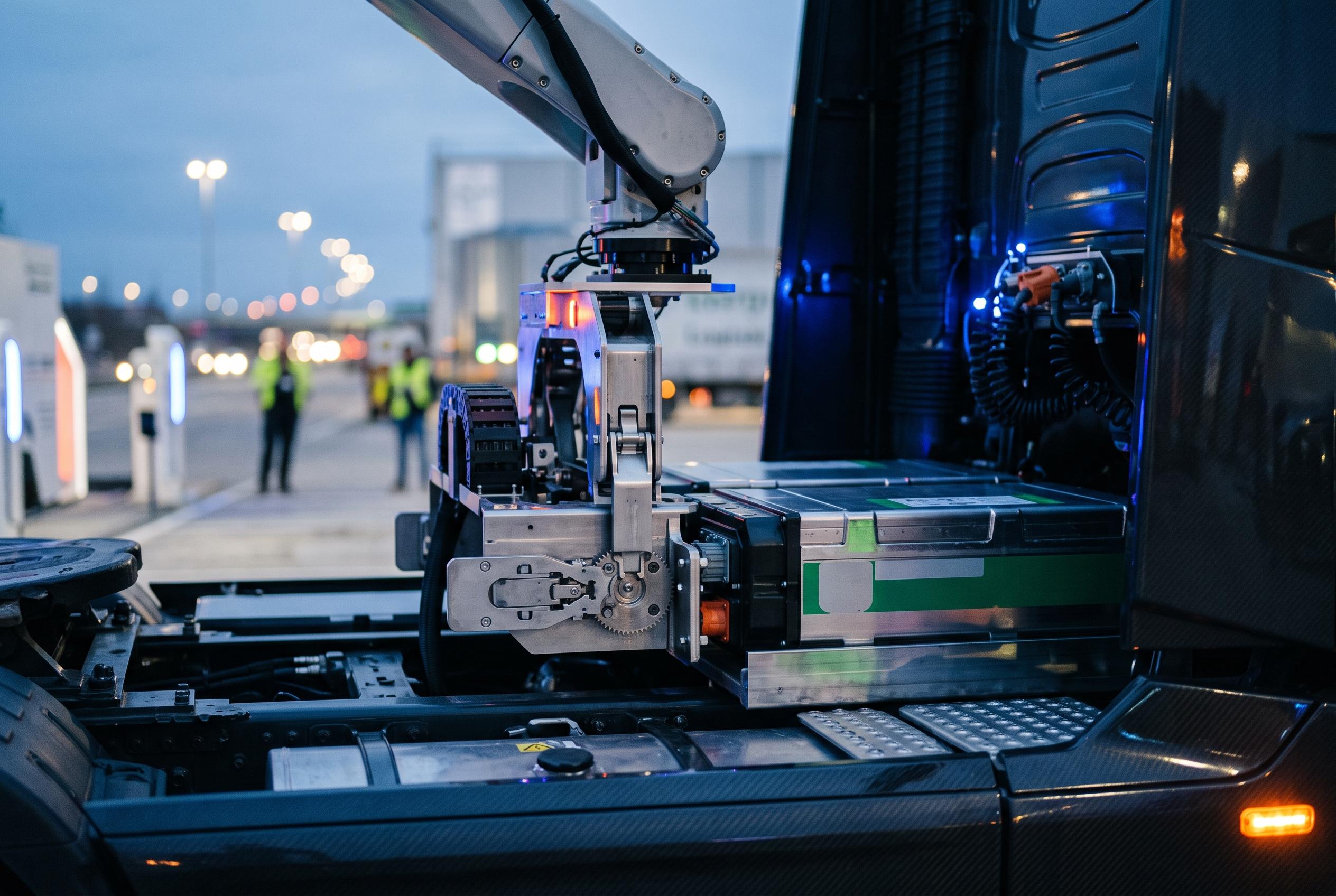
Kuehne+Nagel and CATL are joining forces on battery logistics, electric truck transport and lower-emission freight operations across Europe and Asia. The partnership includes a planned heavy-duty battery-swapping pilot in China for 2026, plus European fleet electrification projects that could give logistics operators a more practical route toward cleaner road freight.
Essential Takeaways
- - Two industry specialists are teaming up: Kuehne+Nagel brings logistics expertise, while CATL supplies battery technology.
- - China pilot planned for 2026: The companies expect to test battery swapping for heavy-duty trucks using Qiji technology.
- - Europe is part of the first phase: CATL's transport flows will be assessed for electrification, although vehicle and route details aren't public.
- - The scope goes beyond trucks: Recycling, aftersales support, charging and energy storage are also under consideration.
- - Demand is climbing: The companies say electric truck battery demand increased by more than 75% in 2024.
A battery partnership aimed at the road
The most interesting part of this agreement isn't simply the promise of more electric trucks. It's the attempt to connect batteries with the messy, practical realities of freight: charging schedules, depot space, vehicle uptime and the constant pressure to keep goods moving.
Kuehne+Nagel and CATL have signed a memorandum of understanding covering battery logistics, transport electrification and emissions reduction. According to Battery-Tech, the initial work will concentrate on projects in Europe and Asia, where freight operators face very different infrastructure and operating conditions.
That makes the partnership feel more grounded than a broad sustainability announcement. A battery may be impressive on paper, but it still needs to arrive, be handled safely, charged efficiently and eventually recycled.
Why battery swapping could matter for heavy trucks
For long-haul and heavy-duty vehicles, charging downtime can be a serious operational headache. A battery-swapping model aims to address that by replacing a depleted pack with a charged one, allowing the truck to return to work sooner.
The planned Chinese pilot is expected to begin in 2026 and will use technology supplied by Qiji, according to Logistik Heute. The companies haven't disclosed the number of trucks, stations or routes involved, so it's too early to judge how widely the model could scale.
Still, the concept is appealing in environments where delivery windows are tight. Fleet managers don't necessarily need futuristic promises; they need a truck that can complete its shift without turning a loading schedule into a guessing game.
Europe will test the everyday case for electric freight
The European strand of the agreement focuses on electrifying CATL's own transport flows. Details remain limited, including which vehicles will be involved and whether the first routes will be regional, urban or longer distance.
That lack of detail is important. Electric trucks can work particularly well on predictable routes with regular depot returns, where charging can be planned around loading and driver hours. They become more demanding when routes are irregular, payloads are heavy or charging infrastructure is thin.
Shipping Beat reported that the cooperation is also intended to support fleet electrification and battery logistics. In practice, the strongest early results are likely to come from carefully selected routes rather than an instant switch across an entire network.
Recycling and charging broaden the plan
The agreement also covers possible work in battery recycling, aftersales service, energy storage and charging solutions for logistics facilities. Those areas may sound less glamorous than a new electric truck, but they're where the economics of battery freight are often decided.
A depot with dependable charging can reduce interruptions, while on-site energy storage may help manage electricity demand. Recycling and aftersales support, meanwhile, address what happens after batteries are installed and used day after day.
CATL said in its company announcement that the partnership reflects a shared effort to accelerate the energy transition. Kuehne+Nagel's newsroom also lists road logistics and electrification among the areas connected with the cooperation.
The bigger test is operational, not promotional
The companies say the projects could help reduce Scope 3 emissions across their logistics and transport value chains. That's a meaningful target because emissions linked to suppliers, carriers and customers are often harder to influence than those from a company's own buildings or vehicles.
Industry coverage from Transport Journal suggests the initial agreement is a starting point rather than a fully funded rollout. No investment amount or wider expansion timetable has been announced, which leaves the partnership's eventual scale open.
For now, the sensible takeaway is cautious optimism. If the pilots make electric freight easier to schedule, maintain and finance, they'll offer something more valuable than a shiny headline: a workable template other logistics operators can copy.
The best electric truck plan is the one that keeps the freight moving.
Disclaimer: This article may have been created with AI assistance and reviewed by our editorial team. It is provided for general informational purposes only. Readers should verify information independently before relying on this content.
