
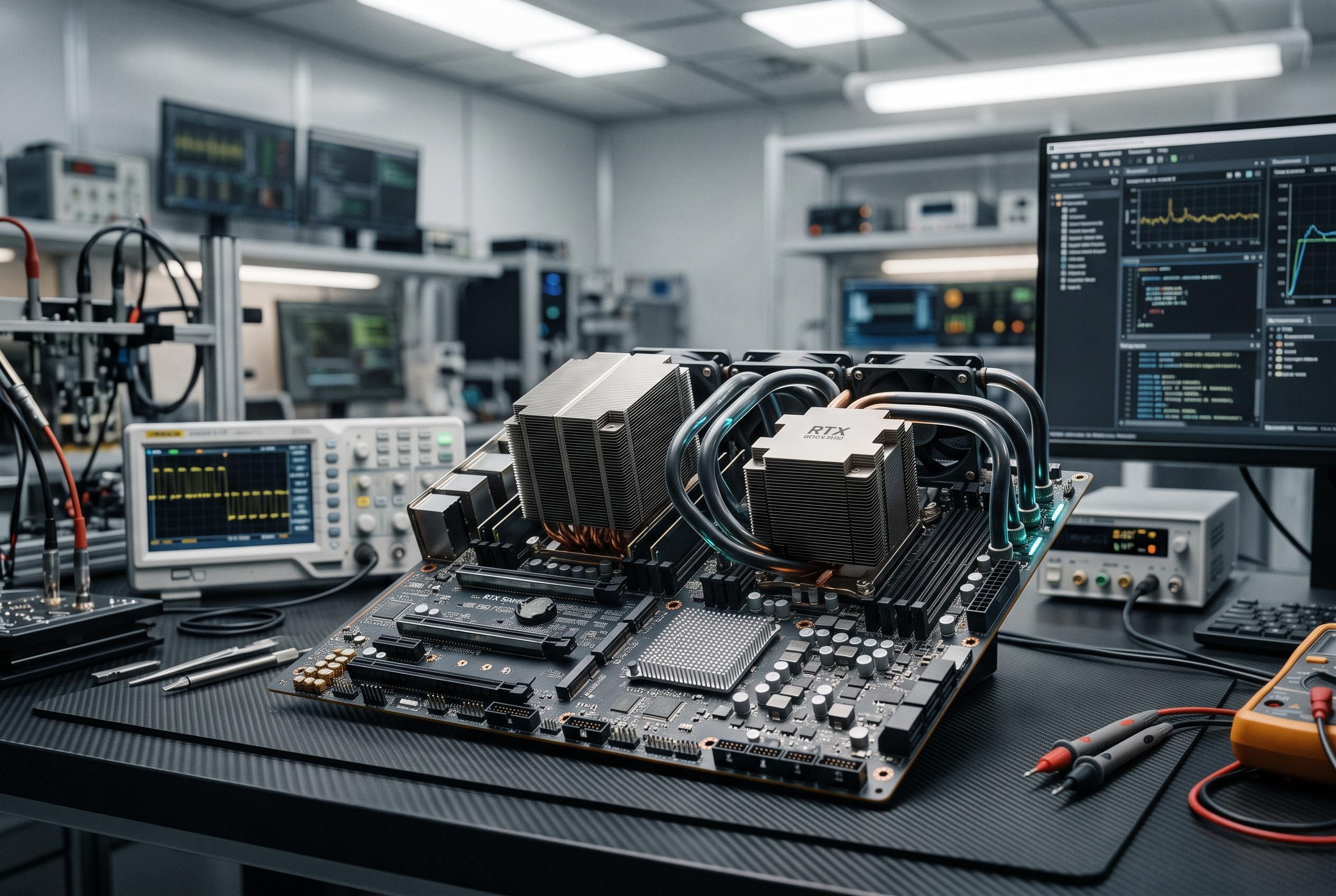
Developers are getting a new kind of Windows computer: Microsoft’s Surface Laptop Ultra, built around NVIDIA’s RTX Spark platform. Announced alongside new agent-focused Windows features, the machine promises serious local AI power, more privacy than cloud-only tools, and enough memory to run models that ordinary laptops simply can’t handle.
The Surface Laptop Ultra Is Built for AI, Not Just Office Work
The headline feature is simple: this isn't a conventional ultraportable with a few AI shortcuts sprinkled across the keyboard. Microsoft has designed the Surface Laptop Ultra around NVIDIA RTX Spark, giving it the kind of local computing muscle usually associated with a desktop workstation.
Laptop is priced from $2,599, a figure that immediately places it above mainstream Windows notebooks and into premium MacBook Pro territory. That's a lot to ask for a laptop, but the appeal is equally specific: users can run demanding models locally instead of sending every prompt, file, or workflow to a remote data center.
The hardware is built around an NVIDIA Blackwell RTX GPU and Grace CPU, with up to 128GB of unified memory. In practical terms, that could make the machine useful for AI developers, researchers, creative professionals, and businesses handling sensitive information. Your average spreadsheet won't need this much horsepower, but large language models certainly might.
Why Local AI Matters More Than Another Copilot Button
The strongest argument for RTX Spark isn't speed alone. It's control.
Running models on the device can reduce data transfers, lower dependence on an internet connection, and give organizations a clearer path for keeping private material inside their own systems. Windows Central described the Surface Laptop Ultra as a gaming-capable PC as well as an AI machine, suggesting that the same silicon could appeal to users who want one very powerful computer rather than separate work and entertainment systems.
There are trade-offs, of course. Local AI hardware is expensive, models still need storage and updates, and high-performance chips can bring heat, noise, and battery-life compromises. Still, the direction feels significant. Instead of treating AI as a distant service, Microsoft and NVIDIA are trying to make it feel like another native function of the PC.
Windows Is Becoming an Operating System for AI Agents
Microsoft's larger announcement goes beyond a single laptop. The company is adding operating-system support for AI agents that can operate persistently, interact with software, and carry out tasks on a user's behalf.
That creates a new security problem. An assistant that drafts an email is one thing; an agent that can keep working in the background, open applications, move files, or make decisions is something else entirely. Microsoft says its execution containers are intended to help secure, observe, and govern those activities at the Windows level.
Axios reported that Microsoft is using the partnership with NVIDIA to refresh the idea of the AI PC, rather than simply adding another branded assistant to existing hardware. That's an important distinction. The company wants Windows to become the environment where agents live, work, and connect with everyday applications.
For users, the practical question will be permission. The best AI agent won't be the one that does the most; it'll be the one that clearly shows what it's doing and asks before it crosses a line.
RTX Spark Pushes Desktop-Class AI Into the Windows Ecosystem
NVIDIA's RTX Spark platform is also aimed at people who need more than a laptop can comfortably provide. The DGX Station for Windows is described as a deskside AI supercomputer, bringing GB300 Grace Blackwell-class hardware into a Windows environment that many businesses already use.
The system is intended to run enormous models locally, with up to 20 petaflops of FP4 AI performance and 748GB of coherent memory. That could let enterprise teams develop and test models without immediately renting time on a remote cluster. It also removes one persistent annoyance for Windows-based organizations: switching between Windows for daily work and Linux for serious AI development.
Microsoft is keeping a bridge to Linux tools through Windows Subsystem for Linux, which should make the transition less disruptive for developers. That combination may be the real selling point. Teams can keep familiar Windows applications nearby while using established AI workflows under the hood.
Who Should Consider a Laptop This Powerful?
The Surface Laptop Ultra isn't aimed at everyone, and that's probably a good thing. Most buyers will get better value from a lighter Windows laptop with a capable neural processing unit and cloud access when needed.
This machine makes more sense for people who regularly work with large models, video, 3D content, software development, private business data, or demanding simulations. It may also appeal to enthusiasts who want a gaming PC and local AI workstation in one sleek package, although sustained heavy workloads will still need careful attention to cooling and battery expectations.
Before buying, check the model sizes you actually plan to use, the software's Windows compatibility, and whether your work benefits from local processing. A large memory figure looks impressive, but it only matters if your tools can use it. As Windows Central noted, this is a substantial hardware shift, not a routine Surface refresh.
Microsoft's Bet Is Bigger Than One New Surface
The Surface Laptop Ultra is the visible part of a much broader strategy. Microsoft wants Windows to remain central as computing moves from apps that wait for instructions to agents that can act continuously.
NVIDIA, meanwhile, gets a new route for its high-end AI hardware into business desktops and premium PCs. The partnership also brings the companies back to a familiar theme: software platforms matter as much as raw silicon. Microsoft has the operating system, while NVIDIA supplies the machinery that makes local AI practical.
The experiment will be worth watching. If developers and businesses embrace secure, on-device agents, the PC could become more private, responsive, and capable. If the hardware remains too expensive or the software feels unpredictable, the Surface Laptop Ultra may be remembered as an impressive preview of a future that arrived a little early.
It's a bold Windows laptop for people who want AI power close at hand.
Disclaimer: This article may have been created with AI assistance and reviewed by our editorial team. It is provided for general informational purposes only. Readers should verify information independently before relying on this content.
