
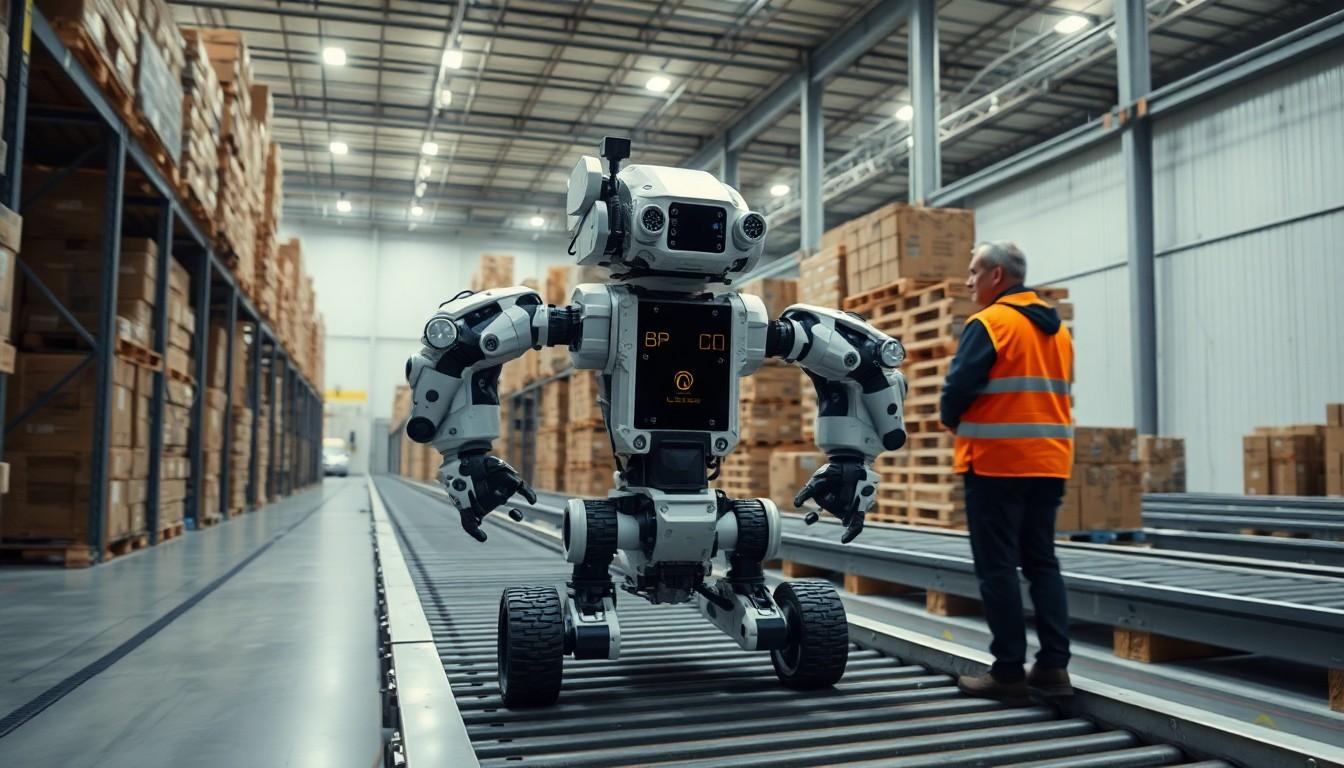
- Polyfunctional robots are emerging as practical solutions for dynamic factory and warehouse settings
- AI and sensors are enhancing robot adaptability, reducing need for extensive programming
- Successful implementation hinges on workflow design, system integration, and workforce training
Polyfunctional robotics could make automation more practical for shifting workloads
Polyfunctional robots are quickly emerging as a more practical solution to one of the biggest hurdles in automation: many factories and warehouses don’t actually operate like clockwork. Workloads tend to shift around, aisles can get clogged, workers move onto different tasks, and suddenly, unexpected issues pop up. In that kind of environment, a machine that can handle more than one job might be way more useful than one designed just for a single, repeatable movement.
The main question isn’t about whether a robot looks super advanced. It’s more about whether it can keep doing valuable work when conditions aren’t perfect or predictable. Supply chain and automation technology folks have increasingly started framing this as a matter of utility: a robot's real value depends on whether it can keep working as things change around it.
Why the industry is shifting focus beyond humanoid robots
This push toward polyfunctional robots helps explain why more companies aren’t solely focused on humanoids anymore. Gartner, for example, predicts that by 2028, fewer than 20 organizations will have scaled humanoid robot prototypes into full production for manufacturing and supply chain uses. Most of those robots, they say, will stay confined to very controlled environments. Technical hurdles, integration headaches, costs, and energy requirements are significant limitations.
Gartner’s broader perspective on these adaptable robots is all about flexibility. They’re meant to switch between tasks, respond to human instructions or demonstrations, and change roles based on what’s needed at that moment. In real-world terms, instead of buying different robots for each separate job, companies could use one platform for various related activities.
The opportunity in existing facilities
For those managing supply chain operations, the appeal of polyfunctional robots is strongest in “brownfield” facilities that are already built around human workers, rather than hyper-automated, fixed setups. Narrow corridors, changing traffic flows, and older layouts can make it pretty costly and complicated to overhaul a site with dedicated robotic cells.
A versatile machine, on the other hand, might help with moving totes during busy shipping periods, restocking lines when throughput slows down, or conducting inspections later in the shift, all within the same building, without needing a big redesign. Gartner even forecasts that by 2030, about 30 percent of factory workers will be interacting with polyfunctional robots in live settings, jumping from less than 5 percent today.
AI driving greater adaptability
Artificial intelligence is playing a big role in making this idea more realistic. Multi-sensor fusion technology can help robots better perceive objects, people, and their environment. At the same time, vision-language-action systems are designed to link what the robot sees, spoken or written commands, and physical actions.
Using natural language interfaces may also cut down on the need for custom coding whenever a job’s parameters change. For example, instead of programming a robot from scratch every time, operators might just demonstrate or give simple instructions, and the robot could learn or adapt accordingly. Ultimately, it’s becoming more possible for machines to learn from previous demonstrations, follow instructions more directly, and handle jobs that mix routine steps and exceptions.
Still some big limits
That said, polyfunctional robots aren’t ready to replace the workforce just yet. Gartner points out that we’re still years away from robots with the dexterity and intelligence to fully handle a wide range of physical tasks, especially those needing broad self-learning capabilities.
And the economics are more complicated than simply buying a robot. While costs for hardware might go down, and pay-as-you-go or robotics-as-a-service options can reduce upfront expenses, the real decisions come down to integration, maintenance, software, and workflow redesign. A robot that can do five jobs isn’t automatically profitable, especially if it spends too much time waiting for changeovers or dealing with reliability issues.
Workflow design might matter even more than the robot itself
In fact, designing workflows carefully can sometimes matter even more than the robot’s capabilities. Gartner recommends that supply chain managers focus on data systems, workflow assessments, and partnership-building with tech providers, rather than just waiting around for fully autonomous humanoids.
The most promising use cases are likely to be repetitive, physically demanding tasks where reusing the same robot for multiple jobs shows clear value. For companies buying from or selling to each other, the key takeaway is straightforward: polyfunctional robots will succeed not because they’re flashy or futuristic, but because they can fit into current operations and keep working well as demand patterns shift.
What businesses should evaluate before adoption
Companies considering this type of automation may need to begin with a detailed review of daily work rather than with a particular robot model. Mapping movement patterns, idle periods, handoffs, safety requirements, and seasonal changes can show where flexibility would provide the greatest operational benefit. A sourcing decision based only on specifications may overlook the practical requirements of the facility.
Compatibility with existing electronics and software will also matter. Robots may need to connect with warehouse management systems, manufacturing execution systems, scanners, cameras, conveyor controls, and mobile devices used by employees. Reliable connectivity and clear data-sharing processes can be just as important as physical mobility. If information remains trapped in separate systems, a versatile robot may still struggle to make useful decisions.
Training and workforce participation are another important consideration. Employees who understand how to assign tasks, respond to alerts, and report unusual behavior can help organizations gain value from the technology more quickly. In many settings, the robot’s role may be less about replacing workers and more about reducing lifting, transport, inspection, and other repetitive duties. That could allow employees to spend more time on coordination, quality, customer service, and problem-solving.
Logistics planning should account for maintenance, battery charging, spare parts, software updates, and fallback procedures. A robot that performs several jobs can also become a critical point of failure if every workflow depends on it. Businesses may therefore need service agreements, backup processes, and clear limits on the tasks the machine is permitted to perform without human approval.
The broader lifestyle of a facility, including shift patterns, worker movement, safety culture, and space constraints, can influence results as much as technical performance. Successful deployment will likely come from starting with a manageable use case, measuring outcomes, and gradually expanding the robot’s responsibilities when reliability has been demonstrated.
Key takeaways
- - Polyfunctional robots may be especially useful in existing factories and warehouses with changing layouts and workloads.
- - Their value depends on utilization, reliability, integration, and workflow design rather than appearance alone.
- - AI, sensors, and natural-language interfaces could make task changes easier, but major technical limits remain.
- - Electronics, software, maintenance, employee training, and logistics should be included in the adoption plan.
- - The strongest business case may come from using one platform across several related, repetitive tasks.
Disclaimer: This article may have been created with AI assistance and reviewed by our editorial team. It is provided for general informational purposes only. Readers should verify information independently before relying on this content.
Sources:
