
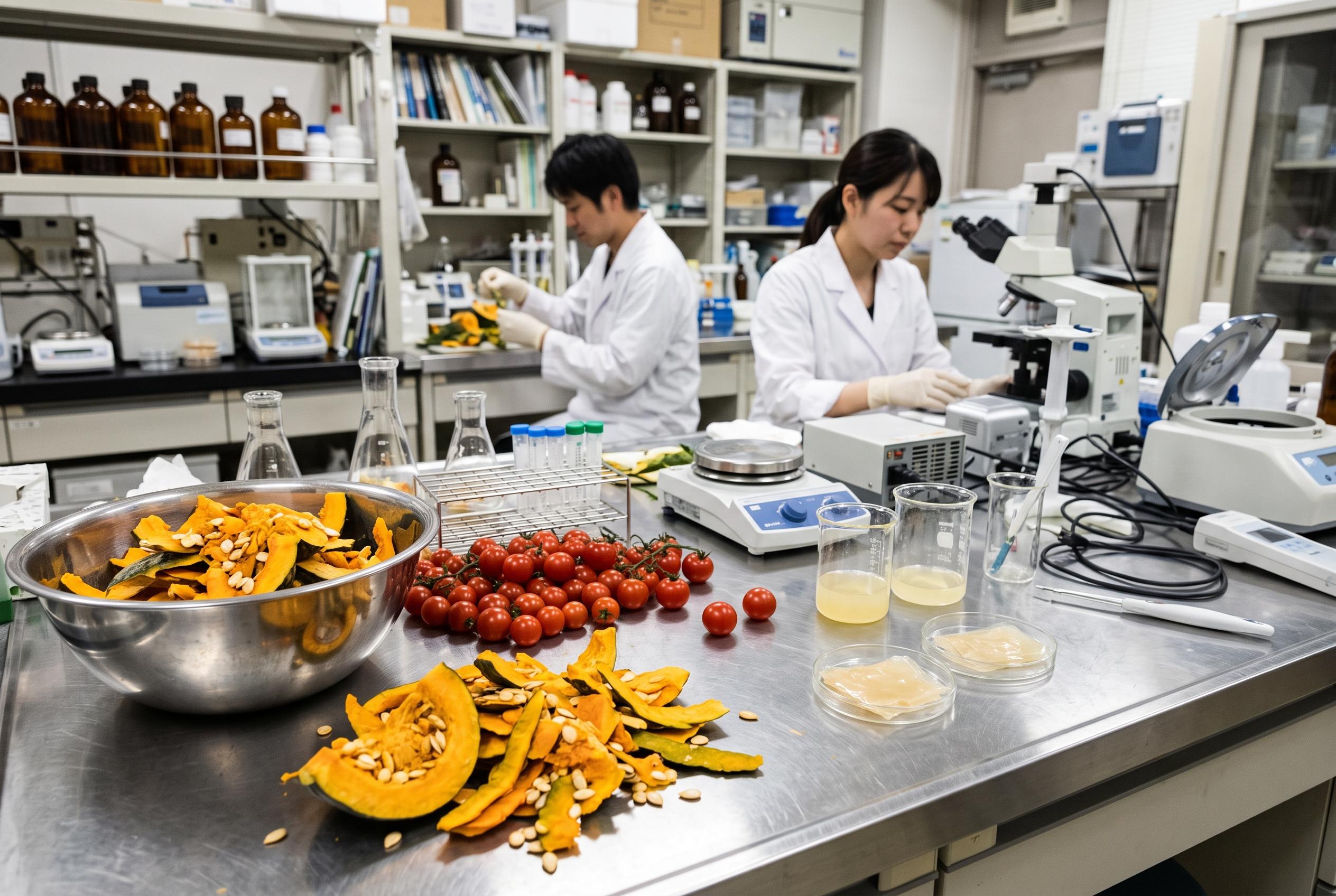
- Researchers turn discarded pumpkin peels into carbon quantum dots for eco-friendly food packaging
- Lab tests show improved preservation of cherry tomatoes with multifunctional biodegradable films
- Potential for reducing plastic reliance and food waste, but commercial applications are still in development
Pumpkin Peel Waste Transformed Into Biodegradable Packaging for Fresher Produce
Researchers at Kyushu University claim they've developed a biodegradable packaging material made from leftover pumpkin peels. This new material could potentially slow down the spoilage of fruits and veggies while also helping cut down on our reliance on traditional plastics.
The study, which was published in Food Research International, tackles a couple of long-standing issues in today’s food supply chains: the high amount of food that gets wasted after harvest, and the environmental impact of petroleum-based packaging materials. By turning an agricultural byproduct into a functional packaging solution, this project hints at a promising new route, using food-processing waste as a resource instead of just defaulting to plastic.
Now, it’s important to note that this material hasn’t quite made it beyond the lab stage yet. But early indications show that pumpkin peel could be a pretty handy raw material for creating packaging that shields produce during storage, handling, and shipping.
Turning Pumpkin Peel Into Nanomaterials
Based on what Kyushu University and the study published on ScienceDirect explain, the researchers used a hydrothermal process to transform discarded pumpkin peels into carbon quantum dots, or CQDs.
Carbon quantum dots are tiny particles made of carbon, and in this research, they combined these CQDs into a film made with carboxymethyl cellulose and gelatin, kind of like a composite material that tries to marry biodegradability with functional properties useful for food packaging.
They found that adding the pumpkin-peel-derived CQDs boosted the film’s mechanical strength and barrier capabilities. Why does that matter? Well, a good packaging film needs to endure handling without falling apart and should also limit moisture, gases, or other things that can cause food to spoil.
And here’s a cool bonus, the material also blocked UV light. Since light, especially UV rays, can cause food quality to deteriorate, the film’s UV-shielding ability offers a little extra layer of protection during storage and transit.
Rather than just throwing away pumpkin peel, this approach uses it as a source of high-value material. It’s part of a bigger movement, looking for sustainable ways to source materials from agricultural leftovers instead of just using new plastics all the time.
Testing the Packaging on Cherry Tomatoes
The team tested their pumpkin-peel-based film on cherry tomatoes, which are notoriously perishable and tend to lose quality quickly after harvest.
Kyushu University reports that the CQD-infused film cut down on microbial growth when compared to unwrapped fruit or tomatoes packed with regular plastic. Plus, the treated tomatoes showed less weight loss and softened more slowly, according to the research.
That’s significant because in the produce world, weight loss and softening impact how attractive and marketable a product is. Even small changes in texture or appearance during transport or on store shelves can influence whether the produce gets sold, discounted, or thrown out.
Interestingly enough, the study also found some antioxidant activity in the film. This suggests the packaging might help keep fruits fresher not just by acting as a barrier but also through active properties that combat microbial growth and oxidation, kind of like a multi-tasking packaging.
Of course, it’s still early days. The research isn’t claiming that this pumpkin-peel film is ready for widespread commercial use yet. But the results within the lab are promising enough to justify further exploration and development.
Could It Be an Alternative to Traditional Plastic?
Food packaging is under some serious pressure to reduce plastic use. Plastics are durable, lightweight, and effective at protecting food, but they also come with serious environmental costs. Naturally, this has prompted a search for biodegradable or bio-based options.
This Kyushu project fits right into that effort. They start with discarded pumpkin peels, things that’s often thrown away, and convert them into advanced nanomaterials. When combined with carboxymethyl cellulose and gelatin, these create a film meant to shield produce.
Now, pumpkin peel is a great candidate because it’s widely discarded even though it contains compounds that can be processed into nanomaterials like CQDs. Turning those peels into a functional component could add value to what’s usually considered waste.
The researchers emphasize that the CQDs offer antimicrobial and UV-blocking properties, which could help protect produce from bacteria, mold, and damage from sunlight or artificial light. In essence, the material isn’t just a wrapper but a multi-functional protective layer.
For companies handling food sourcing, processing, and transportation, such a material might someday help cut down on product loss and packaging waste. But, as with most early-stage innovations, practical issues remain, like how to produce the material at scale, keep it consistent, manage costs, meet regulatory standards, and see if it works across different types of food and storage conditions. The study highlights potential uses but doesn’t claim these hurdles are all solved.
Safety Is Still a Key Factor
Anything that touches food has to pass safety checks first. The university’s tests showed that the material wasn’t toxic at concentrations below certain levels, and the coating they used was very thin.
This is promising, but it’s only a preliminary safety indication. Additional testing is definitely necessary before such coatings or films could be approved for commercial use. Regulations require rigorous assessment of how these materials behave during storage, handling, and contact with various foods.
The team mentioned that the material could potentially be used as a film or even sprayed directly onto produce. A spray-on application might mean less material used per item, possibly reducing costs. But, again, that’s still in the early research phase. They haven’t yet demonstrated that commercial-scale spraying or direct application is practical or approved for everyday use.
Useful in Areas With Limited Cold Storage
Another interesting aspect is potential use in places where cold-chain infrastructure isn’t reliable.
While refrigeration and refrigerated transport do a good job keeping produce fresh, not all regions have access to these systems. A packaging material capable of slowing microbial growth, weight loss, and softening could be quite valuable in those situations, giving produce a longer shelf life during longer or more difficult journeys from farm to person.
But let’s be clear, it doesn’t replace refrigeration or other safety measures. Instead, it can be part of a broader strategy for reducing waste after harvest.
This is especially important for suppliers and logistics companies, who deal with multiple points where quality can break down, harvesting, packing, transportation, storage, and even point-of-sale. A biodegradable, functional film with barrier, UV, and antimicrobial properties might become an extra tool in their kit.
And looking at where raw materials come from, considering waste streams like pumpkin peel could support more circular economic models, using by-products rather than raw materials alone.
Future Directions: Adding Natural Antifungal Agents
The researchers also envision expanding this platform by incorporating natural antifungal compounds to boost resistance against mold.
Mold is a major concern with fresh produce during storage and transport. If the material could be enhanced with antifungal properties, it might become even more effective, an important feature especially for produce most vulnerable to fungal spoilage.
Of course, this idea is a future concept; the current study doesn’t yet include such additions. More research is needed to see how these compounds would interact with the film, how long their effects last, and whether they would compromise other qualities like strength, biodegradability, or safety.
What’s clear is that this pumpkin-peel project adds momentum to a growing field of research focusing on agricultural by-products as raw materials for advanced, sustainable packaging solutions. Its significance is not just about pumpkin peels, they serve as an example of how waste can be repurposed into functional, eco-friendly food protection.
Why It Matters for Food Packaging
This study from Kyushu University showcases how eco-minded food packaging research is increasingly tied to supply chain performance.
A viable alternative material has to do more than just biodegrade, it must also protect the food, endure handling, support logistics, and meet safety standards. The early results on this pumpkin-peel film are promising, showing features like stronger mechanics, better barrier qualities, UV protection, antimicrobial and antioxidant capabilities.
The tests on cherry tomatoes suggest it might actually slow down some visible signs of spoilage. Yet, it remains experimental. Additional validation and testing are necessary before we see this in everyday retail or manufacturing.
Nonetheless, it offers a compelling example of sustainable sourcing, turning a waste product into a biodegradable film that could help extend the shelf life of fresh food. If future research confirms its safety and performance, pumpkin-peel derived CQDs might become part of the broader toolbox of bio-based packaging solutions.
Key Takeaways
- - Pumpkin peels were converted into carbon quantum dots for a biodegradable food-packaging film.
- - Early tests on cherry tomatoes showed reduced microbial growth, weight loss, and softening.
- - The material may offer mechanical, barrier, UV-blocking, antimicrobial, and antioxidant benefits.
- - Commercial use still requires further research, scale-up, cost analysis, and regulatory approval.
- - The project demonstrates how agricultural waste could support more circular sourcing and packaging systems.
Disclaimer: This article may have been created with AI assistance and reviewed by our editorial team. It is provided for general informational purposes only. Readers should verify information independently before relying on this content.
Sources:
