
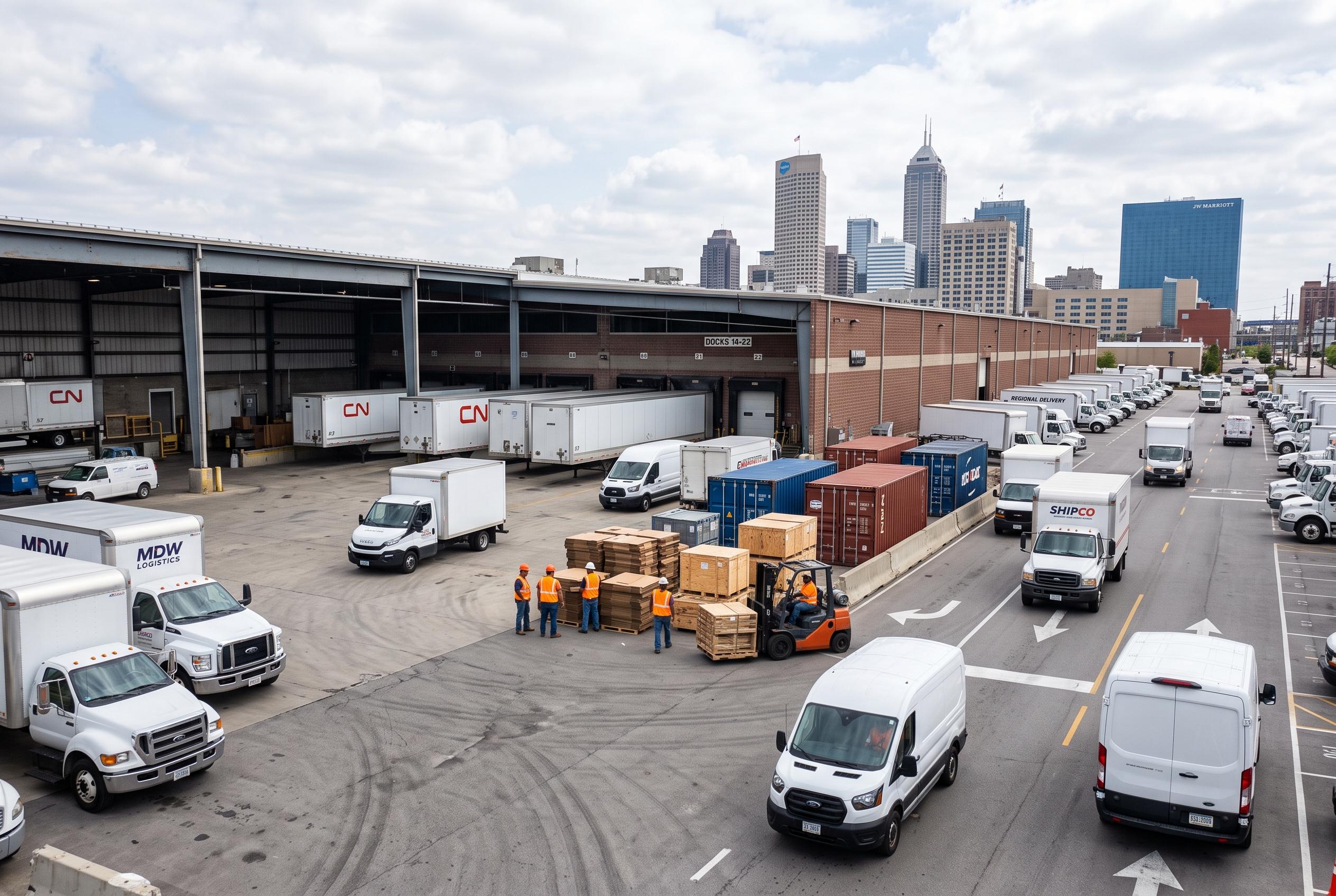
- Domestic manufacturing resurgence fuels regional freight demand
- LTL networks gain prominence for frequent, smaller shipments
- Key regions and sectors are driving new logistics patterns
Reshoring Is Turning US Freight Networks Inside Out
American manufacturing is really shifting gears now, and the ripple effects go way beyond just factory floors. As more companies are bringing production back home after years of offshoring, domestic supply chains are ramping up, becoming more regional, more active, and increasingly hinging on dependable freight logistics. This changing landscape presents both challenges and opportunities for logistics providers, especially those operating less-than-truckload, or LTL, networks.
The move toward reshoring isn’t happening in a vacuum; a bunch of forces are pushing it forward at once. Manufacturing decisions are now heavily influenced by government policies, supply chain hiccups, tariffs, tax incentives, and the general push to rebuild our local production capacity. As factories, suppliers, warehouses, and customers build closer ties through these domestic networks, freight providers are faced with managing a market that’s evolving not just in size but also in structure.
What’s interesting is that this shift results in a different freight profile compared to offshore manufacturing. When goods are made overseas, the typical supply chain depends on large ocean containers arriving at US ports, then transferred into bigger shipments for distribution across the country. Reshoring, on the other hand, tends to generate more frequent trips between local factories, suppliers, warehouses, and customers, more of that regional movement.
This difference makes LTL shipping much more relevant. LTL networks are specifically built to consolidate shipments from multiple shippers into a single trailer. They fit well with supply chains that need regular, smaller shipments of parts, materials, and finished goods, not necessarily filling an entire truck each time. For manufacturers and suppliers, this means a growing need for reliable, time-sensitive transport across regional routes and connecting points.
The Momentum for Reshoring Keeps Going
The Reshoring Initiative’s data suggests that this isn’t just talk anymore, things are really happening. According to their records, over 8,100 documented reshoring and foreign direct investment cases have taken place during the period they track. This number reflects a rising trend of manufacturers choosing US locations for new investments and production facilities.
Their latest reports show that this momentum didn’t slow down recently, either. In 2024 alone, more than 244,000 manufacturing jobs were announced, and the pipeline of new investments keeps flowing, driven by policies, tariffs, and tax benefits. These figures matter because every new manufacturing project can change freight requirements in a region. You see, a factory isn’t an island; it depends on suppliers, inbound materials, equipment, storage, outbound distribution, and consistent transportation links among all these points. As production ramps up domestically, those connections generate new freight routes and boost the importance of regional logistics support.
Sometimes, these impacts are gradual, say, a new plant might initially need shipments of construction materials, machinery, and industrial gear. Once production kicks in, the freight style shifts toward recurring shipments of components, inputs, and finished products. Essentially, reshoring can lead to a whole range of logistics demands throughout the lifecycle of a manufacturing project.
For carriers and third-party logistics firms, it’s not just about the number of projects announced. The key factors are where these projects are, when they start, and how they operate. A new factory can create freight demands right nearby, but it also helps strengthen connections to suppliers and customers elsewhere. That’s why network density and regional reach are becoming more critical than ever.
Why LTL Is Sitting Pretty
The reshoring scenario creates a different pattern of freight flows. Overseas manufacturing often relies on sizable shipments passing through ports en route to distribution points. Domestic manufacturing, however, usually needs for many smaller shipments to move repeatedly within the US.
What kind of shipments? Well, parts moving from suppliers to factories, raw materials traveling between production sites, or finished goods heading from plants to warehouses or directly to customers. Not every shipment is big enough to fill an entire trailer, many are too large for parcel services but too small to justify hauling a full truckload each time. That’s when LTL comes into play.
LTL carriers take multiple smaller shipments from different shippers and combine them into one trailer, making it a pretty convenient fit for this kind of rapid, regional movement. Manufacturers and suppliers can regularly move smaller quantities while keeping broad network connectivity. It’s especially handy when production depends on steady replenishment rather than sporadic, large deliveries.
Industry experts agree that reshoring tends to favor this model. With more frequent, time-sensitive shipments, carriers with extensive regional networks, flexible scheduling, and good coordination can step in more effectively. The challenge, and opportunity, is ensuring reliable, predictable pickup and delivery schedules, providing visibility into shipments, and being able to adapt quickly when plans shift.
This shift really puts logistics performance in the spotlight. A carrier’s value isn’t just in moving freight from point A to point B anymore. It’s about network reach, service dependability, high-tech tracking, and operational flexibility, all of which influence how smoothly a company’s supply chain runs in this new landscape.
Manufacturing Corridors Will Feel the Most Change
Certain manufacturing corridors are primed to see the biggest impact, notably the Southeast, the Midwest, and along the I-35 corridor. As reshoring projects herd into these regions, freight activity is likely to grow more intense around the factories and supplier hubs serving these areas.
These dense manufacturing regions can generate overlapping transportation needs. Suppliers may need frequent inbound routes to factories, while manufacturers require outbound shipments to distribution centers and customers. Plus, construction and expansion projects inflate demand for heavy equipment and materials, adding yet another layer. It’s a mix of different freight modes working side by side.
The rise in sectors like semiconductors, electric vehicles, pharmaceuticals, and food & beverage production is also driving freight demand because these industries rely on repeat shipments of inputs and components. Instead of depending solely on large, irregular project-based transportation, they support regular freight flows, more predictable and steady.
The specifics might vary across sectors, but the big picture remains consistent: domestic manufacturing needs reliable connections between multiple facilities. A typical supply chain might include suppliers, manufacturing plants, distribution hubs, and customers, all spread out across broad geographic areas. Transportation providers must be prepared to serve all these links without treating each shipment as an isolated event.
Where the investment goes geographically also matters. If many companies are establishing operations in the same general corridor, it creates opportunities for more efficient, dense routing and connections. On the flip side, rising demand can stress available capacity, especially if multiple projects start operating simultaneously.
Construction Freight: An Extra Piece of the Puzzle
And let’s not forget, building new plants or expanding existing ones adds another layer of transportation needs. Moving steel, heavy equipment, and construction materials generates extra demand for flatbed freight.
Flatbed shipping differs from LTL because it’s suited for oversized, heavy, or awkward stuff that doesn’t fit neatly into enclosed trailers. Think steel beams, large machinery, or bulky materials. This kind of activity brings new volume and complexity into the domestic logistics scene while manufacturing capacity is still taking shape.
This signals a transition phase: during construction, logistics are mainly about sourcing and moving heavy, outsized items. Once the plant is up and running, the focus shifts to moving components, raw materials, and finished goods regularly. Companies that understand both phases will be better positioned to support these evolving needs.
Combining flatbed and LTL demand illustrates that reshoring isn’t just one mode at a time but a spectrum of logistics activities. Different stages, construction, steady manufacturing, call for different shipping types, from heavy-haul to recurring LTL.
Flexibility, Visibility, and Capacity Will Be Paramount
For shippers, it’s not enough to just find freight capacity. The real trick is securing capacity where and when they need it. As industrial activity heats up, transportation resources can become tight pretty quickly, especially around fast-growing manufacturing hubs.
A carrier might have trucks available somewhere in its network, but that doesn’t always mean the capacity is in the right place. The location of factories, warehouses, and suppliers influences actual availability. Timing’s also critical, particularly if production relies on consistent inbound deliveries or if finished goods need to arrive for specific sales windows.
Delivery performance now depends heavily on visibility into shipments, flexibility to adapt to schedule changes, and a broad network that can shift gears quickly. Visibility tools help shippers track where their freight is, flexibility enables them to respond when plans change unexpectedly, and a wide network opens more options for moving goods efficiently across regions.
These abilities are especially vital during this rebuilding phase when supply chains are under constant adjustment. Makers are tweaking supplier relationships, rerouting routes, reorganizing warehousing, and adjusting production schedules, things that technology-enabled, multimodal logistics providers can support to a tee.
Technology isn’t a magic bullet, but it can improve coordination. Connecting data across shipments, facilities, and modes could be the difference between a smooth operation and a frustrating bottleneck. The goal isn’t just to move more freight, it’s to make the entire domestic supply chain easier to manage as it becomes increasingly complex.
A More Regional, Connected Supply Chain
All in all, the reshoring trend is making US supply chains more regional, more active, and more interlinked. It’s also intensifying the dependence on the strength of connections between manufacturing sites.
This means logistics providers have a major role to play in supporting those connections. LTL carriers are suited for regular smaller shipments; flatbed providers support construction and heavy materials; and multimodal logistics companies can help organize different freight flows as networks develop.
For shippers, the pressing question is how to craft transportation strategies that fit this new production pattern. Domestic manufacturing likely calls for more frequent shipments, tighter coordination with suppliers, and better visibility across several facilities. It might also mean expanding capacity options, as demand can spike quickly along certain corridors.
So, reshoring is changing more than just where things are made. It’s reshaping how parts, materials, equipment, and finished goods move across the country. As U.S. manufacturing continues its upward trend, logistics providers will need to deliver flexible, well-connected networks that can support this growth.
Key Takeaways
- - Reshoring is boosting domestic manufacturing and changing freight needs.
- - LTL networks might benefit from more regular shipments among plants, suppliers, warehouses, and clients.
- - The Southeast, Midwest, and I-35 corridor are prime regions for this increased logistics activity.
- - Sectors like semiconductors, EVs, pharma, and food production are fueling ongoing freight flows.
- - New plant construction is ramping up flatbed freight demand involving steel, heavy machinery, and other sizable loads.
- - Shippers should focus on capacity, visibility, adaptability, and regional network coverage as production hubs grow.
Disclaimer: This article may have been created with AI assistance and reviewed by our editorial team. It is provided for general informational purposes only. Readers should verify information independently before relying on this content.
Sources:
