
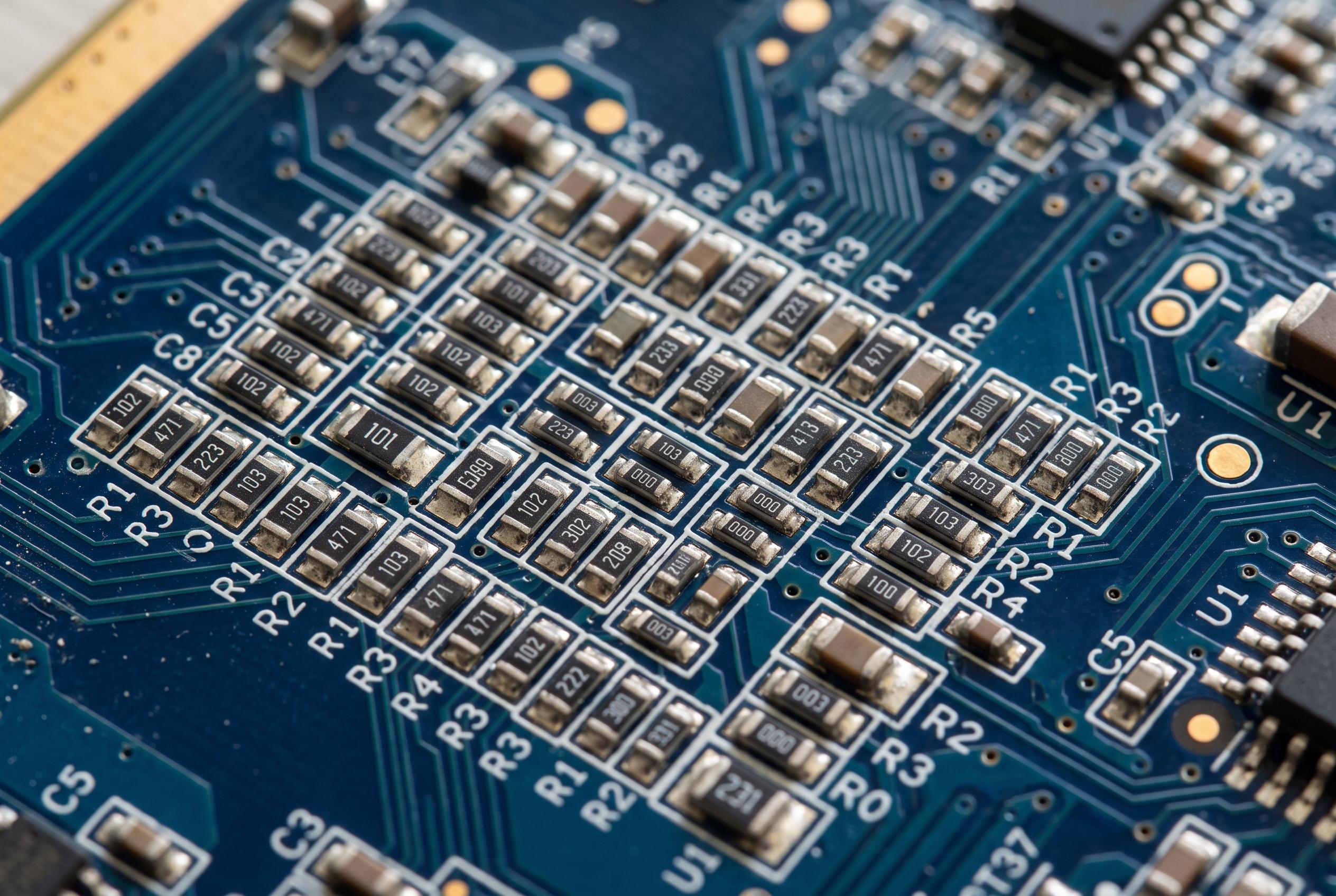
- Introduces SDR01 Series resistors handling 0.33W in a tiny 0402 package
- Designed for surge and ESD protection in space-constrained devices
- Suitable for automotive, industrial, and AI server applications with AEC-Q200 options
ROHM Starts Mass Production of 0402 Anti-Surge Resistors for Compact Electronics Designs
ROHM has kicked off mass production of its new SDR01 Series, a line of high anti-surge chip resistors designed to help engineers make power and interface circuits smaller, all while keeping electrical robustness intact.
These new resistors can handle 0.33W in a 0402 package or the 1005 metric footprint. This combo of power capacity and tiny size is meant for tight spaces in electronics, think automotive, industrial, consumer gadgets, or even AI server systems.
As devices keep getting more compact, the need for smart component sourcing and seamless board-level integration becomes more crucial. Engineers are often challenged with fitting more features onto smaller printed circuit boards, all while managing heat, electrical surges, and maintaining reliability. According to ROHM, the SDR01 Series tackles these issues head-on, especially in circuits where normal resistors might need a bigger package or multiple parts.
The company highlights that these resistors can replace larger ones or combine several components into a single device. That approach might cut down on board space and reduce the number of parts needed, but the actual advantages depend on circuit specifics, resistance values, power demands, and the qualification standards of each application.
Achieving Higher Power in a 0402 Size
What’s particularly interesting about the SDR01 Series is the combination of a 0.33W rating with a tiny 0402 package.
Small chip resistors are everywhere, from managing power, handling signals, sensing, to control circuits. But shrinking the package can cause some design hurdles, especially regarding heat dissipation, surge resistance, and reliability during manufacturing.
ROHM mentions that it redesigned both the resistive element and electrode structure in the SDR01 series to allow that 0.33W power rating within such a small package. They also say it retains the surge and electrostatic discharge (ESD) resistance expected from their high-reliability resistor lineup.
For those working on compact hardware, being able to specify a higher-power resistor without having to move to a bigger package is a real plus. It can free up space in mobile devices, industrial gear, automotive systems, or servers. Still, it’s important to select the right component based on how it’ll be used and what the circuit needs electrically.
The small footprint can be especially helpful for manufacturers working with dense assemblies. In products where every tiny millimeter counts, smaller passive components let you put processors, memory, connectors, sensors, and power circuitry in more flexible arrangements. In AI servers and high-density computing hardware, component size is a big deal, because space is shared by high-performance processing and power management.
Built for Surge and ESD Protection
Surge resistance is one of the main features of the SDR01 Series. Resistances might face short electrical pulses during regular operation, switching power, system errors, or static discharge. Using resistors with stronger resistance to these events can support overall circuit durability, though it all depends on the application.
ROHM positions the SDR01 series as part of its broader lineup of anti-surge resistors, which includes various package sizes and power ratings. This gives designers a good range of options to match their design space and electrical needs.
The company says the SDR series is rated above their ESR line when it comes to surge performance. Basically, it’s a way to help engineers compare what level of surge protection each series offers.
But a strong surge resistance doesn’t mean circuit-level protection and testing can be skipped. How a circuit performs in the real world depends on many factors: the source and shape of the transient pulse, the circuit layout, surrounding components, and the resistor’s specific resistance value. So, engineers have to thoroughly evaluate how the component behaves in their final design.
Same goes for ESD: while a resistor can add to a circuit’s robustness, true ESD protection depends on the entire system, grounding, protection devices, enclosures, and layout all play roles.
Handling Heat in Compact Designs
ROHM claims the SDR01 Series can keep its 0.33W rating up to a terminal temperature of 125 C. That's handy for circuits placed near heat sources or in environments where the board runs hot.
In tight designs, components are often placed close together, while this can make layouts more streamlined and reduce overall size, it also makes thermal management trickier. Parts close to processors, power management ICs, or switching circuits might run hotter.
Having a rated temperature of 125 C, that’s a specific, useful detail for design evaluation. But it doesn’t mean the entire assembly stays cool or will perform perfectly in every thermal scenario. Heat sources, airflow, enclosure design, copper traces, and nearby parts all influence the actual operating temperature.
This info is also useful when choosing components from different suppliers. When comparing resistors for automotive, industrial, or server applications, check not only resistance and size but also how power drops with temperature, operating limits, surge tolerance, and supply availability.
Resistance Options and Temperature Stability
The SDR01 Series offers a temperature coefficient of resistance (TCR) of ±100 ppm/C, covering a resistance range from 10 ohms all the way up to 2.2 megaohms.
TCR indicates how much a resistor’s value might shift with temperature changes. A lower TCR means more stability, which can help keep circuit performance steady in sensitive applications where accuracy is key.
The available resistance range means designers have plenty of choices, whether they need low-value resistors for current limiting or higher values for biasing or sensing. Picking the right one depends on the circuit’s voltage, current, power, pulse behavior, and environmental conditions.
In automotive and industrial electronics, changing temperatures and local heat from other components can be a challenge. For consumer devices and mobile tech, size and thermal limits matter too, even if their environments differ. For high-density AI server hardware, the resistor’s thermal and power specs play a role in system layout, because these systems pack a lot of processing power into limited space.
Automotive Qualification and Market Availability
According to ROHM’s info, the SDR family is part of their anti-surge resistor lineup, which includes different sizes and power classes. Some variants of the SDR01 are listed as AEC-Q200 qualified, that's the standard for automotive components.
Getting AEC-Q200 certified is important because it means the part has been tested and qualified for automotive use. However, not every variant necessarily shares the same qualification status, so designers need to check specific part numbers.
The varied package options and power ratings can make it easier to source all similar resistors from one product family, simplifying procurement and evaluation. Still, choosing the right part depends on the specific application’s technical and regulatory requirements.
ROHM mentions that sample pricing begins at around $0.04 per unit and that the parts are available through their online store, as well as distributors like DigiKey and Farnell.
Prices can fluctuate based on resistance values, order sizes, distributor policies, and availability. For volume manufacturing, factors like supply chain logistics, lead times, and inventory management all come into play.
So, what does this mean for design?
This series clearly reflects a broader trend in electronics: making devices smarter and more powerful in smaller packages. As products shrink, the passive components need to step up, providing higher performance without taking up more space.
The main appeal here is the mix of small size (0402), decent power handling (0.33W), surge and ESD protection, and a decent temperature range. These features come in handy especially if design is tight on board real estate but still needs components that can handle demanding electrical conditions.
Replacing larger resistors or combining multiple parts into one could streamline manufacturing, but each layout must be carefully tested. The new resistor series might shake up some designs, but the real payoff depends on validating it over all operating conditions, including thermal, electrical, and long-term reliability.
In applications like automotive, industrial, consumer gadgets, mobile devices, or AI servers, every component choice ties back to sourcing logistics, thermal management, and board design. A tiny resistor might seem insignificant individually, but its specs and package type can influence the whole system architecture.
In the end, the SDR01 Series isn’t just a smaller resistor, it’s a tool for engineers trying to balance compact layouts with performance, surge resistance, and thermal stability. Its real value will depend on how well it fits into the final design’s technical demands, qualification criteria, and supply chain realities.
Key Takeaways
- - The SDR01 Series combines a 0402 or 1005 metric footprint with a stated 0.33W rating.
- - Surge and ESD resistance may support more durable circuit designs, but system-level protection and testing remain necessary.
- - The 125 C terminal-temperature rating can be relevant for compact, heat-sensitive electronics.
- - Engineers should verify the qualification status, electrical specifications, derating behavior, and availability of each specific part number.
- - Sourcing decisions should account for pricing, volume requirements, lead times, distributor inventory, and long-term logistics.
Disclaimer: This article may have been created with AI assistance and reviewed by our editorial team. It is provided for general informational purposes only. Readers should verify information independently before relying on this content.
Sources:
