
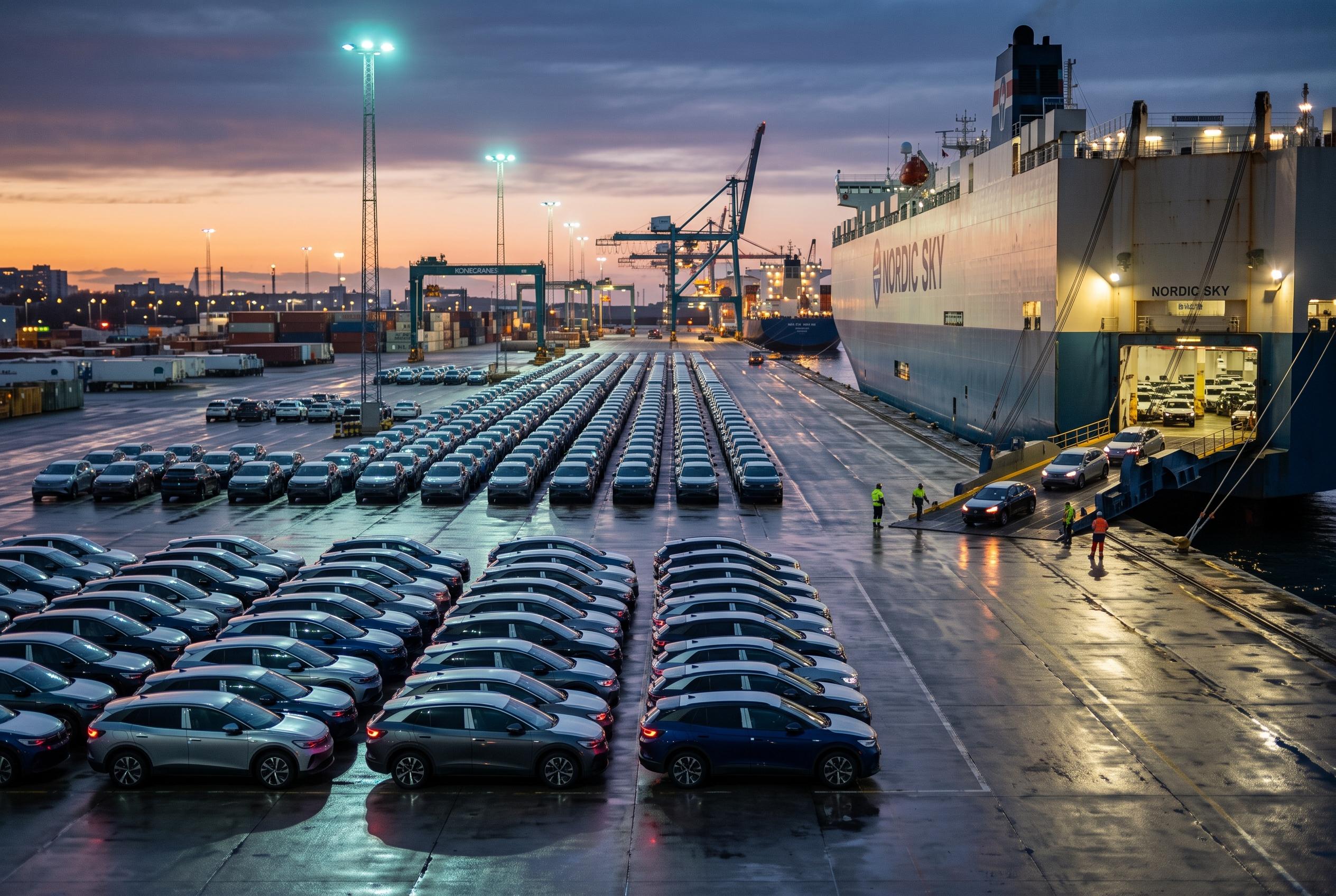
Korean car shoppers are seeing more Chinese-built and China-linked vehicles as three mid-sized automakers respond to sharply weaker domestic sales. Buick's Electra E7, Polestar's contract-built Polestar 4, and a proposed KGM partnership show how quickly the market is changing, bringing fresh choice but renewed questions about technology dependence.
A steep sales slide is pushing automakers to rethink the playbook
The headline number is hard to ignore: three Korean automakers recorded 5,116 domestic sales in September, nearly half the figure from a year earlier. That decline was more than twice the drop recorded across the country's five major carmakers, according to Newsis.
The mood behind those figures is easy to picture. Fewer business days during the Chuseok holiday played a part, while KGM also pointed to depleted electric-vehicle subsidies. Even so, the broader problem is more structural. These brands need new products, and they need them quickly.
GM Korea sold 727 vehicles at home, Renault Korea delivered 2,289, and KGM sold 2,100. Meanwhile, GM Korea's overall sales topped 41,000 vehicles because exports accounted for almost all of its volume, a reminder that a strong factory operation doesn't automatically translate into a strong local showroom.
Buick's China-built Electra E7 makes a bold Korean debut
GM Korea's answer is Buick, a premium brand that has long been familiar to American buyers but is taking a new route into Korea. The first model will be the Electra E7, a mid-sized plug-in hybrid SUV scheduled to go on sale in November.
The vehicle was developed with major input from PATAC, GM and SAIC's joint research organisation, and it's produced by SAIC-GM in China. GM Korea's announcement, reported by GM Korea and GM China, marks the Electra E7's first export beyond the broader Chinese market.
That detail gives the launch extra significance. This isn't simply another badge added to an existing showroom. It's a test of whether Korean buyers will accept a China-produced premium SUV when the car is backed by a familiar global manufacturer and supported by an established service network.
Familiar service support could ease buyer concerns
For customers, the most reassuring part may be less about the Buick badge and more about what happens after purchase. GM Korea plans to sell the Electra E7 through its existing network of more than 115 service locations, according to the company.
That's important because a new imported vehicle can feel like a gamble. Buyers want to know where they'll go for software updates, parts, warranty work, and the occasional mysterious warning light. A recognisable service structure won't answer every question, but it removes one of the biggest barriers to trying an unfamiliar model.
The Electra E7's plug-in hybrid setup could also appeal to drivers who want quieter electric commuting without giving up petrol-fuelled flexibility on longer trips. Still, shoppers should check charging habits, boot space, warranty terms, and real-world electric range rather than relying on the premium presentation alone.
Polestar and KGM show two other routes into China-linked growth
GM Korea isn't the only company looking east. Renault Korea is connected to Polestar's plans to have the Polestar 4 produced under contract, while KGM is seeking investment from China's Chery Automobile. The result is a widening menu of cooperation, from finished-car imports to manufacturing arrangements and corporate investment.
Polestar describes the Polestar 4 as a technology-focused electric SUV, and reviews including Tom's Guide have highlighted its sleek design and heavily digital cabin. The model's appeal is clear: it offers an alternative to the increasingly crowded Tesla-led EV conversation, with a more minimalist and premium feel.
KGM's proposed relationship with Chery is more consequential because it could involve capital and deeper industrial ties. Supporters can call that a practical way to secure products, funding, and scale. Critics worry it could leave a Korean manufacturer increasingly reliant on overseas technology and supply chains.
What should shoppers look for before choosing?
The badge matters, but the details matter more. For the Electra E7, buyers should ask whether the plug-in hybrid system fits their daily mileage and whether home charging is convenient. For an EV such as the Polestar 4, charging access, winter range, repair coverage, and software support deserve equal attention.
It's also worth comparing the ownership experience, not just the sticker price. A vehicle with attractive equipment can lose its shine if parts take too long to arrive or if the local service centre lacks experience with the model. The planned GM Korea network is therefore a useful differentiator for Buick, while Polestar and KGM will need to make their own support promises equally clear.
The bigger shift is already underway. Korean automakers are no longer treating China only as a sales destination or manufacturing base. They're increasingly treating it as a source of platforms, investment, engineering, and finished vehicles. For shoppers, that could mean more distinctive cars and sharper pricing, but also a little more homework before signing.
A pragmatic pivot with plenty at stake
This new strategy looks less like a fashionable experiment than a response to showroom pressure. When domestic volumes fall so sharply, waiting years for an entirely new in-house model is difficult to justify. Imported and jointly developed vehicles can arrive sooner, giving brands a chance to rebuild attention.
But speed brings trade-offs. The success of these launches will depend on whether customers see them as genuinely desirable products rather than stopgaps. A polished display and a well-known badge may open the door, but reliability, resale value, service quality, and transparent pricing will decide what happens next.
For now, Korean buyers are being offered something the market has lacked: fresh alternatives from brands that urgently need a second act. It's a promising change, provided the technology and ownership experience feel as confident as the strategy.
The next phase of Korea's car market may be shaped as much by partnerships as by home-grown engineering.
Disclaimer: This article may have been created with AI assistance and reviewed by our editorial team. It is provided for general informational purposes only. Readers should verify information independently before relying on this content.
