
- Researchers create a gas-phase alkylsilane doping method boosting electron transfer in polymers
- Achieves a record doping efficiency of 1.79 electrons per unit, promising for wearable devices
- Technology remains in research stage, with future potential for flexible displays and health gadgets
Sungkyunkwan University Researchers Develop Doping Technique for Flexible Electronics
Researchers at Sungkyunkwan University say they've come up with a new materials process that might help move forward the commercialization of wearable gadgets and flexible displays. The work was led by Professor Kang Bo-seok’s team at the university’s Institute of Nano Science and Technology, according to a Korean news report and other coverage of the study.
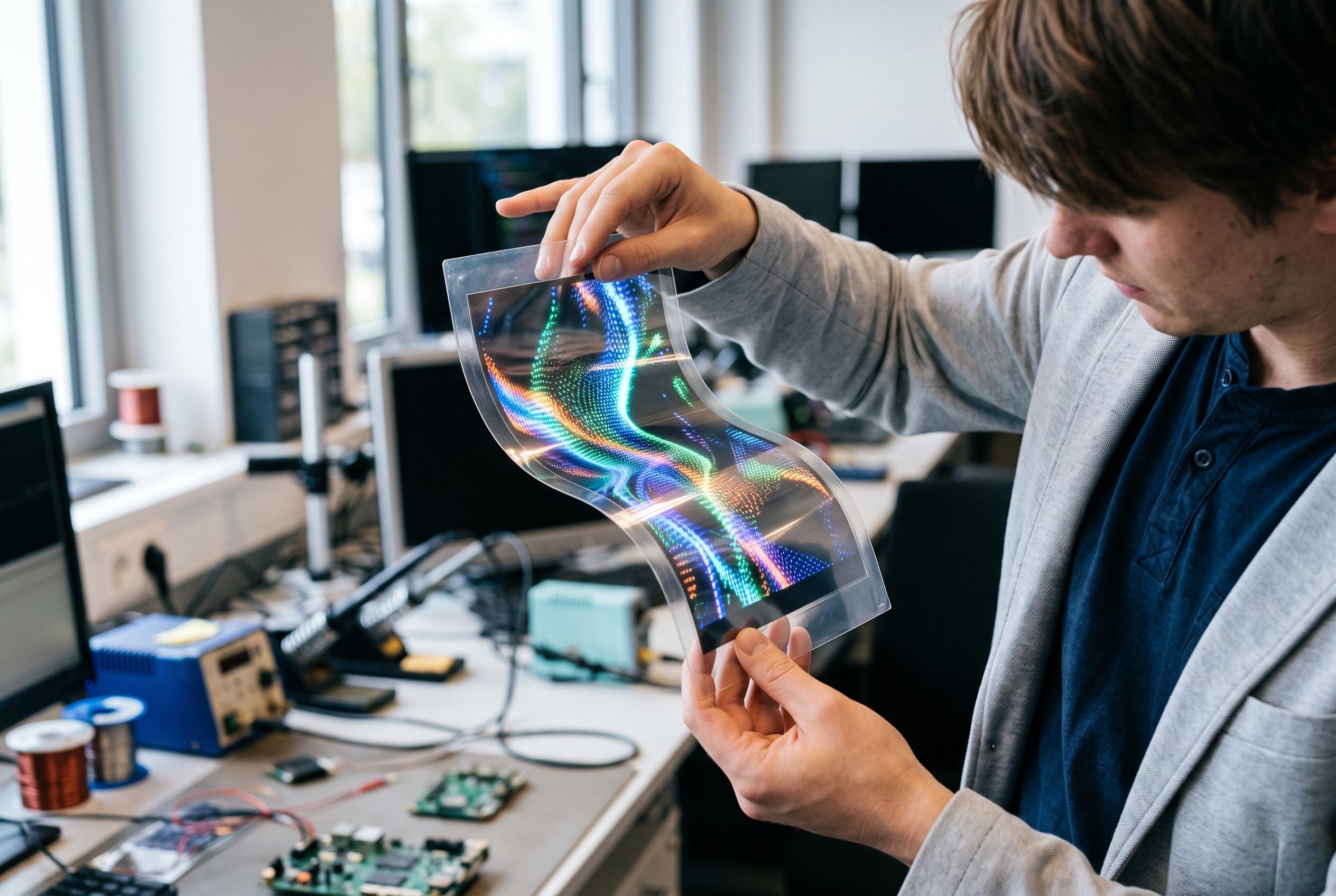
The researchers focused on conductive polymers, materials that can support electronic functions while being used in flexible device designs. Their potential relevance includes wearables, flexible displays, health-monitoring gadgets, and rollable screens.
This work is a research finding, not a finished product available for purchase. Additional research would be needed to determine how well the technique performs in real manufacturing.
A new approach to polymer doping
At the core of this study, there's doping, which is basically a standard method used to boost the electrical conductivity of polymers. In materials science, doping means adding some substance or molecules into a material to change how it conducts electricity. For conductive polymers, the goal is to make it easier for charges or electrons to move through the structure.
The team at Sungkyunkwan focused on alkylsilane molecules. Their experiments showed that alkylsilane molecules in the gas phase can form chemical bonds with the surface of a polymer. According to the researchers, this bonding is important because the electrical properties of the molecules help electrons move more freely through the polymer.
What's key here is the reported link between chemical bonding and electron transport. Instead of treating doping simply as the addition of a substance, the researchers examined how the dopant interacts chemically with the polymer surface.
This approach may be relevant to flexible electronics because such devices require effective electrical performance in flexible formats. The reports identify wearables and flexible displays as potential applications, but do not establish that the method preserves polymer flexibility.
Reported efficiency of up to 1.79 electrons per repeating unit
The researchers say their method achieved a doping efficiency of up to 1.79 electrons per repeating unit within the polymer. They describe this as a world-leading result among conductive polymer materials reported so far.
A repeating unit is the building block that repeats along a polymer chain. The figure of 1.79 electrons per unit describes the amount of charge introduced through the doping process and its reported effect on the material’s electrical properties.
But this remains academic-level lab research. A high doping efficiency does not mean the method will automatically work in mass production or in a finished device. Questions remain about manufacturing costs, long-term stability, integration with other components, and scalability.
Potential relevance to wearable electronics and flexible displays
Professor Kang said the findings connect chemical bonding with electron flow, which could help advance next-generation flexible electronic devices. The team believes the work could support devices such as health-monitoring wearables and flexible, rollable screens.
Wearables and flexible displays require materials capable of supporting electrical functions in devices designed to bend or change shape. The reported work may represent one step toward improving the electrical performance of polymers used in such applications, but the reports do not establish that the technique maintains flexibility.
It’s also worth noting that the approach might matter for other bendable technologies, such as sensors or flexible circuits used in health-monitoring gadgets. The reports highlight wearables and rollable screens as potential applications, but do not say these uses have been adopted commercially or provide timelines for that to happen.
Implications for sourcing and manufacturing in electronics
For manufacturers or suppliers working on flexible electronics, this study points to a possible new approach to improving the electrical performance of conductive polymers. If the technique proves suitable for scaling up, it could provide another way to develop materials for flexible devices.
However, the current details do not confirm that the method is ready for mass production. The reports present the research results and potential uses, but do not address manufacturing costs, production yields, supply-chain issues, or finished-product performance.
A promising lab discovery still needs to clear those hurdles before it can influence commercial manufacturing. The work from Sungkyunkwan University provides a foundation for further study, but additional testing is needed to assess its industrial potential.
Support and publication details
This research was supported by South Korea’s Ministry of Science and ICT and was published in the prestigious Journal of the American Chemical Society, or JACS. The study was also published as a JACS cover paper.
Publication in JACS indicates that the work was published in a prominent scientific journal. Still, it remains a research result rather than an off-the-shelf, market-ready technology.
In sum, Professor Kang’s team is examining how molecular bonding affects electron flow, with potential implications for conductive polymers used in flexible devices.
Why this development really matters
The main takeaway is that this doping method links chemical bonding with electron transport in conductive polymers. The team’s technique, which uses gas-phase alkylsilane doping and surface bonds, achieved a reported efficiency of up to 1.79 electrons per repeating unit, a figure described as world-leading in the field.
If future studies establish the method’s durability, compatibility, scalability, and suitability for flexible devices, it could contribute to the development of flexible displays, wearable electronics, health sensors, and rollable screens. For now, it remains a promising materials approach requiring further validation.
Key points to remember
- - Sungkyunkwan University researchers developed a gas-phase alkylsilane doping technique for conductive polymers.
- - The process creates chemical bonds between alkylsilane molecules and the polymer surface.
- - The doping efficiency reached up to 1.79 electrons per repeating unit.
- - The team describes this as a world-leading result in conductive polymer research.
- - Potential uses include wearables, health gadgets, flexible displays, and rollable screens.
- - The study was published as a cover paper in JACS.
- - Commercial manufacturing and market availability are not yet confirmed.
Frequently asked questions
What did the researchers develop?
They developed a gas-phase doping technique that uses alkylsilane molecules to form chemical bonds with the surface of a conductive polymer.
What does the reported 1.79-electron figure mean?
It refers to the reported doping efficiency, measured as up to 1.79 electrons introduced per repeating unit of the polymer.
Could this technology be used in smartphones or mobile devices?
The study may have relevance to flexible electronics, including some future mobile or wearable designs, but it does not confirm use in commercial smartphones or other mobile products.
Is the technique ready for commercial manufacturing?
No. The findings remain at the research stage. Further work is needed to evaluate scalability, costs, reliability, flexibility, and compatibility with production processes.
Why is chemical bonding important?
Chemical bonding can influence how effectively charges move through a material. The researchers examined this interaction rather than treating doping only as the physical addition of another substance.
What should electronics manufacturers watch next?
Manufacturers should look for follow-up testing involving long-term stability, bending performance, production yields, supply-chain requirements, and integration into complete electronic devices.
Disclaimer: This article may have been created with AI assistance and reviewed by our editorial team. It is provided for general informational purposes only. Readers should verify information independently before relying on this content.
Sources:
- - Paragraph 1: [2], [3]
- - Paragraph 2: [1], [2]
- - Paragraph 3: [2], [3], [4], [6]
- - Paragraph 4: [1], [7]
