
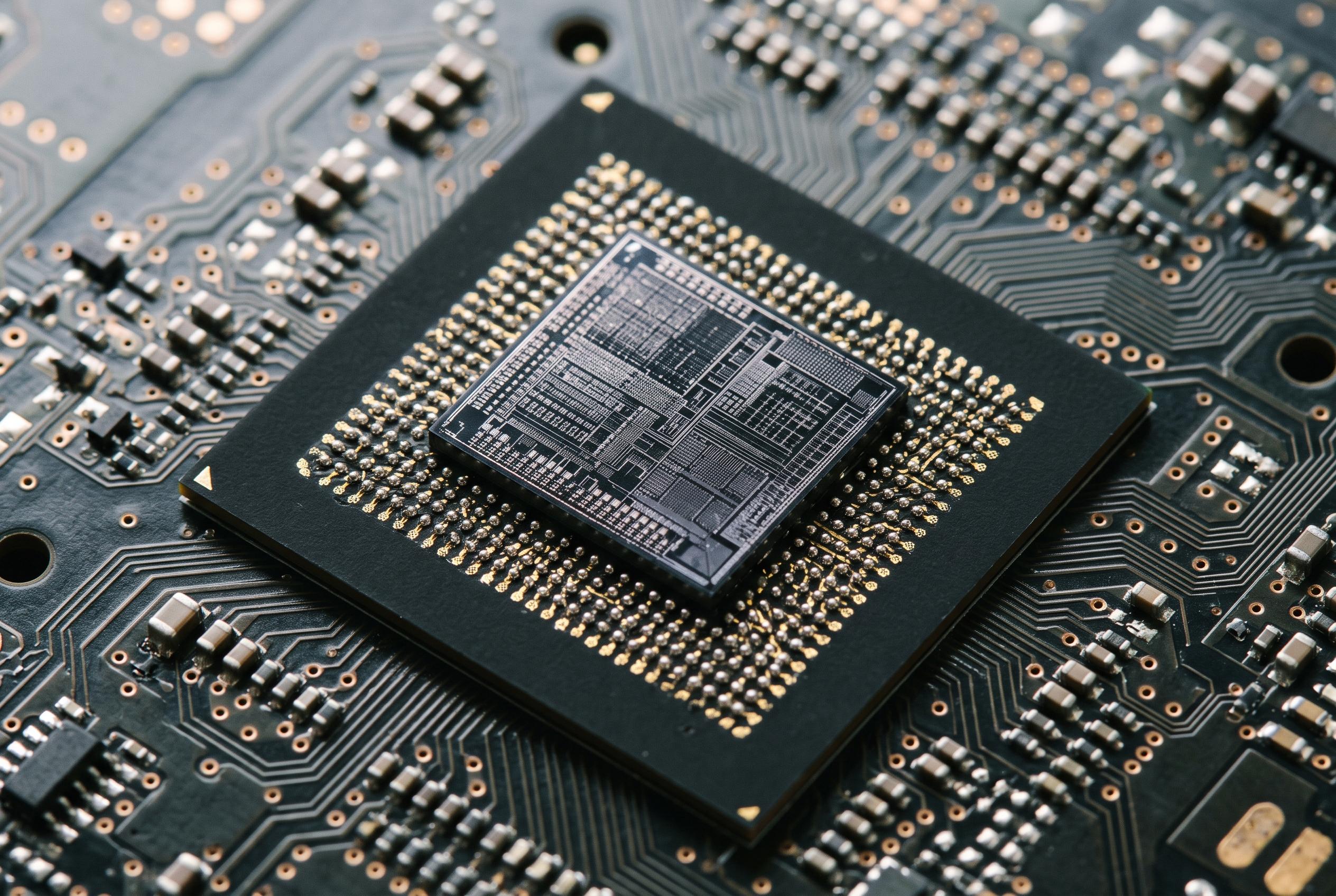
- Taiwan's ASIC sector shifts from design to mass production, boosting revenue.
- Alchip benefits from 3-nm AI accelerator chip ramp-up; MediaTek ramps its customized AI chips.
- Cloud giants and automakers drive demand, emphasizing supply-chain coordination and industry evolution.
Taiwan’s leading chip designers are seeing increased activity as AI custom-chip projects move toward mass production, CTEE reported Tuesday. Alchip Technologies Ltd. has benefited from the ramp-up of its 3-nanometer AI accelerator chips, reporting record monthly revenue in July. MediaTek Inc. is scheduled to begin volume shipments of its first custom AI chip in the fourth quarter.
Institutional investors said Taiwan’s application-specific integrated circuit (ASIC) sector is moving from chip design projects toward mass production and revenue generation. ASICs are chips designed for specific computing applications rather than general-purpose use, according to Business Next.
Alchip’s consolidated revenue reached NT$7.43 billion (US$230.4 million) in July, up 181.78% from the same period a year earlier. The monthly figure was nearly as high as Alchip’s NT$7.64 billion revenue for the entire second quarter, reflecting the ramp-up of its 3-nanometer AI ASIC shipments.
The products entered mass production toward the end of the second quarter. Shipments are expected to increase through the third quarter as capacity for wafers, advanced packaging, and high-end substrates expands.
Alchip is also seeing its automotive advanced driver assistance system chips enter mass production. Analysts expect automotive products to become the company’s second-largest revenue source starting this year, according to CTEE.
MediaTek reported consolidated revenue of NT$48.48 billion in July, up 12.16% year on year. While Alchip is already in volume production, MediaTek remains in the early stages of expanding its custom-chip business.
MediaTek’s first major cloud project is reportedly Google’s eighth-generation Tensor Processing Unit, while a next-generation 2-nanometer project is also under development. The projects are being monitored as potential growth areas for MediaTek beyond its smartphone business.
Analysts said custom-chip projects typically have long development cycles, with revenue recognition depending on the timing of design completion, mass production, and customer deployment. MediaTek’s ASIC business is expected to make an increasing contribution to revenue from the fourth quarter through 2027.
The trend is part of a broader effort by major cloud service providers to develop their own AI chips. These companies have worked with design service providers to develop ASICs for specific computing requirements. MediaTek has also identified custom AI chips as an area for expansion in the data-center market, with production of its first custom AI chip scheduled to begin in the fourth quarter of 2026.
In Taiwan, Alchip and Global Unichip Corp. are among the companies specializing in ASIC development. MediaTek expects the global ASIC market to reach NT$1.45 trillion by 2028.
For the broader electronics industry, the shift toward custom AI chips is increasing the importance of specialized silicon and the manufacturing processes required to produce it. These projects involve multiple stages, including chip design, wafer production, advanced packaging, and high-volume manufacturing.
Taiwan’s semiconductor ecosystem includes chip designers, foundries, packaging companies, and materials suppliers that support different stages of chip development and production. The expansion of AI ASIC projects is creating additional activity across these parts of the semiconductor supply chain.
The development of custom chips also extends to applications beyond general-purpose computing. AI accelerators and ASICs can be designed for specific workloads, allowing semiconductor companies to develop products according to the requirements of individual customers and applications.
The transition from chip development to mass production involves several stages, including design completion, tape-out, manufacturing, packaging, testing, and customer deployment. The timing of these stages can affect when a project begins generating shipment volumes and revenue, particularly for custom chips with long development cycles.
Supply capacity is another consideration during production ramps. Alchip’s recent AI chip shipments have been associated with increased requirements for wafer capacity, advanced packaging, and high-end substrates. The availability of these resources can affect the pace at which production volumes increase.
The automotive segment represents another application for Taiwan’s chip designers. Alchip’s advanced driver assistance system chips have entered mass production, adding automotive products to its portfolio alongside AI and high-performance computing applications. Analysts cited by CTEE expect automotive products to become Alchip’s second-largest revenue source this year.
Cloud providers are also developing custom chips for their own computing requirements. MediaTek’s first major cloud project is reportedly Google’s eighth-generation TPU, while the company is also developing a next-generation 2-nanometer project. MediaTek has said its first custom AI chip is scheduled for production in the fourth quarter of 2026.
The development of custom AI chips is contributing to changes in the semiconductor supply chain, including increased activity in chip design services, advanced manufacturing, and packaging. Companies involved in these projects must coordinate development and production activities across multiple stages before finished chips can reach customers.
For semiconductor companies, the timing of production ramps can affect revenue because custom-chip projects generally require a period of development before commercial shipments begin. Alchip has already moved a 3-nanometer AI accelerator into mass production, while MediaTek is preparing for its first major volume shipments in the fourth quarter.
The automotive, cloud, and AI markets therefore represent several areas in which Taiwan-based chip designers are developing custom-chip projects. These applications have different technical and production requirements, but each involves specialized semiconductor designs and manufacturing processes.
The broader development of AI ASICs is also increasing the role of design partnerships between cloud companies and semiconductor firms. Cloud providers can specify chips for particular workloads, while ASIC design companies provide expertise in architecture, implementation, manufacturing coordination, and production.
Taiwan’s ASIC sector is consequently moving into a period in which several projects are progressing from development toward commercial production. Alchip has begun ramping shipments of its 3-nanometer AI accelerator, while MediaTek is preparing to begin production of its first custom AI chip in the fourth quarter of 2026. The developments illustrate the increasing role of custom silicon in AI and data-center hardware.
Takeaways:
- - Taiwan’s ASIC sector appears to be moving from design wins to revenue-producing mass production.
- - Alchip is already seeing strong AI chip shipment growth, while MediaTek is earlier in its ramp.
- - Cloud companies continue to push custom AI silicon to reduce dependence on Nvidia.
- - Sourcing, logistics, packaging, and substrate availability are becoming increasingly important to chip growth.
- - The trend may also influence mobile, automotive, and lifestyle electronics as demand for specialized chips expands.
FAQ: Q: What is an ASIC? A: An ASIC is a chip built for a specific computing task rather than general-purpose use.
Q: Why are AI custom chips important? A: They can be tailored for performance, efficiency, and workload-specific needs.
Q: Why is Taiwan central to this trend? A: Taiwan has a strong ecosystem of chip designers, manufacturing partners, and packaging specialists.
Q: How does this affect the electronics supply chain? A: It increases the need for coordinated sourcing and logistics across wafers, packaging, and substrates.
Q: Is this only about data centers? A: No. The same custom-chip trend can also influence mobile, automotive, and other lifestyle electronics.
Q: What should observers watch next? A: Shipment ramp-up, mass-production timing, and how quickly custom-chip projects turn into revenue.
