
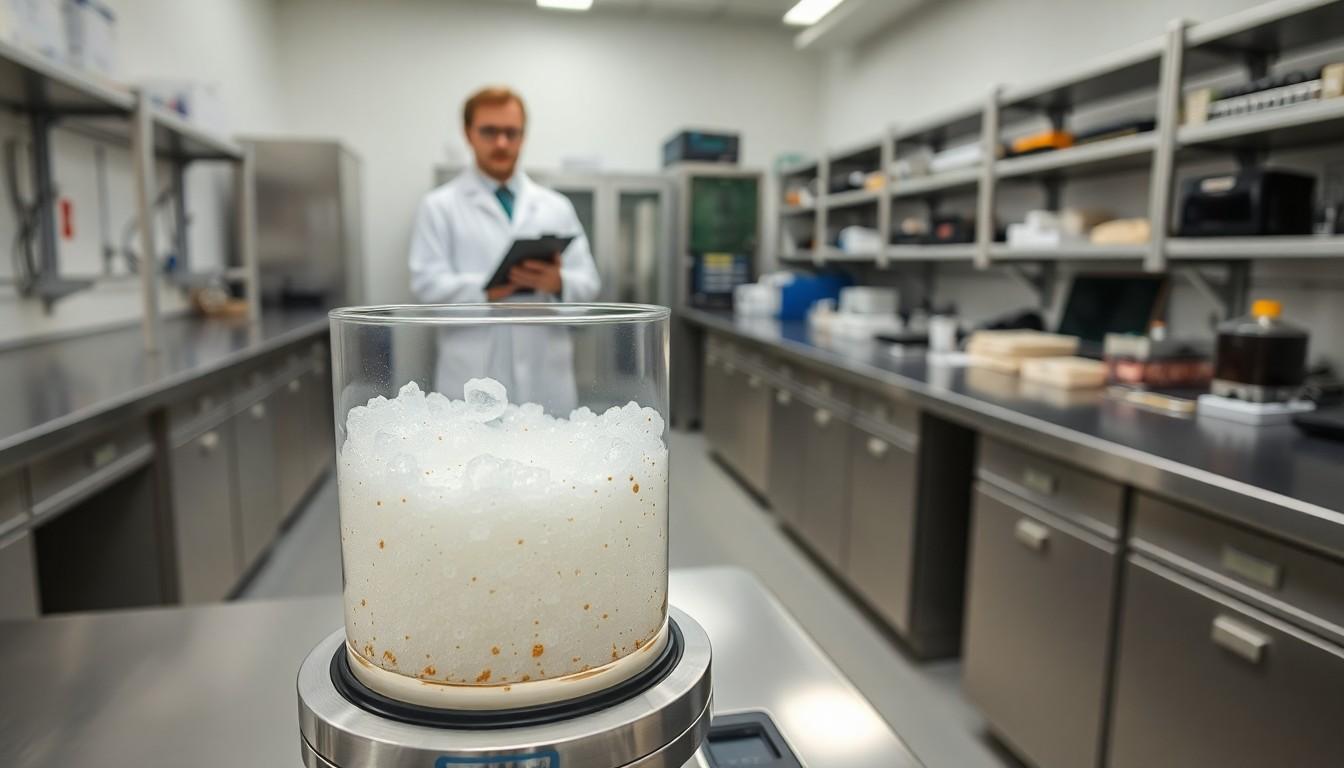
- Researchers create a whey-based aerogel capable of extracting gold from electronic waste.
- A lab-produced gold nugget contains approximately 91 percent gold from old motherboards.
- The method promises a more sustainable and cost-effective alternative to traditional gold recovery.
Researchers Transform Cheesemaking Waste into a Metal-Recovery Tool for Electronics Recycling
Researchers over at ETH Zurich have come up with a pretty interesting way to repurpose whey , you know, that leftover liquid from cheesemaking, to actually extract gold from old electronics. Basically, in a lab setup, their team managed to produce a tiny but very pure gold nugget from metals stripped from outdated computer motherboards. Looks like this finding could create some new links between food industry waste, electronics recycling, and sourcing precious metals.
Now, it’s important to note that this isn’t yet a practical, full-blown recycling process you could use at scale. Still, the scientists do see it as a potential alternative to traditional gold-recovery methods, which often involve harsher chemicals and spend a lot more energy.
How whey becomes a gold-capturing sponge
The core material here is whey or the leftover liquid after milk curdles and is strained during cheesemaking. Instead of just tossing whey away, these researchers processed its proteins into a unique material designed to snatch up gold.
In their study, whey protein was turned into amyloid nanofibrils, super fine, thread-like protein structures. They then freeze-dried these into a lightweight aerogel. Think of it like a sponge, but not just for soaking up liquids; its structure and chemistry make it selectively capture gold from a mix of metals.
This selectivity is a big deal because electronic waste contains a complicated cocktail of valuable and less-valuable metals. Motherboards, for example, often include gold, copper, and other metals, meaning any recovery system has to be good at picking out the gold specifically, not just grabbing everything indiscriminately.
The paper published in Advanced Materials said the whey-based aerogel managed to pick up 93 percent of the gold from a test solution, while only absorbing less than 10 percent of other metals at similar levels. Its capacity was around 166.7mg of gold per gram of aerogel, which is pretty handy.
These results suggest that such waste-derived materials could possibly play a useful role in recovering precious metals during electronics recycling. Although, right now, it’s just a proof of concept from the lab, not a ready-to-scale solution.
A lab-made nugget from old motherboards
To see how their system worked with real electronic waste, the team took material stripped from 20 motherboards. The metal parts there were first dissolved in acid, as they usually do in lab settings. Then, they used the whey-protein aerogel to recover gold from that solution.
The final result? A 450mg nugget with roughly 91 percent gold, and most of the rest was copper. ETH Zurich mentioned that this composition roughly equates to 22-karat gold.
But, just to clear something up: it doesn’t mean every old motherboard has enough gold to duplicate this nugget. Instead, it shows that gold from electronic waste can be collected with this aerogel after the metal parts are dissolved.
That’s a key point because it influences both sourcing and cost considerations. The value of electronic waste depends on multiple factors: what kind and how much material is there, how much it costs to gather and process, and how pure the recovered metals can be. For this to become a real, practical process, all those parts would need to align, not just the sponge’s performance.
Why electronic waste represents a big opportunity
This research comes in the context of the rapidly growing flow of electronic waste. The United Nations Institute for Training and Research and the International Telecommunication Union estimate that globally, around 62 million tons of e-waste were generated.
The sad part is only about 22.3 percent of that waste is actually collected and recycled properly, environmentally sound recycling, that is. Their estimates also suggest that e-waste production increases yearly by roughly 2.6 million tons, possibly hitting 82 million tons by 2030.
E-waste is a broad category, everything from old computers and phones to household appliances and gadgets. Many of these contain materials of real economic value, like precious metals, which often go unrecovered if devices aren’t collected or processed properly.
The bigger environmental challenge here is real, more e-waste means more strain on collection systems, recycling infrastructure, and responsible material management. Pulling out valuable metals from discarded electronics could help boost resource efficiency, but only if the process is safe, feasible, and scalable.
What’s cool about ETH Zurich’s approach? It links two very different waste streams: dairy industry whey, which is usually just waste, and obsolete electronics. In a nutshell, this method could give a low-value byproduct from cheesemaking a totally new gig, helping source precious metals from old electronics.
Why whey-based recovery could make economic sense
Money matters, especially when thinking about new recycling tech. ETH Zurich reports that the resource and energy costs of their method are around one-fiftieth of the value of the gold recovered, at least in their lab tests. That’s a striking comparison, and it helps explain why whey is such an attractive resource here.
Whey is abundant, cheap, and produced on a large scale by the dairy industry already. Using this waste stream for metal recovery could cut down on the need to create entirely new raw materials just for the process, which is handy.
Of course, these economics are based on lab results and shouldn’t be viewed as a guarantee of real-world profitability. An actual industrial-scale operation would need to factor in transportation, equipment, acid handling, waste collection, labor, environmental measures, and how to efficiently recover the final metals.
Still, the cost advantage is compelling enough to push this idea forward. If the aerogel can be produced reliably at larger scales, whey could become part of a more circular supply chain, connecting food production waste to electronics recycling.
Researchers also point out that, beyond gold, this approach could also recover platinum, palladium, and silver. The research doesn’t yet specify how efficient the process would be for each of those metals, but the potential is there to expand its scope beyond just gold.
Moving toward modular, localized recycling?
The team has already expressed interest in scaling up their technology. An ETH-outgrowth is working on presenting this approach as a modular, cost-effective system to recover precious metals nearer to the source of waste.
This idea could be big because electronic waste is generated in all kinds of locations, not just central facilities. A system that works closer to where the waste was produced might cut down the need for long-distance transport and handling, which would be a pretty nice advantage. That said, their public info doesn’t clearly spell out how a commercial, larger-scale version would operate or what size it might reach.
This is part of a broader shift toward more localized recycling approaches and resource recovery. Instead of just treating old electronics as stuff to get rid of, there’s growing interest in viewing them as potential sources of reusable materials. Metals like gold, silver, platinum, palladium, copper, even more, hold value when properly recovered.
Still, some limitations remain. The process relies on acid digestion, meaning it still involves chemical processing. And, importantly, the work has only been demonstrated by the original research team. For this to become a real, practical option, independent testing, larger pilot studies, safety assessments, and environmental impact evaluations will be needed.
What the study shows, and what it doesn’t
ETH Zurich’s research proves that a whey-derived aerogel can selectively capture gold from a solution based on electronic waste. It also shows that this metal can be turned into a small nugget with a very high gold content.
But crucially, it doesn’t mean the process is ready for mainstream use. It remains just a proof-of-concept in the lab. There’s still a lot to figure out: how it performs with different kinds of electronic waste, how often the aerogel can be reused, how to extract the metals afterward, and how it would perform on a large scale.
Those are important questions because waste streams in the real world vary a lot. A method that works well with 20 motherboards might stumble when faced with more complex electronics or mixed waste.
That said, this is an exciting example of turning waste into resource. Combining a protein-based material made from cheesemaking byproduct with precious metal recovery from outdated electronics points toward innovative ways to improve resource recovery. As e-waste volumes continue to grow, advances like this could be increasingly relevant in sourcing and recycling strategies.
For now, though, the tiny gold nugget remains a proof of concept rather than an immediate commercial product. Next steps involve trying to scale, test independently, and integrate these methods more sustainably and safely into practical recycling operations.
Bottom-line key points
- - ETH Zurich researchers created an aerogel from whey protein that captures gold from dissolved electronic waste.
- - They recovered a 450mg nugget of roughly 91 percent gold content.
- - The sponge managed to trap 93 percent of gold in tests, while only taking up less than 10 percent of other metals like copper.
- - Its capacity was around 166.7mg of gold per gram of aerogel.
- - Currently, it’s just a lab setup relying on acid digestion.
- - The method could also be relevant for platinum, palladium, and silver recovery.
- - And finally, this work links dairy waste with precious-metal extraction from electronics.
- -
Disclaimer: This article may have been created with AI assistance and reviewed by our editorial team. It is provided for general informational purposes only. Readers should verify information independently before relying on this content.
