Download App
Better Online and Trade Show Sourcing Experiences.Scan the QR code to download.
Learn More
Hot Topics
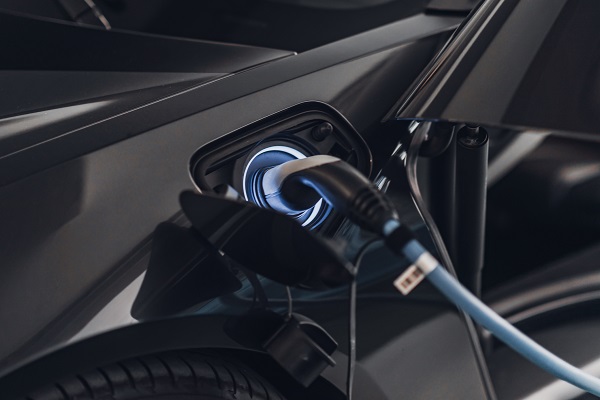
In 2020, electric vehicles (EVs) accounted for just 3.5 percent of car sales around the world. But that number already represents rapid growth in recent years, and sales are expected to grow ever more rapidly in the next decade. According to a May 2021 report by international consultants McKinsey & Company, worldwide new-car sales of EVs, mainly battery electric vehicles (BEVs) and plug-in hybrid electric vehicles (PHEVs), are expected to increase their share of global passenger vehicle sales to 39 percent in 2030 due to a combination of regulatory pressure and changing customer demand.
A key factor behind this predicted growth is the dramatically falling cost of batteries suitable for use in EVs. As batteries get cheaper, EVs become more competitive on price with vehicles using internal combustion engines (ICEs).
"According to Wright's Law, also known as the learning curve effect, lithium-ion (Li-ion) battery cell costs fall by 28 percent for every cumulative doubling of units produced," Govind Bhutata wrote in a May 2021 report for Visual Capitalist. "Wright's Law has accurately predicted the decline in battery costs, and so far, reported battery prices have been in line with modeled forecasts. The battery pack is the most expensive part of an electric vehicle. Consequently, the sticker prices of EVs fall with declining battery costs."
The cost of Li-ion batteries is expected to fall to $100/kWh by 2023, Bhutata writes. At that point, making an electric vehicle will be as cheap as making its ICE equivalent. This is the crucial tipping point for the automotive market, because although the cost of owning and operating an EV is already less than that of a gas-powered car, the sticker price at the point of purchase is higher, so EVs cost more up front.
According to investment management firm ARK Invest, that will change in 2023, when the price of an ICE Toyota Camry will be the same as that of a 350-mile range electric vehicle with similar specifications - about $26,000. The price of that EV is predicted to drop further, making it $8,000 cheaper than the ICE car by 2025. ARK forecasts that, consequently, "EV sales should increase roughly 20-fold from about 2.2 million in 2020 to 40 million units in 2025."
ARK Invest's report is not the first to make such a forecast. In June 2019, McKinsey researchers James Eddy, Alexander Pfeiffer and Jasper van de Staaij predicted, in their report Recharging economies: The EV-battery manufacturing outlook for Europe, that "by 2040 about 70 percent of all vehicles sold in Europe across different segments (passenger cars, vans, trucks and buses) will be electric. Falling battery costs make it likely that the total cost of ownership for a passenger EV will reach parity with internal-combustion- engine (ICE) cars by the mid-2020s."
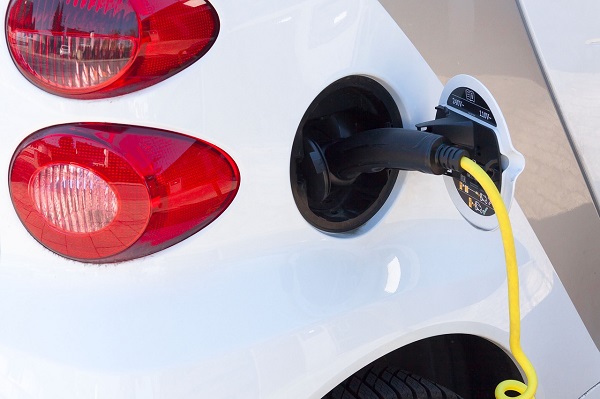
The EV future will not be evenly distributed, at least for a while. Europe and China will have the highest e-mobility shares by 2030, per McKinsey's research, with that of EVs even higher in Germany due to heavy incentives brought in from 2020. At the same time, regulatory targets are expected to increase in China and the US, and 2030 is the year when the British government plans to completely ban the sale of new ICE vehicles. Full-electric vehicles are anticipated to account for more than 70 percent of Volkswagen's European vehicle sales by 2030, the German auto maker said in March 2021 as it unveiled its 'Accelerate' strategy.
However, emerging markets such as South Asia, South America, the Middle East and Africa are likely to experience growth for both ICE and EV powertrains, because electrification will still be relatively less advanced. These regions are also forecast to have the largest share of ICE vehicles in 2030.
There is a strong concentration of battery manufacturers in China today, which may give Asian automotive suppliers and OEMs a competitive advantage through easier access to EV technology. However, another region is looking to challenge that dominance in the coming years.
In 2018, the EU launched its Battery Action Plan to improve European battery self-sufficiency. There are now four new "gigafactories" online and 23 under construction across the EU and UK, according to CIC energiGUNE, a research center in the Basque Country. When all those facilities are online, they will have a maximum capacity of close to 700GWh by 2028. In terms of global capacity, BloombergNEF predicts Europe's share could increase from 7 percent now to 31 percent in 2030.
The American market is also going electric, but perhaps not so swiftly. Deloitte predicts EVs will take up 27 percent of new car sales in the US by 2030. According to Frank Jacobs at Big Think, "The Biden administration is keen to make up for past inaction in terms of switching to post-fossil energy. But it has its work cut out."
Tesla has its Gigafactory 1 in Nevada, which coined the term now used generically for large-scale battery factories. When its current expansion is completed, Tesla's facility will be the largest building in the world by footprint, but aside from that the US has only two other battery production facilities. Based on current trends, by 2030 the US will have just 10 gigafactories to China's 140 and Europe's 27. "If US production can't keep up with demand, electrification will suffer from thedreaded battery bottleneck," writes Jacobs. "Unless America is content to import its batteries from Europe or China."
Ripple effects for powertrain manufacturing Changes in demand as EVs gain on ICE vehicles will affect the requirement for automotive components. The transmission is the part of the powertrain most affected by the change, McKinsey writes in the report Electromobility's impact on powertrain machinery published in May 2021, adding: "The number of key components will significantly decline with the shift from ICE toward BEV powertrains."
McKinsey predicted an uptick in demand between now and 2030 for a number of components that are either present in ICE powertrains but also needed in EV powertrains, or are more specific to EVs. These include blade carriers, gear wheels, planet carriers, shafts, and transmission pumps (802 percent, 25 percent CAGR), battery cells and modules (706 percent, 23 percent CAGR), cylindrical battery cells (718 percent, 23 percent CAGR), prismatic battery cells (762 percent, 24 percent CAGR) and compressors (346 percent, 16 percent CAGR).
The same report also highlights a reduction in the number of key components as the shift continues from ICEs to BEVs. "Since PHEVs and mild hybrid EVs have both ICE and BEV components, there will still be a need for ICE components, but on a much smaller scale. The number of key components will decrease from around 30 in an ICE powertrain to around 9 in a BEV powertrain."
More Sourcing News
Read Also

关注 “环球资源外贸” 官方微信,获取实时外贸资讯
iOS & Android
iOS & Android(Mainland China)
Copyright © 2026 Publishers Representatives Limited. All rights reserved.