Download App
Better Online and Trade Show Sourcing Experiences.Scan the QR code to download.
Learn More
Hot Topics
Obi uses a spoon to scoop up food from different bowls, giving users who lack mobility some autonomy at home.
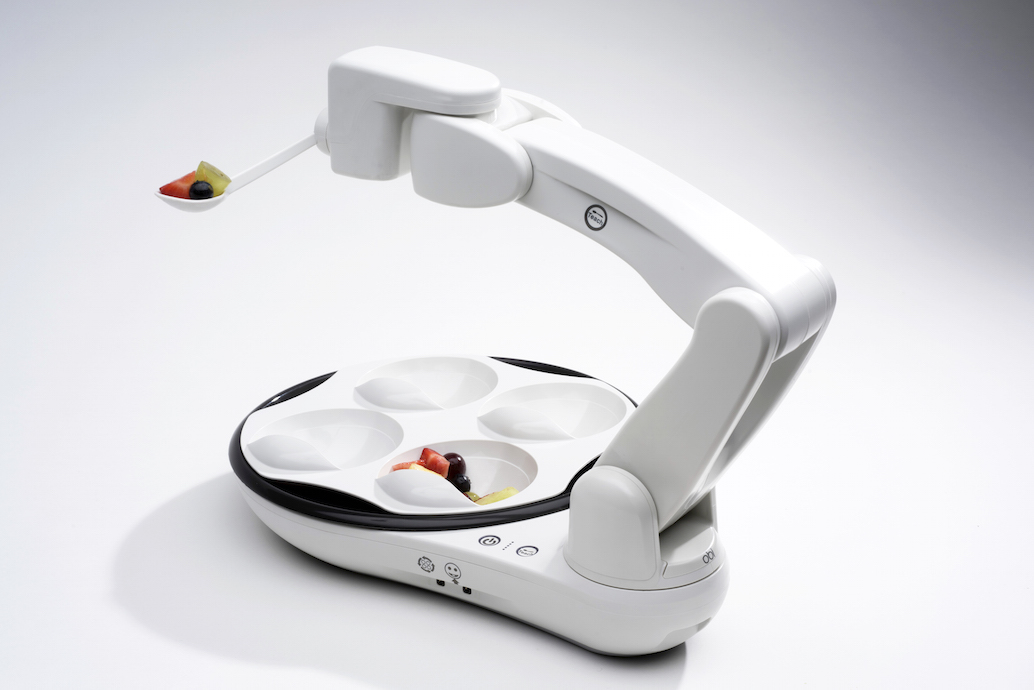
Obi has four different bowls to choose from during a meal (Source: Obi)
Robots can be expensive and the technology can sometimes leave people a little wanting. As part of a continuous process, a lot of companies are working to increase the capability of home and service robots. The features are already quite impressive in some ways, but one of the major areas that is believed to have the most promise is health care, especially in looking after the elderly. That is not the only demographic that needs health assistance, though. There are people with specific disabilities that can benefit from new technology. The Obi robotic arm is one example of this.
Obi was created to help people with limited movement eat without the need of another person. The company's promotional video includes an interview with a person suffering amyotrophic lateral sclerosis, which causes muscle atrophy. He said Obi returned to him a small sense of autonomy by allowing him to use the robotic arm to feed himself during family meals.
Obi does require some assembly and it looks like the arm needs to be trained where to deliver the food. Once that is done, the spoon connected to the arm scoops up food from four different bowls in the device's dish. It looks like food needs to be cut up into fairly small portions for this to work, but as David Hare said in the video, "you cannot put a price tag” on getting back some autonomy.
Obi is a business, however, so it does need to put a price tag on its product. The robotic arm costs $4,500, but the company's website promotes using crowdfunding campaigns as a way to raise money for the device. This route seems to have worked for at least one customer so far. Perhaps, the bigger potential for Obi later down the line is insurance firms, which already pay for things such as motorized scooters for people with limited mobility. All the money in the health care market probably explains part of the reason robotics companies are so interested in it. The capability of robots today seem well-suited for particular health care tasks but cost can be prohibitive. At least if a robot is part of medical expenses, some of the damage might be shifted to an insurance provider.
More Sourcing News
Read Also

关注 “环球资源外贸” 官方微信,获取实时外贸资讯
iOS & Android
iOS & Android(Mainland China)
Copyright © 2026 Publishers Representatives Limited. All rights reserved.




