Download App
Better Online and Trade Show Sourcing Experiences.Scan the QR code to download.
Learn More
Hot Topics
by Renaud Anjoran
These days it seems more and more "hardware startups" are coming to Shenzhen and working with Chinese manufacturers to launch production of electronic products. And they typically find out that their supplier hasn’t prepared correctly for the launch process.
Many of these startups have little manufacturing experience and don’t know where to pay the most attention. They tend to rely too much on the OEM supplier and overlook several critical factors that we listed below.
The quality of the final product directly depends upon the quality of the components that go into it; therefore, it is essential that all parts are inspected before they are used in any final assembly. An unfortunate habit of many Chinese suppliers is to buy substandard components in order to make more margin. If you discover this after half the order quantity is finished, it is way too late.
A procedure for inspecting all incoming components and parts is necessary. This is the stage where any faulty parts delivered by the supplier should be identified and put to one side and quarantined, thus preventing them from being distributed to production.
All Incoming Quality Control (IQC) should be carried out in accordance to a sampling plan. If you shoot for high quality a good sampling plan would be based on the following standard: ISO2959-1, LEVEL II, SINGLE SAMPLING with an acceptance quality limit (AQL) of: Critical Defects: 0.4%, Major Defect: 0.65%, Minor Defect: 1.0%. Make sure you tell your supplier about this in advance, since it is considered pretty strict by most Chinese factories.
For most electronic products, many components are purchased by the OEM manufacturer. Ideally you can screen and qualify the critical sub-suppliers rather than relying on your direct supplier.
Best practice for electronic component inspection begins with product handling. Ideally inspectors would take the Electrostatic Discharge Sensitive Safety Standard (ESDS) training and continue to use all the correct procedures throughout their work. This knowledge is critical for receiving inspections and shipping preparation.
Having suppliers deliver good quality components and goods with virtually zero defects is obviously the ideal scenario, however, without good planning your product launch could possibly go astray with respect to scheduling from a launch date.
To ensure your new product has a smooth and successful launch and to maximize productivity you need a solid production plan, however generating an effective plan is a complex process. A cross functional team need to work together to ensure that materials, equipment and human resources are available when and where they are needed.
A production plan is like a roadmap: it helps you know where and when you are going and how long it will take to get there. I am shocked at how few factories do a proper plan. If they simply give you a shipment date, it is a red flag.
You must request a detailed plan that shows when each component will be delivered, when they will train the operators, when they will do small runs, when they will do mass production, etc. And then you need to check with a manufacturing expert whether the plan is realistic.
In order to prepare the flowline for a new product introduction it is paramount that prototypes and pre-production units have already been run. This allows for machine setting and line parameters to be understood and recorded so that every aspect of the flow line is ready for the first production run.
Making sure the flow line is organized from start to finish includes all the peripheral elements such as feeders, inspection stations both in-line and off-line as well as making sure all the equipment has been set up and functioning correctly.

If you want to check how well organized your OEM manufacturer is, I advise to send an engineer to conduct a process audit.
Define, Measure, Analyze, Improve and Control (DMAIC) is a structured problem-solving method. Each phase builds on the previous one, with the goal of implementing long-term solutions to problems.
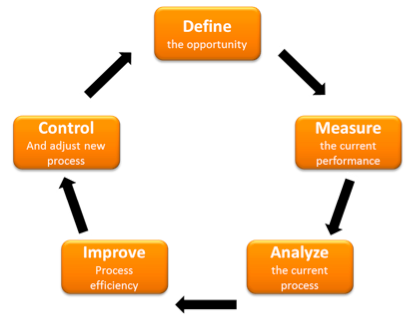
The DMAIC method is the preferred method for improving a system that has either high risk or the problems are complex (note that, on an SMT flowline, both of these scenarios fit within these criteria). Optimizing the production flow line and eliminating problems and issues, as well as having an evergreen improvement plan in place, will ensure your new product has a relatively smooth launch.
Renaud Anjoran has been managing his quality assurance agency (Sofeast Ltd) since 2006. In addition, a passion for improving the way people work has pushed him to launch a consultancy to improve factories and a web application to manage the purchasing process. He writes advice for importers on qualityinspection.org.
More Sourcing News
Read Also

关注 “环球资源外贸” 官方微信,获取实时外贸资讯
iOS & Android
iOS & Android(Mainland China)
Copyright © 2026 Publishers Representatives Limited. All rights reserved.




