Download App
Better Online and Trade Show Sourcing Experiences.Scan the QR code to download.
Learn More
Hot Topics
by Stef Calimlim (Content Editor)
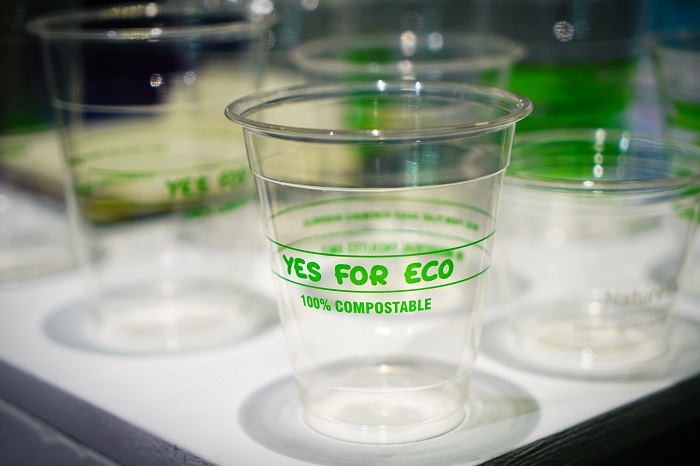
People live in a world where plastic is everywhere. From gadgets, household products and transportation to food packaging, plastics have become a part of people’s daily lives. Inarguably, plastic has many uses and benefits, but along with these come environmental costs and drawbacks such as pollution and health hazards. Reliance on plastic, specifically single-use ones, has created a massive garbage problem and devastating effects on the environment. What is making things worse is that microplastics, as several researches have shown, are making their way through water, soil, the food people eat, and eventually to the human body.
In response to the worsening plastic waste crisis, governments around the world are creating laws to gradually phase out single-use plastics, tax the use of plastic, and provide incentives to businesses and establishments promoting the use of eco-friendly alternatives to plastic.
This is where bioplastics come into the picture. Bioplastics are a type of plastic made from renewable sources such as vegetable oils, starches, plants, recycled food waste and sawdust instead of petrochemicals. They are either biodegradable or compostable. Bioplastics are considered as an environment-friendly alternative to traditional plastic.
According to Statista, the worldwide production capacity of bioplastics was at 2.1 metric tons in 2020, an eight percent increase from 2019. The growth is expected to persist in the coming years, with a projected increase to around 2.87 million tons in production capacity by 2025.
PLAs – Polylactic acids (PLAs) are nontoxic, carbon-neutral and 100 percent renewable. They are made from plant sugar derivatives. They come from corn, potatoes, wheat and tapioca, and are used in food packaging. PLAs are also known as substitute for polystyrene (PS), low-density and high-density Polyethylene (LDPE and HDPE), polyethylene terephthalate (PET) and polypropylene (PP).Cups, food containers, cutlery, salad bowls and straws are among the common products made of PLA.
PHAs – Polyhydroxyalkanoates (PHAs) are biodegradable and readily compostable plastics produced by microorganisms through bacterial fermentation of feedstocks. They are widely used for various biomedical applications and as substitute for polypropylene (PP) and polyethylene (PE). Despite their biodegradability, carbon neutrality and sustainability features, there is currently insufficient production facilities worldwide and limited thermo-mechanical stability, impeding PHAs application on a larger scale.
PHBs – Polyhydroxybutyrates (PHBs) are both biodegradable and produced by microorganisms. Application of this type of plastic includes tableware, surgical stitches and pins, and fruit and vegetable packaging.
Cellulose-based – These are strong and biodegradable plastics made using cellulose or cellulose derivatives from cotton, oat straw, soybean biomass and wood pulp. They are commonly used by pharmaceutical companies, and as beverage, electronics device and corrugated packaging.
Starch-based – Commonly derived from rice and corn starch, which is a natural polymer, this type of bioplastic has high water vapor permeability, is highly degradable and known for its ability to blend with other biopolymers. It is widely employed in the medical industry and used in various packaging applications.
Interested in sourcing bioplastic materials and by-products? You can find a wide range of bioplastic raw materials and bioplastic packaging, tableware and more from our verified suppliers via Global Sources.
More Sourcing News
Read Also

关注 “环球资源外贸” 官方微信,获取实时外贸资讯
iOS & Android
iOS & Android(Mainland China)
Copyright © 2026 Publishers Representatives Limited. All rights reserved.




