




AMOLED displays have come a long way from their first market appearance via the BenQ-Siemen S88 mobile phone in 2006 and Nokia’s N85 smartphone in 2008. It was Nokia’s pioneering use of this LCD alternative, however, that led to its wider adoption, notably by Samsung. The Korean company announced its first smartphone to have the screen, the i7110, in the same month as N85’s launch and released it the following year. It has been showcasing the display in its Samsung Galaxy series since 2009, including the company’s own iterations that include Super AMOLED and Super AMOLED Plus.
Over the years since then, AMOLED use has been steadily increasing. In 2023, this display’s global sales value reached $49.3 billion from the previous year’s $45.5 billion because of rising demand for smartphones, according to AskCI. This translated to 50.8 percent of the smartphone display market, according to TrendForce. Then, in 2024, this OLED-based technology finally snatched the lead from TFT LCDs in smartphones, accounting for 51 percent of total display shipments, according to Display Daily.
AMOLED has also expanded its application base to wearables such as smartwatches, fitness trackers, virtual reality head-mounted displays and smart glasses. It is also finding a niche in larger devices, including tablets, laptops, automotive entertainment and smart TVs. Based on Omdia’s projections, the volume of AMOLEDs for tablets will jump from 3 million units in 2021 to 27 million in 2028 and for laptops from 5 million units to 47.3 million.
Finding momentum
A key driver in broader AMOLED adoption is the flexible display, according to Omdia. Based on UBI Research’s data, the ratio between rigid and flexible types began to diverge beginning 2019 and clearly showed the latter’s significant increase in 2022.
By volume, IHS Markit said that flexible AMOLED displays rose from 1.5 million units in 2019 to 8.3 million in 2020, 17.5 million in 2021, 24.4 million in 2022, 28 million in 2023 and 46.2 million in 2024. This is expected to climb further and reach 53.4 million this 2025.
The OLED category’s widening reach is attributed to falling costs. “For example, from 1Q 2015 to 2Q 2017, the cost of manufacturing a 55-inch UHD TV panel with an OLED display fell from 426 percent of LCD costs to 245 percent of LCD costs,” according to MarcoPolo, Paulson Institute’s now-archived think tank. “If this trend persists, as seems likely, then OLEDs could reach cost parity with LCDs in the coming decade, accelerating OLED’s adoption as the preferred display technology by major producers.”
Pushing for dominance
China, a major player in the AMOLED display sphere, has been experiencing a boom in this category, with new lines operating and breakthroughs achieved.
Jiangsu EF, which invested $830 million in a factory in 2023, began trial production of high-end AMOLED display modules mainly for smartphones in late 2024. Its annual capacity will reach 70 million units on a mass scale in one or two years.
In the flexible AMOLED category, BOE continues to expand its lead. The company, the largest supplier in the country and ranks second in the world, shipped about 140 million flexible AMOLEDs from three 6G lines in its Chengdu, Chongqing and Mianyang factories in 2024. This figure will increase further when its first 8.6G AMOLED display project in Chengdu, worth $8.75 billion, starts mass production by the end of 2026.
BOE is not only ramping up production but also doing the same for innovation. Available information points to over 30,000 patent applications on the company’s flexible displays out of the more than 100,000 independent filings as of end-2024.
Meanwhile, Visionox, a first-tier AMOLED display module manufacturer in China, has developed its own technology called Visionox Intelligent Pixelization for up to 80-inch units. ViP is said to improve the effective luminance area to 69 percent from the current 29 percent and raise definition to over 1700ppi. It also helps lower power dissipation by 38 percent, which in turn lengthens operating time by up to six times.
Visionox uses its in-cell touch control integration technology, which eliminates a separate touch layer and results in thinner displays.
Manufacturing pool
There are hundreds of suppliers of AMOLED displays in China, consisting of mostly small and midsize homegrown manufacturers and foreign companies.
Samsung and LG Display are some of the major players with factories there. Their Chinese first-tier counterparts include Shenzhen Tianma, Truly, Ever Display and CSOT, in addition to BOE and Visionox.
Many factories are found in Guangdong, specifically Shenzhen, Dongguan, Zhongshan, Shanwei and Guangzhou. There are also facilities located in Sichuan and Shaanxi, with both inland provinces attracting manufacturing investment in exchange of lower labor cost and preferential policies.
China-made modules
Manufacturers of AMOLED display modules provide a range of sizes, mostly for smartphones, wearables wearables , laptops, automotive entertainment devices and smart TVs.
In terms of resolution, the choices are 1920x1080dpi, 2560x1440dpi and 3200x1440 dpi. Units usually have a color gamut of 16.7 million, brightness of up to 600cd/sqm, contrast ratio of 10,000:1 and response time shorter than 4ms.
These display modules use domestically or overseas sourced luminance materials, ITO glasses, polarizers, polyimide films, PCBs and driver ICs. Luminance materials account for 30 percent of total costs and are usually obtained from suppliers in South Korea and Japan. For ITO glasses, Chinese manufacturers turn to homegrown providers, including Ofilm and CSG.
Outlay for these inputs is expected to stay stable and keep prices of AMOLED display modules at current levels until end-2025. In the flexible category, however, quotes might slightly go down as more makers venture into production and heighten competition.
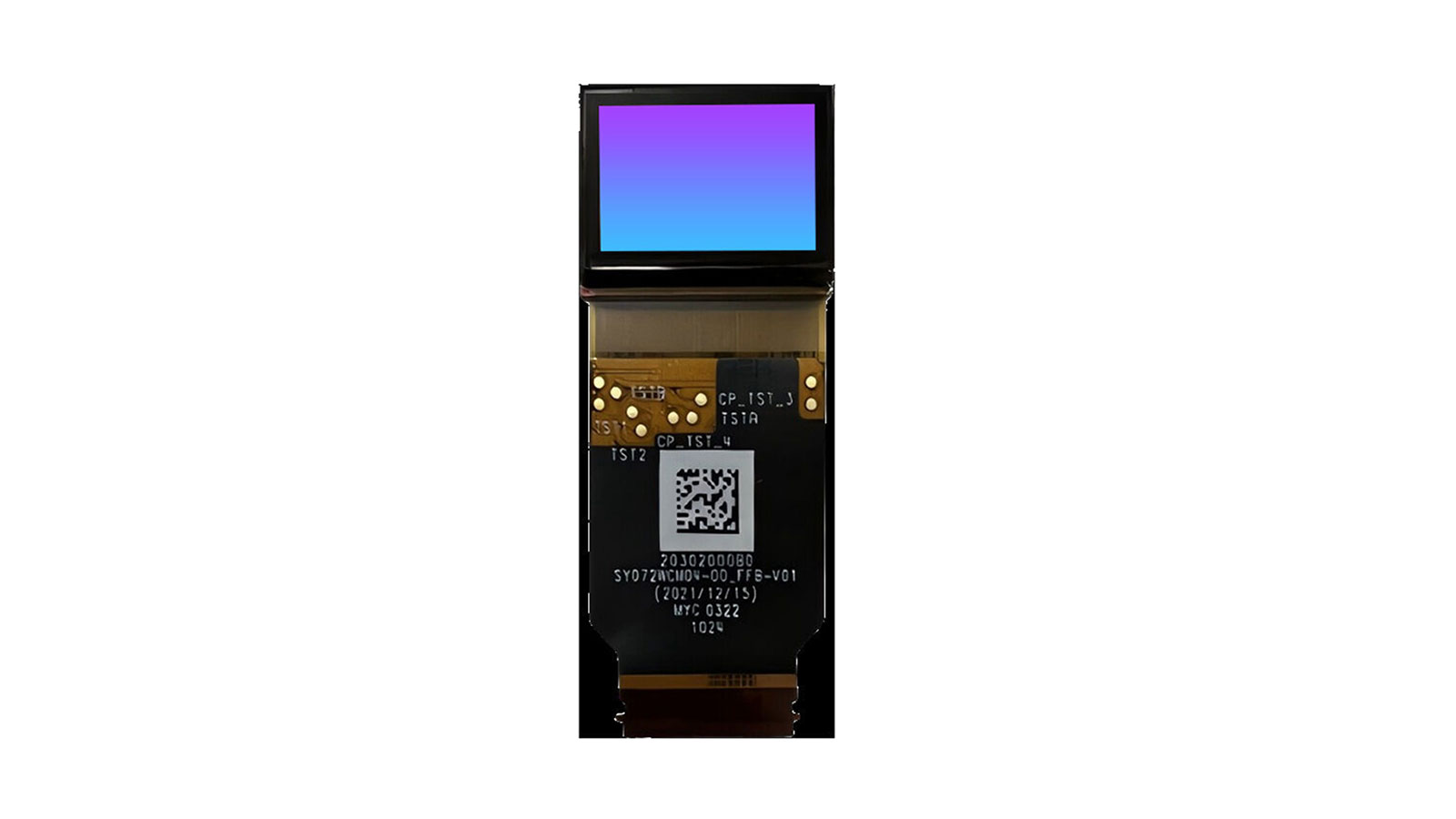
AMOLED display module, 0.72 inch, 1920x1200 pixels
Company: Huaxin Technology Co. Ltd
Huaxin Technology’s 0.72-inch AMOLED display module, the ESHX072WCM06, renders in 1920x1200-pixel resolution and has 500,000:1 contrast ratio. It can be viewed from all angles and supports a 61-pin MIPI. Outer dimensions are 19.97x15.5x1.78mm, with the active area in 15.552x9.72mm.
MOQ: 1,000 units
Lead time: 7 days
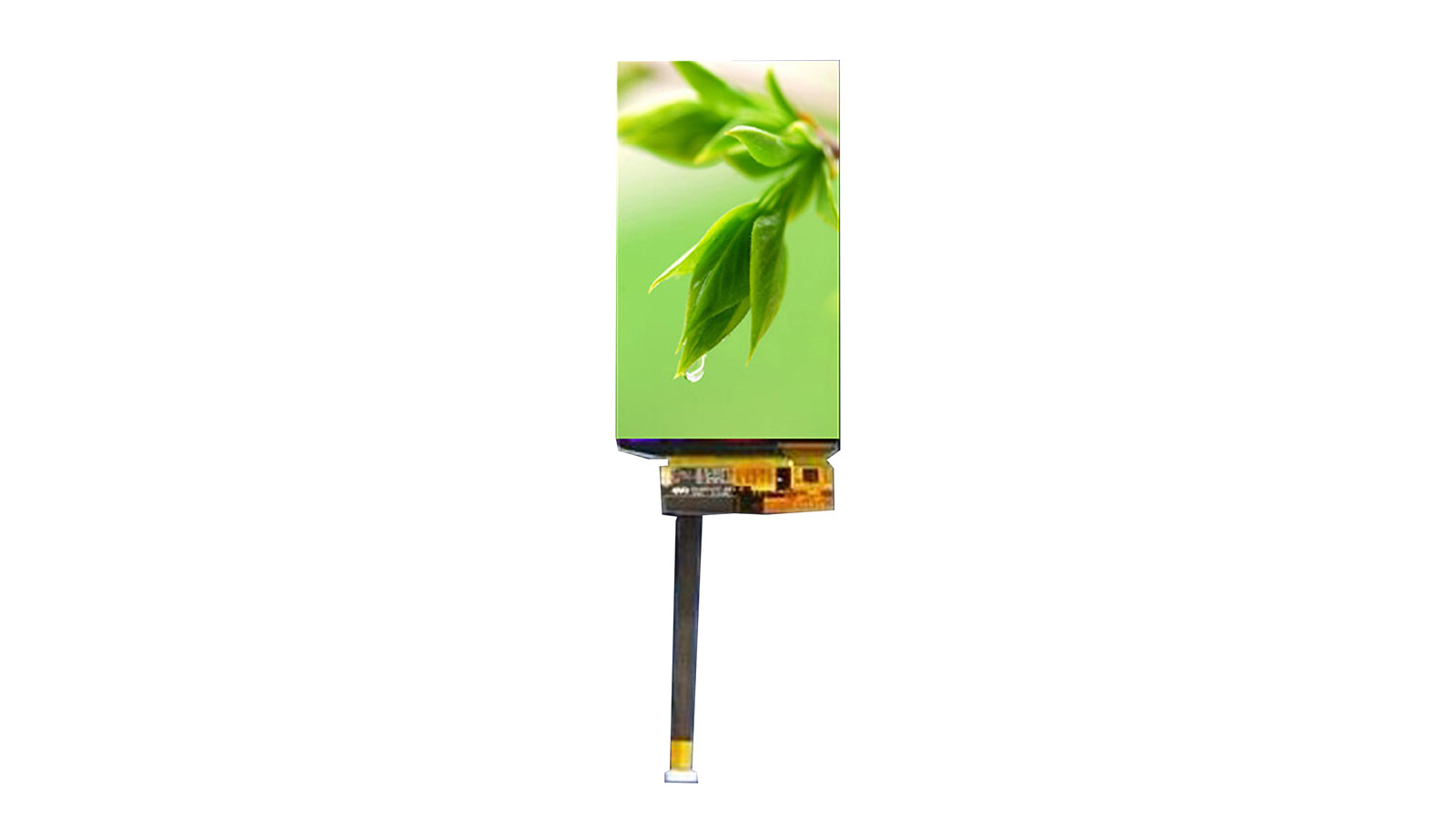
AMOLED display module, 5.5 inches, 1920x1080 pixels
Company: Shenzhen Golden Vision Optoelectronic Co. Ltd
From Shenzhen Golden Vision, the GVH05502017V1 is a 5.5-inch AMOLED display module with 1920x1080-pixel resolution, 350cd/sqm brightness, 100,000:1 contrast ratio and more than 80-degree viewing angle. This 70.41x128.29mm unit has an active area of 68.31x121.44mm.
MOQ: 1,000 units
Lead time: 30 days
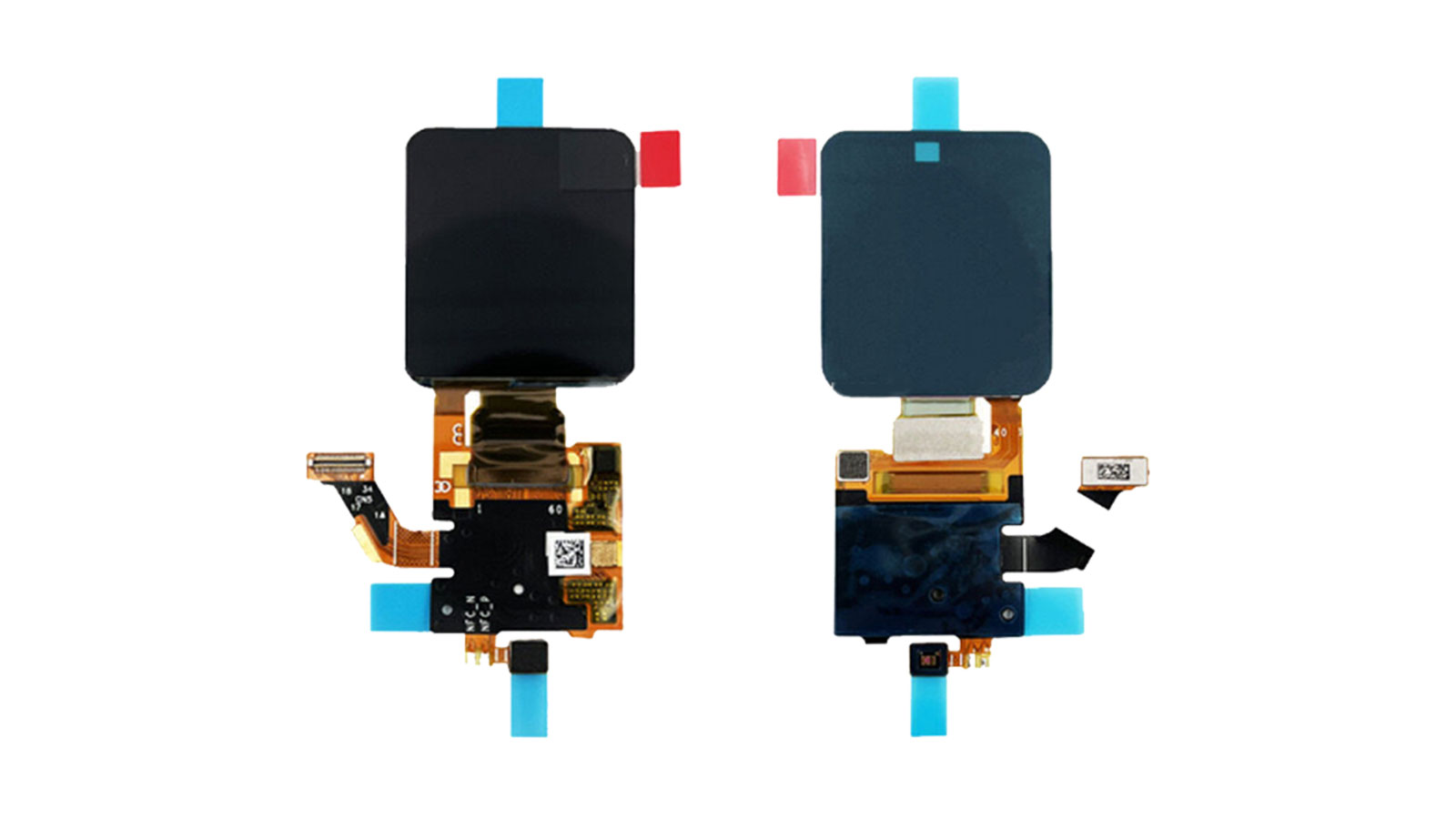
AMOLED display module, 1.6 inches, 320x340 dots
Company: Shenzhen Haresan Electronics Co. Ltd
The AHEM1D6-001-5130 from Shenzhen Haresan is a 1.6-inch AMOLED display module that renders in 320x340-dot resolution and 450cd/sqm brightness, and uses an SH8601Z driver IC. It has 301ppi pixel density, 37.02x30.4mm active area and 28.92x33.35x0.73mm outer dimensions.
MOQ: 1,000 units
Lead time: 10 days
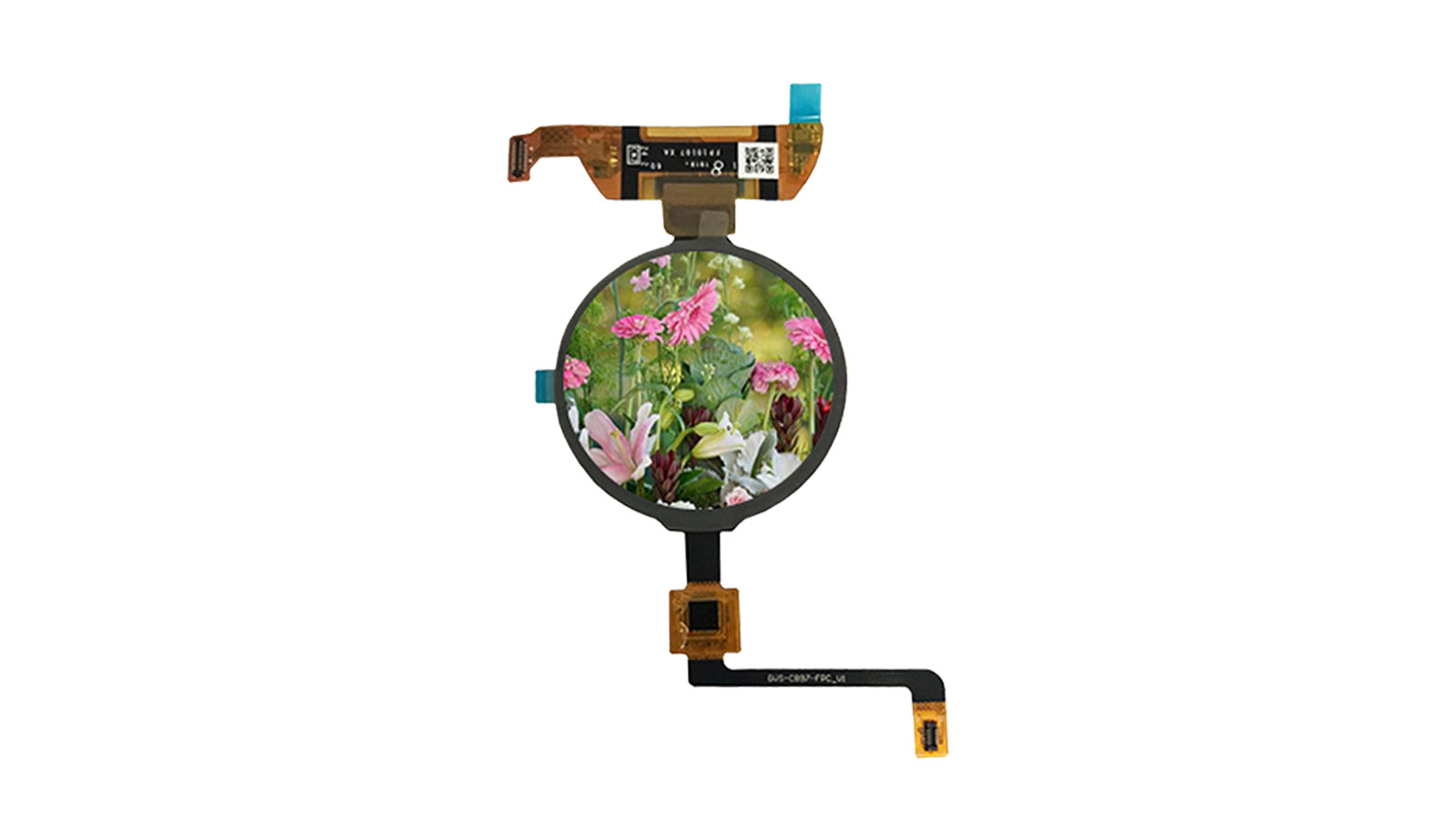
AMOLED display module, 1.39 inches, capacitive touchscreen
Company: Shenzhen Oric Electronics Co. Ltd
This 1.39-inch AMOLED display module, the ORC-O013901C-V01, includes a capacitive touch panel and has 454x454-dot resolution, 35.412mm active display diameter and 38.83x38.21x0.68mm outer dimensions. It supports MIPI and SPI, and uses an RM69330 driver IC.
MOQ: Negotiable
Lead time: 7 days

