Download App
Better Online and Trade Show Sourcing Experiences.Scan the QR code to download.
Learn More
Hot Topics
China components suppliers eye prospects in the emerging application market, directing product development toward matching its requirements.
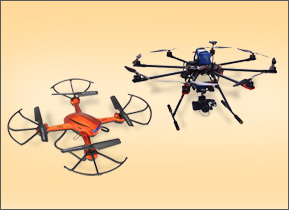
Drones have become a hot technology over the past two years, and have presented electronic components manufacturers with new opportunities in this nascent but large market. MEMS sensors, brushless DC motors and lithium batteries are at the forefront in this category right now.
MEMS acceleration sensors and gyroscopes are mainly used to ensure steady and safe drone flying, which is why it is important for suppliers to ensure high precision and reliability in their products. Senodia Technologies (Shanghai), a major MEMS gyroscope maker in China, installed a production line for drones in 2015. It is the only company to cater to local consumers and businesses at present.
Other kinds of sensors may also see climbing demand in the drone industry over the next several years, including GPS, laser and ultrasonic sensors.
Brushless DC motors used in drones must be small, lightweight, and have a long battery life and high level of efficiency and reliability. With this in mind, China manufacturers make certain their products meet industry standards, including GB/T21418-2008 and JBT10690-2007, especially for industrial drones. Shenzhen Feijun Electrical Motor Co. Ltd released units for drones in the past two years. One such model, the F8L, has 1,500 to 3,400rpm, 1.2 to 9.5kg thrust and 10 to 14g/W efficiency. It is rated at 22.2 to 48V, 2 to 32A and 62 to 1,440W.
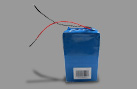
To be competitive, lithium batteries for drones need to be light but with a large capacity. Li-polymer types are currently regarded as the best choice because they meet requirements for great density and reliability, and light weight and thin profile at a relatively low price. Dongguan Jifei has presented 000051 units for the DJI phantom series drones. The 11.1V products with JST-XH charge balance and XT60 discharge plugs provide 2,600mAh capacity. They measure 105x34x26mm and weigh 185g.
Local manufacturers make up more than two-thirds of the industry, and foreign-invested businesses the rest. The former has been able to capture the majority of the market by offering a better price-to-performance ratio.
It is expected that components makers in the country will pay more attention to drones for years to come.
The primary production areas for this market are along the coast in the Pearl River and Yangtze River Delta regions. Guangdong province is the largest manufacturing area, playing host to over 70 percent of the suppliers. Shenzhen, one of two first-tier cities there, is a key location, being a major production hub for smartphones and model planes, and offers a supply chain for drones. Other incentives for manufacturers include the area’sabundant labor force and beneficial public policies.
MEMS sensors: All drones require MEMS acceleration sensors and a MEMS gyroscope for stable flying. The gyroscope offered by Senodia for drones has a high-performance silicon micro machine sensor with signal conditioning circuitry, and enhanced resolution and temperature stability. It operates in -20 to 85 C.
Brushless DC motors: Brushless DC motors used in drones need to support 1,000 to 1,200-hour operation. Such units have 22V rated voltage and 0.5A to 1A no-load current. They weigh between 100 and 300g. High stability and reliability indicate the R&D trend for local makers.
Li-polymer batteries: Li-polymer batteries used in drones demand capacity exceeding 10,000mAh. These have a 22V rated voltage and 25C continuous discharge rate, and last more than 500 cycles. Most manufacturers of this battery type have ensured their products meet RoHS requirements.
Citing gyroscopes as an example, the key materials and components include gyro wheels, cases, torque motors and signal sensors. In brushless DC motors, these are stators, rotators, position sensors and cases. Cathodes, anode materials, electrolytes and insulation are the counterparts in Li-polymer battery production.
All manufacturing inputs come from local sources. Some suppliers also use imported versions on request.
Material and component costs and product prices have generally been stable, a trend expected to last through the coming year.

Global drones market to grow fast
Statistics from the Beijing Haiying Information Research Institute show the worldwide drone market reaching total sales of up to $39.1 billion within the next decade. The industry in China will also rise rapidly, with aggregate market value hitting $7.9 billion within the same period, according to the National Business Daily.
At present, drones are widely used in agriculture, rescue, aerial photography and meteorology. New applications for these unmanned aerial vehicles have been emerging in recent years. They include express delivery.
China drone makers are optimistic about the future of the market, both locally and abroad. DJI Technology, the largest drone supplier in the world, is projected to achieve total sales surpassing $1 billion in 2015, doubling from the previous year. The company is expected to maintain its high growth over the next two years given increasing demand. This will present a huge application base for components suppliers in the country.
China makers occupy line
DJI is now widely recognized as the biggest consumer drone supplier, accounting for as much as 70 percent of the global market. More manufacturers such as Ehang and Xaircraft have entered the sector and witnessed explosive growth in the past two years. In order to boost price and performance advantage, the majority of drone suppliers source their raw materials from domestic providers.
Decades of development have produced a comprehensive supply chain for the electronics industry in China. High-quality sensors, brushless motors, batteries and other components, and raw materials can be easily acquired at reasonable prices in the country, benefiting local drone manufacturers. It is expected that foreign players may also soon obtain their manufacturing inputs from China to help lower costs.
More Sourcing News
Read Also

关注 “环球资源外贸” 官方微信,获取实时外贸资讯
iOS & Android
iOS & Android(Mainland China)
Copyright © 2026 Publishers Representatives Limited. All rights reserved.