Image source: Pixabay
Aluminum extrusion profiles are essential materials in various industries, including construction, automotive, electronics and aerospace. They are long, continuous shapes created by forcing aluminum through a shaped opening in a die. The aluminum extrusion process involves heating the metal to a specific temperature, which allows it to flow more easily through the die. The resulting profiles can be cut to the desired length and used in a variety of applications.
Aluminum profiles can be designed for specific requirements. They offer high strength-to-weight ratios, corrosion resistance and thermal conductivity as well, making them ideal for use in different environments.
In recent years, demand for aluminum extrusion profiles has increased significantly. This growth can be attributed to the advantages of aluminum over other materials such as steel and plastic. With an understanding of their different types and uses, you can make informed decisions when selecting the right profile for your markets.
Types and their uses
The common types of aluminum extrusion profiles and their uses include:
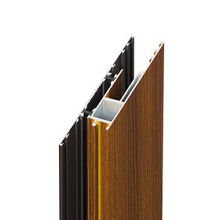
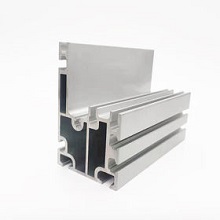
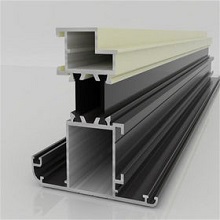
- Standard profiles: The most common, these come in a wide range of shapes and sizes. They are typically used in window and door frames, curtain walls and structural framing.
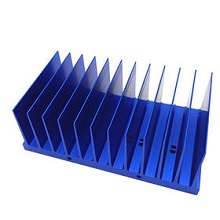
- Heat sink profiles: Used in electronic devices, such as computer processors and LED lights, these feature fins or grooves that increase their surface area for efficient heat dissipation.
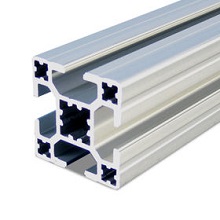
- T-slot profiles: They are used primarily in industrial applications, such as machine guarding, workstations and structural framing. These profiles feature a T-shaped slot that allows for the attachment of various components, making them highly versatile and modular.
- Conveyor profiles: Designed for use in conveyor systems, they provide a lightweight and durable solution for material handling applications.
- Solar panel mounting profiles: These profiles are specifically designed for mounting solar panels, offering a lightweight and corrosion-resistant alternative to traditional steel mounting systems.
Shapes, sizes, textures, colors and brightness
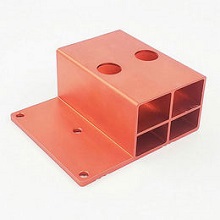
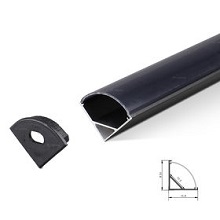
Aluminum extrusion profiles come in a wide variety of shapes, sizes, textures, colors, and brightness levels, allowing for maximum customization and versatility. Some of the most common shapes include angles, channels, tubes, bars and beams, which can be further customized by adjusting their dimensions, wall thickness and other design features.
In terms of textures, there are smooth, brushed and textured finishes available. The choice depends on the desired appearance and specific application requirements. For example, a smooth finish might be preferred for decorative uses, while a textured finish may be more suitable for slip-resistant surfaces.
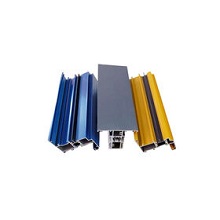
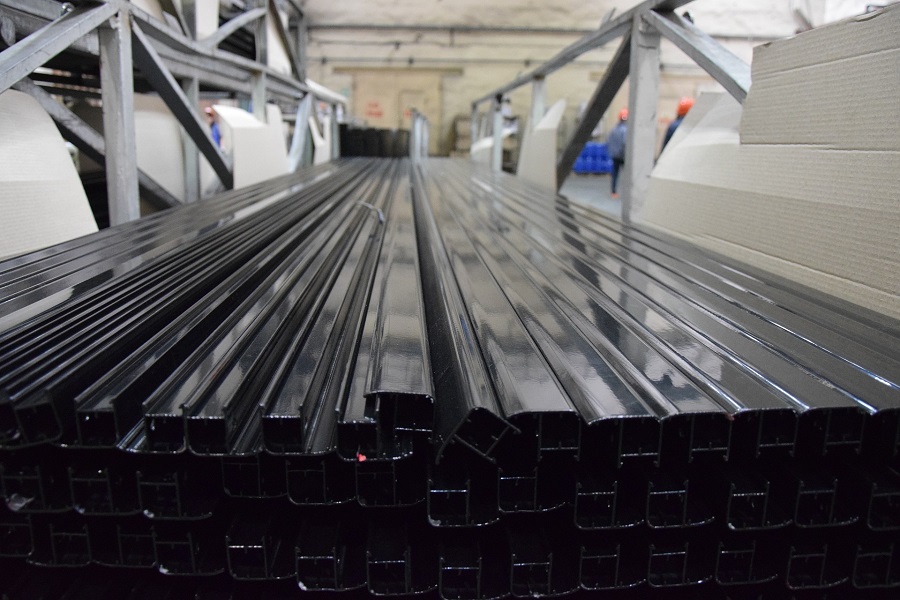
Aluminum profiles can also be anodized or powder-coated in various colors, providing a wide range of aesthetic options. Anodizing is a popular choice for protecting and coloring aluminum, as it offers excellent corrosion resistance and a durable, long-lasting finish. Powder coating, on the other hand, provides a thicker, more uniform layer of color that is resistant to chipping and scratching.
Finally, aluminum profiles can be produced with finishes ranging from matte to highly reflective, again depending on the desired appearance and specific application requirements.
Grades of aluminum used
There are several different grades of aluminum used in the production of profiles and the most common include:
- 6061 aluminum: A popular choice for its high strength, corrosion resistance and ease of extrusion, this is commonly used in automotive parts, structural framing and heat sinks.
- 6063 aluminum: For its good extrudability, corrosion resistance and surface finish, it is typically used in window and door frames, furniture and architectural components.
- 2024 aluminum: This high-strength aluminum alloy is primarily used in the aerospace field due to its enhanced fatigue resistance and strength-to-weight ratio.
- 7075 aluminum: Another high-strength aluminum alloy, this is often used in aerospace and military applications due to its excellent strength-to-weight ratio and corrosion resistance.
- 5052 aluminum: Known for its good weldability, formability, and corrosion resistance, this alloy is a popular choice for marine applications and other environments where exposure to water is a concern.
Extrusion dies
The most common types of extrusion dies used in the production of aluminum profiles include:
- Solid dies: These are used to produce solid profiles such as bars, beams and angles. They feature a single, continuous opening through which the aluminum is extruded.
- Hollow dies: They are used to make hollow profiles such as tubes and pipes. They feature a central mandrel around which the aluminum flows, creating the hollow shape.
- Semihollow dies: These are used to create profiles with partially hollow shapes such as channels and T-slots. They feature a combination of solid and hollow sections within the die.
- Multihole dies: Dies with multiple holes produce complex profiles with various openings or cavities. These can create intricate shapes and structures in a single extrusion process.
Extrusion machines
One of the key machines in this process is the aluminum extrusion machine. These are designed to apply the necessary force and heat to extrude aluminum through the die, creating the desired shape. The common types include:
- Horizontal extrusion presses: These force the aluminum horizontally through the die, allowing for the production of long, continuous profiles.
- Vertical extrusion presses: They thrust the metal vertically through the die. This configuration is often used for shorter profiles or when space constraints are a concern.
- Direct extrusion presses: In direct extrusion, the aluminum billet is heated and then forced through the die. This process is the most common method of aluminum extrusion and is used to produce a wide range of profiles.
- Indirect extrusion presses: In indirect extrusion, the die is held stationary while the aluminum billet is pushed through it using a ram. This method is less common than direct extrusion but is used for more complex profiles.
- Hybrid extrusion presses: These combine the features of direct and indirect extrusion, allowing for the production of more complex profiles with greater precision.
Frequently asked questions about aluminum extrusion profiles
How are aluminum extrusion profiles made?
The process of making aluminum extrusion profiles involves several steps, including:
- Billet preparation: Preparing the aluminum billet is the first step in the extrusion process. The billet is typically made from a specific grade of aluminum and is heated to a specific temperature to make it more malleable.
- Extrusion: Once the billet is prepared, it is loaded into the extrusion press. This machine applies pressure, forcing the billet through the die. The die determines the shape and dimensions of the resulting profile.
- Cooling: After extrusion, the aluminum profile is cooled using water or air to ensure it retains its shape and dimensions.
- Cutting: Once the aluminum profile is cooled, it is cut to the required length using a saw or other cutting tool.
- Finishing: The final step in the process is to finish the profile. This may involve anodizing or powder coating for corrosion resistance and added color.
What is the market size of aluminum extrusion profiles?
Globally, this market reached $87.84 billion in 2021, according to Grand View Research, and is projected to register a CAGR of 7.5 percent from 2022 to 2030. Straits Research puts it at $146.2 billion by 2030 based on a more conservative 6 percent CAGR from 2022.
Verified Market Research says that there is increasing use of aluminum extrusion profiles in the automotive industry. “Aluminum is getting favored for the making of lightweight vehicles besides, aluminum is 100 percent recyclable and impervious to erosion, thereby promoting growth.”
What are the factors to consider in selecting suppliers of aluminum extrusion profiles?
When selecting a supplier of aluminum extrusion profiles, several key factors should be kept in mind. These include:
- Quality: Product quality is critical in ensuring that specific requirements of the application are met. It is important to select a supplier that adheres to strict quality control standards.
- Lead time: This is essential, particularly when dealing with time-sensitive projects.
- Customization: Pick a supplier that can manufacture profiles down to the most detailed requirements.
- Pricing: It is important to choose a supplier that offers competitive pricing but will not compromise on quality.
- Customer service: Great customer service ensures a smooth procurement process. Select a supplier that offers provides this kind of support.
In conclusion, aluminum extrusion profiles are versatile components used in various industries. Selecting the right supplier is critical in ensuring the profiles meet specific requirements. By considering the factors outlined in this guide, you can choose the right supplier for your market needs.
Online platforms nowadays allow buyers to easily look for the right manufacturer that meets their specific needs. Global Sources, for instance, not only provides site visitors with a comprehensive list of products and their details but also a list of suppliers that have been verified by third parties to ensure buyers are only dealing with legitimate companies. The B2B sourcing platform lets visitors filter and customize their searches, check the qualifications and relevant company information of the suppliers and take a virtual tour of some of the manufacturers’ facilities.
Company: Guangdong JMA Aluminium Profile Factory (Group) Co. Ltd
Description: The JMAC-2021-359 is an aluminum extrusion profile for windows. This is usually made of 6063 T5 or T6, but other aluminum types can be used, depending on requirements. Versions for doors and furniture can also be made.
Guangdong JMA operates three factories, with a total area of 5 million sqm. It complies with ISO 9001:2015, 45001:2018 and 14001:2015.
Price: $1.50 per kilogram
MOQ: 1,000kg
Lead time: 20 to 25 days
Company: Shanghai Everskill Mechanical & Electric Products Co. Ltd
Description: The AEP20200409001 aluminum extrusion profile can be made of 6063, 6061, 6060, 6082 or 7075 alloy, with T5 or T6 heat treatment, and subjected to mechanical polishing or have a sandblasted or mill finish. Various sizes and styles are available. Length is up to 13,000mm or 3m. Price and MOQ are on direct inquiry.
ISO 9001:2015-compliant Shanghai Everskill has a state-certified R&D institution. Bosch, Thule, Hubbell and GE are some of its major customers.
Lead time: 30 to 60 days
Company: Kingka Tech Industrial Ltd
Description: The Aluminum Extrusion-104 is a heat sink with an anodized finish. Heat treatment with or without color can be done when specified. OEM orders and drawings are welcome.
ISO 9001:2015-compliant Kingka has an annual production capacity of 800 million heat sinks. Its major clients include ABB, Samsung, Philips, Wells and Bosch.
Price: $7.80
MOQ: 200 pieces
Lead time: 25 to 30 days
Company: Shenzhen Zhendong Precision Metal Co. Ltd
Description: A customizable aluminum extrusion profile, the ZD-001 9328 can be chemical or mechanical polished, anodized, electrophoretic-coated or spray powder-coated.
ISO 9001:2015-compliant Shenzhen Zhendong specializes in the manufacture of metal and plastic parts. It provides OEM services.
Price: $2.80 to $10
MOQ: 10 pieces
Lead time: 7 to 60 days
Company: Dongguan Xinruida Precision Technology Co. Ltd
Description: Model Aluminum Profile is a material for construction and industrial applications. It has 0.02mm tolerance and a natural anodized finish with sandblasting. Various heat treatment options are available.
Dongguan Xinruida is an ISO 9001:2008-compliant and Fortune 500 company.
Price: $4.40 to $5
MOQ: 10 pieces
Lead time: 7 to 12 days
Company: Ningbo Fendo Import & Export Co. Ltd
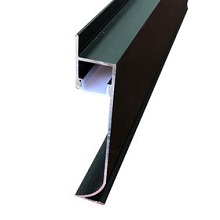
Description: This corrosion-resistant aluminum extrusion profile used a skirting line for LED strip lights, the FD-AP008-2 measures 1,000x71.4x13.4mm, with length customizable.
Ningbo Fendo offers a range of products, including small electric appliances, car accessories and personal protective equipment. It has cooperation partnerships with more than 30 factories.
Price: $3 to $3.60
MOQ: 2 pieces
Lead time: 30 to 60 days
Company: Dongguan Foxron Precision Metal Parts Co. Ltd
Description: The F000951 is an aluminum extrusion profile for glass display cabinets. The 6061-T6 alloy used may have an anodized, a painted or a powder-coated finish. This RoHS-compliant material has deburred edges and holes. Various materials and finishes are available.
Dongguan Foxron has a 15,000sqm factory equipped with advanced machines. It is ISO 9001:2015 -compliant.
Price: $0.33
MOQ: 100 pieces
Lead time: 15 to 20 days
Company: Dongguan Kinggold Industry Co. Ltd
Description: The KF-A184 is an aluminum extrusion with a black anodized finish. It is used as a supporting part or for repair work in the construction industry. This RoHS-compliant material can come in custom specifications.
Dongguan Kinggold specializes in metal parts and can produce up to 200 million pieces every month. It is compliant with IATF 16949, GB/T 19022-2003, and ISO 10012:2003 and 9001:2015.
Price: $0.50 to $10
MOQ: 1,000 pieces
Lead time: 7 to 25 days
Company: Shenzhen Standard Technology Co. Ltd
Description: The AL601-1616-C-2 is a 16x16mm aluminum extrusion profile for lighting applications. The material used is 6063-T5 aluminum alloy anodized in silver, black or white. Length and color can be customized. This product is usually available in 0.5, 1, 1.5, 2 and 3m-long versions.
ISO 9001:2015-compliant Shenzhen Standard specializes in lighting products and markets them under the SE brand. It accepts OEM projects as well.
Price: $1.22 per meter
MOQ: 10 meters
Lead time: 3 to 7 days
Company: Guangzhou Homi Aluminium Co. Ltd
Description: The HAP01 is a 6063-T5 aluminum extrusion profile for sliding casement windows. Versions made of 6061 alloy are also available. As for heat treatment, T4 and T6 are also options, while finishes can be powder, electrophoretic or PVDF coating or anodizing. A wood grain pattern can also be added.
Guangzhou Homi specializes in the production of aluminum windows, doors and curtain walls for home and commercial settings.
Price: $4 per kilogram
MOQ: 3,000kg
Lead time: 20 to 30 days