





Image source: Getty/Zu Kini
Type-C USB cables have become increasingly popular in recent years, especially with the rise of newer devices such as smartphones, tablets, and laptops. “USB-C” has been more in the news of late now that the year 2024 is fast approaching. December 28, 2024, is the deadline set by law in the European Union for all mobile phones, digital cameras, headphones, and handheld video game consoles for sale in the region to use USB-C for wired charging.
The EU regulation is aimed at having a common charger for mobile devices – making life easier for consumers who have multiple devices and hitherto needed to have different chargers for everything. This law, Directive (EU) 2022/2380, will cover laptops as well, but not until April 2026.
With USB-C set as the standard for wired charging in Europe, as well as the ever-increasing popularity of consumer electronics, demand for Type-C USB cables will no doubt surge.
According to data from Allied Market Research (AMR), the global USB cable market will experience a 20.24 percent CAGR growth to reach $69.86 billion in value by 2031. During this forecast period, AMR USB Type-C, particularly the 3.x versions, will be the most lucrative segment of the market.
What is the difference between Type-C and other USB cables?
The Type-C USB cable, also known as USB Type-C or simply Type-C cable, is an insulated electrical wire for transmitting electric power or telecommunication signals between electronic devices, with a USB-C connector on one or both ends.
The USB-C connector is a type of USB connector with 24 pins that was introduced in 2014. It was designated “C” because of its shape – it is symmetrically oblong. Because of its form factor, it is a reversible connector, which means that it can be plugged into a port either way round, with no right or wrong side. It is much easier to use than its flat or rectangular predecessors, which needed to be correctly aligned to the port they were to be plugged into. It is also smaller and more versatile than the earlier connectors, allowing it to be used for a wider range of devices.
What are the different types of Type-C USB cables?
There are several different kinds of USB-C cables, each with different capabilities and intended uses. Here are some of the most common types:
- USB-C to USB-C : This is a cable with USB-C connectors on both ends. It is commonly used to connect USB-C devices to each other, such as connecting a laptop to a smartphone or a USB-C docking station.
2. USB-C to USB-A : This is a cable with a USB-C connector on one end and a USB-A connector on the other end. It is commonly used to connect USB-C devices to older USB-A devices, such as connecting a USB-C phone to a computer with a USB-A port.
- USB-C to HDMI : This is a cable with a USB-C connector on one end and an HDMI connector on the other end. It is used to connect USB-C devices to displays with HDMI inputs, such as a monitor or a TV.
- USB-C to DisplayPort : This is a cable with a USB-C connector on one end and a DisplayPort connector on the other end. It is used to connect USB-C devices to displays with DisplayPort inputs, such as a high-end computer monitor.
- USB-C to Ethernet : This is a cable with a USB-C connector on one end and an Ethernet connector on the other end. It is used to connect USB-C devices to wired networks for faster and more reliable internet access.
- USB-C to 3.5mm Audio: This is a cable with a USB-C connector on one end and a 3.5mm headphone jack on the other end. It is used to connect USB-C devices to headphones or speakers that use a standard 3.5mm audio jack.
- USB-C to Lightning: This is a cable with a USB-C connector on one end and a Lightning connector on the other end. It is used to connect USB-C devices to Apple devices that use the Lightning connector, such as iPhones and iPads.
- USB-C to Micro USB: This is a cable with a USB-C connector on one end and a micro-USB connector on the other end. It is used to connect USB-C devices to older devices that use the micro-USB connector. An example is a Type-C cable for Android phones and cameras.
- USB-C to USB-B : This is a cable with a USB-C connector on one end and a USB-B connector on the other end. It is used to connect USB-C devices to older devices that use the USB-B connector, such as some printers and scanners.
- USB-C to VGA : This is a cable with a USB-C connector on one end and a VGA connector on the other end. It is used to connect USB-C devices to displays with VGA inputs, such as some projectors and older computer monitors.
- USB-C to Thunderbolt 3 : This is a cable with a USB-C connector on both ends, but it is designed to support Thunderbolt 3, which is a high-speed data transfer technology that is faster than regular USB-C. It is used to connect Thunderbolt 3 devices to each other, such as connecting a laptop to an external GPU.
- USB-C male to female: This cable, also simply called a Type-C USB cable male to female, has a USB-C plug on one end and a USB-C receptacle on the other end. It is often used to extend the reach of a USB Type-C device or to connect a Type-C device to a charger or computer in a way that allows for more flexibility in placement.
It's important to note that not all USB-C cables are created equal and some are designed for specific purposes or have different capabilities. For example, some USB-C cables may not support fast charging or high-speed data transfer. A user must still check which type is compatible with their device and which serves their needs best.
What are some of the most popular devices that use USB Type-C?
USB Type-C has become increasingly popular in recent years, and it is now used in a wide range of devices. Here are some of the most popular devices that use USB Type-C:
- Smartphones: Many newer smartphones, including models from Samsung, Google, and Apple, now use USB Type-C for charging and data transfer.
- Laptops: USB Type-C is increasingly being used as a standard port on laptops, including models from Apple, Dell, HP, and Lenovo.
- Tablets: Some newer tablets, including the iPad Pro and Microsoft Surface Pro, use USB Type-C for charging and data transfer.
- Gaming consoles: The Nintendo Switch and some newer models of the Xbox and PlayStation consoles use USB Type-C for charging and data transfer.
- Monitors and displays: Some newer monitors and displays have USB Type-C ports that can be used for video output and charging.
- External hard drives and storage devices: Many newer external hard drives and storage devices now use USB Type-C for high-speed data transfer and power delivery.
These are just a few examples of the many devices that use USB Type-C. As USB Type-C continues to gain popularity, we can expect to see even more devices adopting this versatile technology in the future.
What are the trends in Type-C USB cables?
One of the biggest advantages of USB-C is speed. USB-C cables are capable of transferring data at much faster rates than older USB connectors. USB-C is USB standard 3.1, which means a cable of this type should be capable of transferring data at a speed of 10 Gbps. This means that one can transfer large files, such as high-quality videos or photos, in a matter of seconds. There are no USB Type-C 3.2 connectors whose rated peak speed is 20Gbps.
Another advantage of USB-C is its ability to deliver power. USB-C 3.2 cables can deliver up to 100 watts of power, which is sufficient for traditional mobile device charging.
USB-C cables are also capable of delivering power in both directions. This means that you can use a USB-C cable to charge your device, or to charge another device from your device. For example, you could use your laptop to charge your smartphone, or vice versa. This is known as USB Power Delivery, or USB PD.
This makes USB-C a popular choice for charging devices, as it eliminates the need for multiple chargers and cables.
USB-C cables also support a range of other features, such as video output and audio transmission. This means that you can use a USB-C cable to connect your device to a monitor or TV, or to connect headphones or speakers directly to your device.
Another advantage of USB-C is its ability to support multiple protocols, including Thunderbolt 3. This is a high-speed data transfer protocol that is capable of transferring data at speeds of up to 40 Gbps, making it ideal for tasks such as video editing and gaming.
Durability is another leading feature of Type-C cables. USB Type-C is designed to be more durable than older USB types, with a thicker and more robust connector. This makes it less likely to break or become damaged over time.
In summary, the latest USB Type-C cables offer a range of advantages over older USB-type cables. Among these features are reversible design, fast data transfer speeds, high power output, versatility, and durability. As more and more devices adopt USB Type-C, it is becoming the new standard for USB connectors.
What are some of the most important factors that buyers should consider when buying Type-C cables wholesale?
Buyers purchasing USB Type-C cables wholesale can benefit from considering the following points when sourcing:
1.Purchase from reputable brands: When purchasing USB Type-C devices, choose products from reputable brands that have a good track record of producing quality and secure products. This can help reduce the risk of purchasing counterfeit or malicious devices.
2. Check for certification: Look for USB-IF certification when purchasing USB Type-C devices. This certification ensures that the product has undergone testing and meets the USB-IF's standards for interoperability, safety, and performance. The USB IF is short for USB Implementers Forum, a nonprofit corporation made up of the companies that developed the Universal Serial Bus standard.
To check if a USB Type-C device has USB-IF certification, you can follow these steps:
- Visit the USB-IF website at www.usb.org.
- Click on the "Certified USB Products" tab in the top menu.
- Select "Product Search" from the drop-down menu.
- Enter the name or model number of the USB Type-C device you want to check in the search bar.
- If the device is USB-IF certified, it should appear in the search results. You can click on the device to view its certification details, including the certification number, date, and testing information.
Note that not all USB Type-C devices may be USB-IF certified, so if you cannot find a device in the search results, it does not necessarily mean that it is not a quality product. However, USB-IF certification is a good indication that the device has undergone testing and meets the USB-IF's standards for interoperability, safety, and performance.
3. Look for fast charging and data transfer speeds: A good USB-C cable should support fast charging and data transfer speeds. Look for cables that support USB Power Delivery (USB PD) and USB 3.1 or Thunderbolt 3 protocols, which offer the fastest speeds.
4. Durability: A good USB-C cable should be durable and able to withstand frequent use. Look for cables that are made with high-quality materials, such as braided nylon or Kevlar, and that have reinforced connectors.
5. Length: Consider the length of the cable you need. Longer cables can be more convenient for using devices while they are charging or transferring data, but longer cables can also be less portable and more prone to tangling.
How to find trustworthy wholesale Type-C USB cable manufacturers and suppliers
Finding trustworthy suppliers can be a challenge but here are some points to increase your chances of finding the best suppliers for your needs:
Start by researching potential suppliers and reading customer reviews and feedback. This will provide some information on a supplier’s reputation and the quality of their products. Checking supplier websites as well as B2B platforms like Global Sources that have experience in verifying the manufacturing experience as well as production facilities of suppliers.
Make a shortlist of suppliers that you think will be a good match for your business. Contact these suppliers and ask for references from other buyers who have purchased from them.
Next, look for certifications related to manufacturing processes and product standards that your potential supplier company has obtained. An example of a certification is ISO 9001 which ensures that products are of a high quality and are produced in a socially and environmentally responsible way.
Ask your potential supplier if they have samples and request samples of the Type-C USB cables that you are interested in buying in bulk later so that you can test them for quality.
Finally, when you think you have identified the best supplier for your business, negotiate prices and terms. A good supplier will provide a warranty, have a returns policy, and will maintain open lines of communication.
Following these steps will help wholesale buyers find trustworthy and reliable manufacturers.
Product Gallery
Here is a gallery of products chosen by our market analyst representing trends in Type-C USB cables from the Global Sources supplier community:
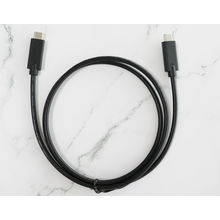
1. Braided TPE
Company: Power System Electronic Technology Co. Ltd
Model PS-184G-#4581 from Power System is a 1m braided TPE Type C3.0 to Type C3.0 cable with 3A at 5V current rating. Power System provides OEM and ODM services and has MFi, UL, FCC and RoHS certifications.
Price: $0.99 - $1.15 per piece
MOQ: 3,000 pieces
Lead time: 25 – 30 days
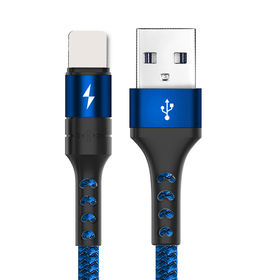
2. Braided, with tinned copper core
Company: Zhongshan Zhenfu Electronics Co. Ltd
Zhongshan Zhenfu’s model CU-2201-003-#6227 is a 3-in-1 cable that supports USB, USB-C and Micro USB interfaces. It has 5A Quick Charge function. Zhongshan Zhenfu has ISO 9001, UL and RoHS certifications.
Price: $0.99 - $1.24 per meter
MOQ: 3,000m
Lead time: 15 to 20 days
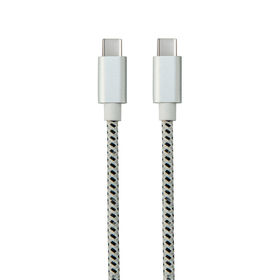
3. Fabric braided
Company: Zhuhai Hantai Electronics Co. Ltd
Model HT-06-134 WT from Zhuhai Hantai is a 1m nylon braided USB-C to USB-C cable that supports PD fast charging and has a data transfer rate of 480Mbps. Zhuhai Hantai is an MFi -and BSCI-certified manufacturer of digital cables.
Price: Please inquire
MOQ: Small orders accepted
Lead time: 25 to 30 days
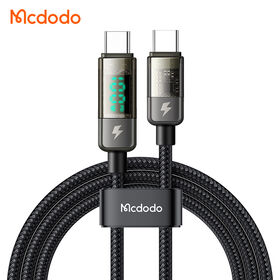
4. Digital display and E-mark
Company: Guangdong Mcdodo Industrial Co. Ltd
Guangdong Mcdodo’s model CA-361 is a Type-C to Type-C cable with current rating of 5A and maximum power output of 100W. It supports PD fast charging. It also features a digital display and has an E-mark chip. The cable is made of zinc and nylon and is offered in 1.2m and 1.8m lengths. Guandong Mcdodo specializes in cables, chargers, and other digital peripherals.
Price: $6.08
MOQ: 100 units
Lead time: 3 to 7 days
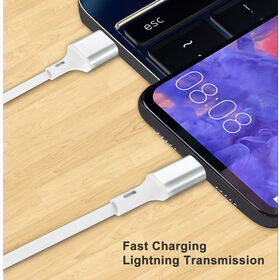
5. USB-A to Type-C, with tinned copper core
Company: Shenzhen Sinotek Technology Co. Ltd
Model Sku-001-#6354 from Shenzhen Sinotek is a USB-A to Type-C cable for Android that supports fast charging up to 60W. It has a tinned copper core and optional nylon fiber braiding reinforcement. Shenzhen Sinotek is an ISO 9001- and 14001-certified company with 10 years' experience as an OEM/ODM service provider.
Price: $1.1 - $1.3
MOQ: 1,000 units
Lead time: 30 to 35 days
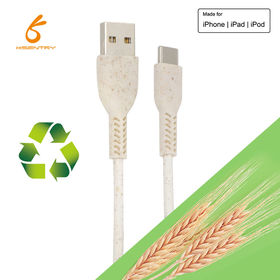
6. Biodegradable Type-C to Type-A
Company: Shenzhen Ksentry Electronics Co. Ltd
From Shenzhen Ksentry, model KS-CBD002 is a USB-C to USB-A fast charging cable made of biodegradable wheat straw and copper. It is offered in 1m and 2m length options. Shenzhen Ksentry specializes in USB charging and data cables, stylus pens and other mobile accessories. It is an ISO 9001-certified manufacturer.
Price: $0.71 - $0.75
MOQ: 1,000 units
Lead time: 5 to 15 days
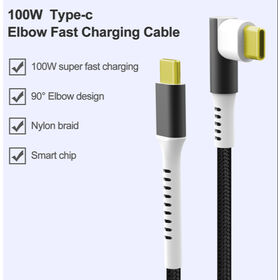
7. 100W, in elbow design
Company: Shenzhen Sinotek Technology Co. Ltd
Model Sku-001-#3497 from Shenzhen Sinotek is a Type-C to Type-C cable that is offered in power output options ranging from 10W to 100W and lengths of up 3m. It comes in 90-degree elbow design for flexibility. Shenzhen Sinotek has 6,000sqm MFi-certified factory.
Price: $2.2 - $2.5
MOQ: 1,000 units
Lead time: 30 to 35 days
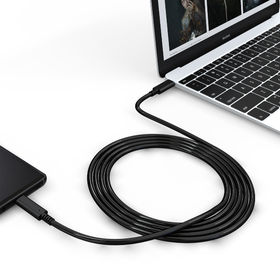
8. 3.1 version, with E-marker chip
Company: Shenzhen LVSUN Electronics Co. Ltd
The LS-USB-C -E-marker model from Shenzhen LVSUN is a retractable Type-C to Type-C cable with a built-in E-market chip. This USB3.1 cable is offered in length options of 1.2m or 2m. Shenzhen LVSUN is an ISO 9001-certified manufacturer and a holder of patents in Europe, US and China.
Price: $3.8 - $5
MOQ: 200 units
Lead time: 7 to 15 days

9. Type-C to DisplayPort
Company: Dongguan Zhongjiadongsheng Technology Co. Ltd
Model TDCD1-#3235 from Dongguan Zhongjiadongsheng is a Type-C to display port cable that supports PD charging. The 2m unit has a tinned copper core, nickel-plated interface and aluminum alloy outer shell. Dongguan Zhongjiadongsheng has a 5,000sqm factory and specializes in USB-C cables and hubs and MFi cables. This ISO 9001- and 14001- certified company has been awarded 100 product patents.
Price: $4.9
MOQ: 1,000 units
Lead time: 20 to 30 days
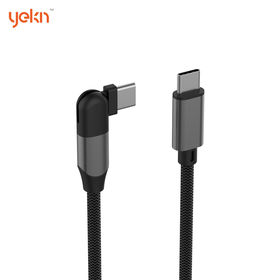
10. Right-angle connector, retractable
Company: Dongguan City Yellow Knife Industry Co. Ltd
The SCC048-3-8 from Yellow Knife is a 100W Type-C to Type-C fast charging retractable cable with a connector that can be bent at a right angle. It has aluminum casing and is nylon braided, It is available in 3ft and 6ft length options. Yellow Knife is an MFi-certified manufacturer that specializes in USB-C cables, MFi Lightning calbes, PD GaN chargers and similar products. It has a 20,000sqm factory and offers OEM/ODM services.
Price: $2.29 - $2.39
MOQ: 500 units
Lead time: 20 to 35 days

