Image source: Getty
Diesel engines have been an integral part of the automotive and industrial world for over a century. They are a type of internal-combustion engine that uses diesel fuel as its primary energy source.
Invented by German engineer Rudolf Diesel in 1892, the diesel engine has become a widely used power source in various industries due to its efficiency and reliability. They are found in cars, trucks, buses, construction equipment, marine vessels and various industrial applications.
The diesel engine differs from gasoline engines in several ways, primarily in the method of fuel ignition. The former uses compression ignition, whereas gasoline engines use spark ignition. This means that the diesel engine compresses air in the combustion chamber to a high temperature, which ignites the fuel when it is injected into the chamber. This process results in higher thermal efficiency, meaning that diesel engines convert more of the fuel's energy into usable power compared to gasoline engines.
Diesel engine parts
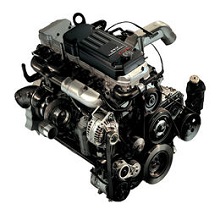
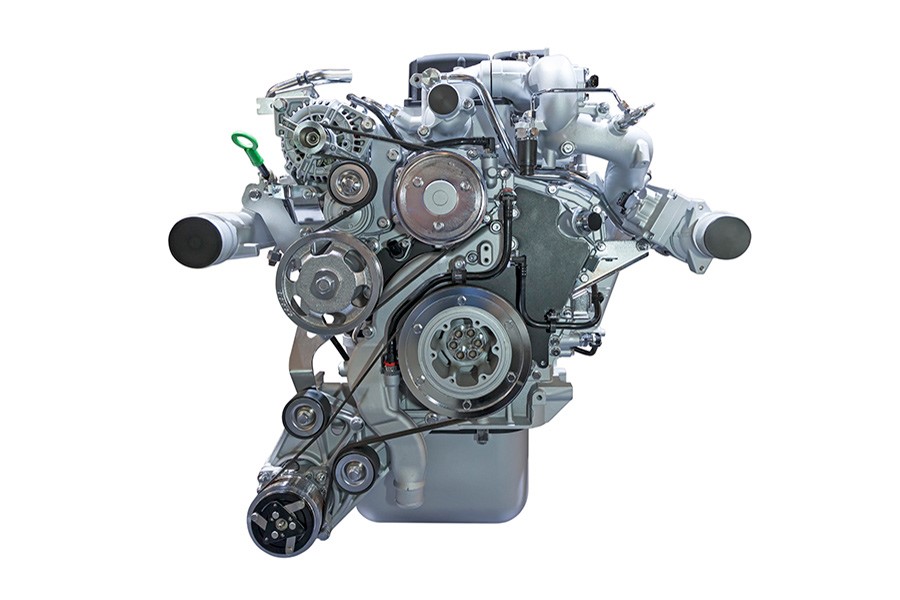
Several key components work together for a diesel engine to generate power efficiently. They include:
- Cylinder block: This is the main structure of the engine, housing the cylinders and other internal components. It is typically made of cast iron or aluminum alloy.
- Cylinder head: Mounted on top of the cylinder block, this houses the valves, fuel injectors and, in some engines, glow plugs. It also forms the combustion chamber where fuel and air mix and burn.
- Crankshaft: This converts the linear motion of the pistons into rotational motion, which is transmitted to the transmission and ultimately the vehicle wheels.
- Camshaft: Controls the opening and closing of the engine's intake and exhaust valves and is driven by the crankshaft via a timing belt or chain.
- Pistons and connecting rods: Pistons are the reciprocating components that move up and down within the engine's cylinders, transferring the force of combustion to the crankshaft via connecting rods.
- Fuel injection system: Responsible for delivering the precise amount of diesel fuel into the engine's combustion chamber at the correct time. Modern diesel engines use electronic fuel injection systems, which are more efficient and precise than older mechanical ones.
- Turbocharger: Many diesel engines use this, which increases the engine's power output by forcing more air into the combustion chamber. This device allows for a more complete combustion of the fuel and increases overall efficiency.
- Cooling system: Diesel engines generate a significant amount of heat during operation, and a cooling system is necessary to prevent overheating. This typically includes a radiator, coolant pump and thermostat.
- Exhaust system: Responsible for expelling the byproducts of combustion, including harmful gases like carbon monoxide and nitrogen oxides. Modern diesel engines are equipped with exhaust after-treatment systems, such as diesel particulate filters and selective catalytic reduction systems, to reduce emissions.
- Lubrication system: This is essential for reducing friction and wear between moving engine components. It consists of an oil pump, oil filter, and various oil passages that distribute oil throughout the engine.
How a diesel engine works
The diesel engine operates on a four-stroke cycle, which includes intake, compression, combustion (power) and exhaust strokes. During intake, the piston moves downward, and the intake valve opens, allowing fresh air to enter the combustion chamber. Then, the piston goes up, compressing the air to a high pressure and temperature.
At the next stage, the fuel injection system sprays diesel fuel into the combustion chamber, where it mixes with the hot compressed air. The heat causes the fuel to ignite, burn and release energy in the form of expanding gases. This expansion pushes the piston downward, generating power and turning the crankshaft.
Finally, during the last stroke, the piston goes up again, and the exhaust valve opens, allowing the combustion byproducts to exit the cylinder and pass through the exhaust system.
The cycles repeat, providing continuous power output.
In two-stroke engines, intake, compression, ignition, combustion and exhaust are completed in two piston strokes.
Types of diesel engines and their applications
There are several types of diesel engines, each designed for specific applications and power requirements. Common types include:
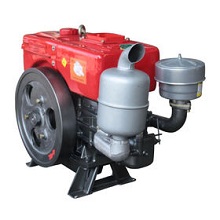
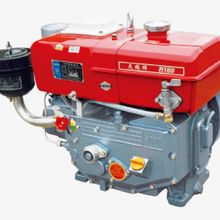
- Single-cylinder diesel engines: These have only one cylinder and are typically used in small, portable equipment such as generators, water pumps and small agricultural machinery.
- Inline diesel engines: They feature a straight arrangement of cylinders in a single row. Common uses are in automotive applications, such as cars and light trucks, as well as industrial equipment and marine vessels.
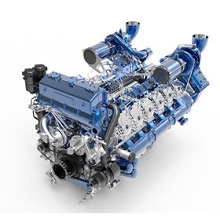
- V-type diesel engines: This type has two rows of cylinders arranged in a V shape, reducing the engine's overall length and allowing for higher power outputs. Such engines are found in heavy-duty trucks, large marine vessels and power generation applications.
- Opposed-piston diesel engines: These feature two pistons in each cylinder, with combustion occurring between the two pistons. This design provides increased efficiency and power density and is used in some marine and power generation applications.
The specific application for a diesel engine will determine its size, power output and required auxiliary systems. For example, marine diesel engines typically need specialized cooling and exhaust systems to operate in harsh environments, while automotive diesel engines are designed for compactness and weight reduction.
Advantages over gasoline engines
Diesel engines offer several advantages over gasoline counterparts, including:
- Higher fuel efficiency: Diesel engines have a higher conversion efficiency and therefore better thermal efficiency, resulting in reduced fuel consumption and overall operating costs.
- Greater torque output: They provide more torque at lower engine speeds, making them well-suited for heavy-duty applications and towing.
- Longer service life: Known for their durability, diesel engines can often operate for longer periods between major overhauls.
- Lower emissions: Modern diesel engines produce fewer carbon dioxide emissions per unit of power output than those that use gasoline. With the implementation of advanced exhaust after-treatment systems, they can also achieve lower emissions of particulate matter and nitrogen oxides compared to older technologies.
- Fuel availability: Diesel fuel is widely available, making diesel engines a practical choice for various applications, including remote locations and off-grid power generation.
Frequently asked questions about diesel engines
How much does a diesel engine cost?
The cost of a diesel engine can vary significantly depending on the application, power output and brand. A small single-cylinder unit for a portable generator can be a few hundred dollars, while a large marine diesel engine can be hundreds of thousands. The cost also includes installation, maintenance and replacement parts.
When purchasing a diesel engine, it is important to consider the total cost of ownership, including fuel consumption, maintenance and repair costs. A higher initial cost may be offset by lower operating costs over the engine's lifetime.
In vehicles, what are the advantages of a diesel engine over a gasoline-powered one?
- Higher fuel efficiency: Diesel engines typically have better fuel economy than gasoline types, resulting in lower fuel costs.
- Greater torque output: They produce more torque, providing better acceleration and towing capacity.
- Longer service life: These engines can last longer due to their more robust design and lower operating temperatures.
- Better resale value: Diesel vehicles often retain their value better than gasoline vehicles due to their durability and fuel efficiency.
- Lower carbon dioxide emissions: Diesel engines generally emit less carbon dioxide due to their higher thermal efficiency.
However, diesel engines may have higher initial costs, require specialized maintenance, and emit more nitrogen oxides and particulate matter than gasoline engines. The choice between a diesel or gasoline engine will depend on the specific application and priorities of the buyer.
What must be considered when sourcing diesel engines?
- Power output: The engine's power output should match the application's power requirements, including peak power and continuous power.
- Physical dimensions: The engine should fit within the available space in the application.
- Fuel consumption: Fuel consumption should be evaluated to ensure it is within the application's budget and fuel availability.
- Emissions regulations: Compliance with local emissions regulations, including nitrogen oxide and particulate matter limits, is a must.
- Brand reputation: The engine's brand and warranty should be considered to ensure reliable operation and support.
- Installation and maintenance requirements: Installation and maintenance requirements should be evaluated to ensure they can be met within the application's constraints.
What factors must be considered when sourcing diesel engine parts?
- Compatibility: The parts should be compatible with the engine's make and model, including any specific requirements of the engine's manufacturer.
- Quality: To ensure reliable operation and longevity, the parts should meet or exceed the engine manufacturer's quality standards.
- Availability: They should be readily available, either from the engine manufacturer or reputable aftermarket suppliers.
- Cost: The price is competitive without compromises on quality and compatibility.
- Warranty and support: The parts should come with a warranty and be backed by reputable technical support to ensure any issues can be resolved quickly and effectively.
Is there a market for used diesel engines?
Yes, especially in heavy-duty industries such as maritime transport, mining, and generator applications. Used diesel engines can provide a cost-effective solution. However, purchasing them comes with some caveats. For a reliable and cost-effective purchase, the following must be considered:
- Compatibility: Ensure that the used diesel engine is compatible with the vehicle or equipment.
- Price research: Investigate the market prices for used diesel engines to make informed decisions and avoid overpaying.
- Warranty: Insist on a warranty to protect your purchase in case of any unforeseen issues.
- Company reputation: Check the experience and reputation of the company you are buying the engine from.
- Engine type: Decide between four-stroke and two-stroke engines based on your specific requirements.
- Age: Check whether used engines are older or newer as they can impact performance and maintenance requirements.
- Testing: Have them checked for any oddities or malfunctions before finalizing your order. This can be done by your appointed representative or third party.
- External inspection: Have the external parts checked for signs of wear and tear that could indicate potential issues.
By considering these factors, costs can be minimized costs and purchasing faulty engines can be avoided.
Online sourcing tip
Online platforms nowadays allow buyers to easily look for the right manufacturer that meets their specific needs. Global Sources, for instance, not only provides site visitors with a comprehensive list of products and their details but also a list of suppliers that have been verified by third parties to ensure buyers are only dealing with legitimate companies. The B2B sourcing platform lets visitors filter and customize their searches, check the qualifications and relevant company information of the suppliers and take a virtual tour of some of the manufacturers’ facilities.
Company: Flame Diesel Co. Ltd
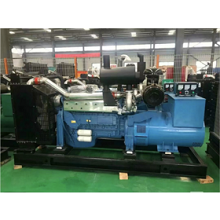
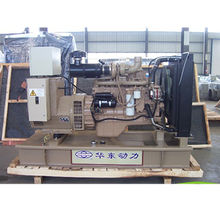
Description: This genset, with model number 300kW, has a four-stroke diesel engine. It has a single- or three-phase AC or a DC output, an AC or a static excitation system, and an air, oil, water or wind cooling method. Unit dimensions are 230x80x140cm and weight is 1,200kg.
Flame is a distributor of aftermarket parts for Weifang Ricardo and Weichai diesel generators.
Price: $13,900 to $14,100
MOQ: 3 units
Lead time: 15 to 30 days
Company: Oriemac Machinery & Equipment (Shanghai) Co. Ltd
Description: The SC-Engine is a new Shangchai diesel engine for wheel loaders and truck cranes. It measures 150x150x260cm and weighs 400kg. This product comes with a one-year warranty.
ISO 9001:2008-compliant Oriemac specializes in construction machinery and heavy industrial equipment. It provides aftersales services and has an service center overseas.
Price: Starts at $2,400
MOQ: 1 unit
Lead time: 5 to 15 days
Company: Cruking Engineering Equipment (Xiamen) Co. Ltd
Description: Model 6BTA-5.9 is a four-stroke diesel engine assembly for Shantui bulldozers and Liugong wheel loaders. This inline unit, with six cylinders, has 2,200rpm rated speed, 5.9L displacement and 150hp or 112kW rated power. This water-cooled engine has a gross weight of 600kg.
ISO 9001:2000-compliant Cruking exports its products to 120 countries.
Price: $4,700 to $6,900
MOQ: 1 unit
Lead time: 15 to 20 days
Company: Newindu Construction Engineering (Shanghai) Co. Ltd
Description: This diesel engine, model number 5258274, is an inline type with six cylinders and 19L displacement. Its rated power is 522kW/700hp at 2,100rpm and peak torque 2,730N.m at 1,400rpm. This Euro 2 unit, with a 159x159cm bore and stroke and 12/24V electric start motor, has a turbocharger and intercooled intake method, direct-injection pump, fluid cooling and mechanical control governor. Its compression ratio is 13.9:1 and fuel consumption 210g/kWh. Size is 2,151x966x1,704mm and net weight 2,073kg. This engine has a one-year warranty.
ISO 9001- compliant Newindu is one of the leading construction machinery exporters in China.
Price: $40,000 to $45,000
Lead time: 10 to 30 days
Company: Acntruck Vehicle & Machinery (Shanghai) Co. Ltd
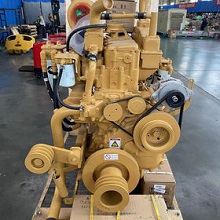
Description: Model NTA855 is a six-cylinder diesel engine for SD32, SD22, SD7 and SD23 bulldozers. Each cylinder is 139.7mm and its stroke 152.4mm. This 1,800kg engine, 14.01L total exhaust, has 1-5-3-6-2-4 firing order. Its rated speed is 2,000rpm, minimum 600 to 700rpm and maximum 2,150 to 2,250rpm with no load, and minimum fuel consumption <228g/kWh.
ISO 9001:2008-compliant Acntruck is a key provider of heavy trucks and construction machinery.
Price: $14,000 to $15,000
MOQ: 1 unit
Lead time: 1 to 14 days
Company: Jinjiang Jiaxing Supply Management Co. Ltd
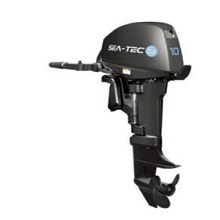
Description: This diesel engine, model 10 hp Outboard Boat Motor-062J, is a two-stroke type with two cylinders, CDI ignition system and water cooling. It has 7.4kW maximum output, 4,500 to 5,500rpm speed and 246cc displacement.
Jinjiang Jiaxing Supply has a wide range of products and exports to Asia, Australasia and the Americas.
Price: $799.83 to $800
MOQ: 1,000 units
Lead time: 15 to 25 days
Company: Changzhou Oumai Bearings Technology Co. Ltd
Description: Model ZS195 is a 12hp diesel engine with an electric start motor. This horizontal single-cylinder, four-stroke unit has a direct-injection combustion chamber, 0.815L displacement, and uses water cooling. Its cylinder is 95mm in diameter and the stroke measures 115mm.
ISO 9001:2000-compliant Changzhou Oumai specializes in bearings used in the mining, smelting and automotive industries, oil fields, steel mills, engineering machinery, agricultural vehicles and hoisting equipment.
Price: $260
MOQ: 1 set
Lead time: 7 to 10 days
Company: Source Trading Europe UG
Description: This is a brand-new and genuine Baudouin Weichai 12M33 diesel engine with 12 cylinders. A V-type unit, it is turbocharged and aftercooled. Its bore and stroke is 150x185mm, rated power 956kW at 1,500rpm, displacement 39.2L and compression ratio 15:1. This engine has a mechanical pump fuel system and complies with IMO Tier 2 emission standards. It comes with a one-year warranty.
Source Trading Europe is based in Germany and complies with ISO 9001 and 9002. It supplies various products.
Price: $1,999 to $3,555
MOQ: 1 unit
Lead time: 3 to 14 days
Company: ICH Industrial Co. Ltd
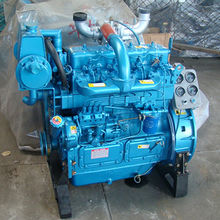
Description: A four-cylinder diesel engine for boats, the D-1031 is available in 20, 30, 50 and 70hp versions supplied with or without a gearbox, depending on customer preferences. There is also a 90hp unit with six cylinders.
ICH manufactures and exports hardware tools and protective work products.
Price: $1,700
MOQ: 1 unit
Company: Qingdao Guonuo Machinery Co. Ltd
Description: These single-cylinder diesel engines, which include models R165, R175, R180K and R180, have a cast-iron water tank, frame and gearbox cover. All are four-stroke, hopper-cooling and hand-crank types. The R165, R180K and R180 have a swirl combustion chamber, while the R175 has a precombustion chamber. Applications include walking tractors, irrigation and generating sets, air compressors, inland ships, engineering machinery, transportation vehicles and processing machinery for agricultural and sideline products.
Qingdao Guonuo specializes in cast and forged products and supplies agricultural, grain and oil processing machinery.
Price: $100 to $200
MOQ: 1 set