Download App
Better Online and Trade Show Sourcing Experiences.Scan the QR code to download.
Learn More
Hot Topics
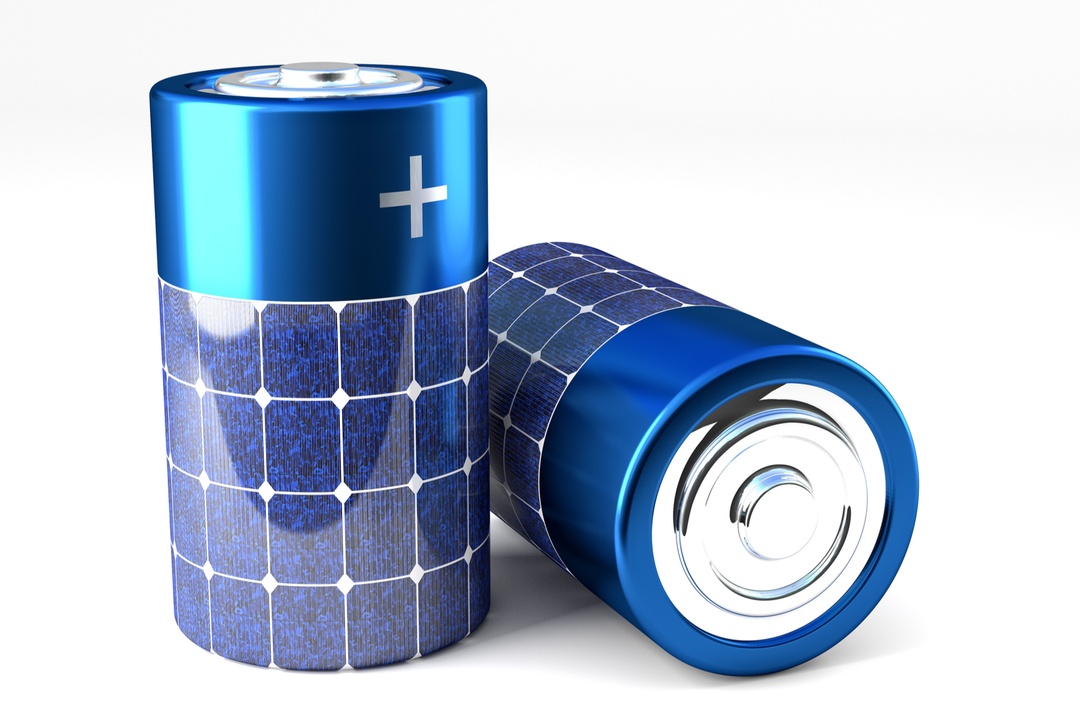
Image source: Getty
Solar batteries’ rise to power has been nothing short of groundbreaking, significantly changing the landscape of energy consumption and production, and catalyzing innovation across industries.
With advancements in technology and engineering, these batteries have evolved from simple storage solutions into sophisticated systems that can efficiently capture, store and distribute solar-generated power. This transformation has led to a substantial increase in the adoption of solar energy for both residential and commercial applications.
Commonly used in automotive vehicles, uninterruptible power supply (UPS) systems and off-grid solar power systems, lead-acid batteries are cost-effective and reliable as they can handle high discharge currents, withstand slow, fast and overcharging, and have a low self-discharge rating. Specific types include flooded (FLA), and sealed (SLA), valve-regulated (VRLA) or absorbed glass mat (AGM).
Lead-acid batteries have a low energy density, meaning they have limited energy storage capacity. They require regular maintenance, including monitoring water levels and periodic equalization charging. They also have a shorter life span compared to other battery types.
High energy density, good thermal stability, high efficiency, low maintenance requirements, long life span and the ability to handle high discharge currents make lithium-ion or Li-ion batteries a popular choice for portable electronics, electric vehicles (EVs) and grid-tie solar power systems. This type of battery is suitable for buyers looking for a compact and reliable energy storage solution to offer their markets. However, they are more expensive than lead-acid batteries and require a battery management system (BMS) for safe operation.
Lithium-ion phosphate, nickel manganese cobalt, nickel cobalt aluminum and lithium manganese oxide are some examples of common Li-ion batteries.
Suitable for applications operating in harsh environments, nickel-cadmium or NiCd batteries can withstand extreme temperatures and handle high discharge rates. They are commonly used in emergency lighting systems, remote sensing devices and aviation applications. One thing that buyers should keep in mind when sourcing this type of battery is that unlike other types of batteries, it is bulky and less environmentally friendly as it may contain toxic materials.
Unlike the nickel-cadmium battery, saltwater batteries are nontoxic and eco-friendly. They are perfect for small-scale energy storage systems, off-grid applications and as backup power sources because of their high energy density and long life span. The sodium-ion battery or NIB offers a relatively safer and more abundant alternative to lithium-ion batteries, though it is still emerging in the market.
Flow batteries are suitable for grid-scale energy storage, renewable energy integration and load shifting applications. They offer high efficiency and can handle deep discharges without affecting their life span. They have a long cycle life and can be easily scaled up for large energy storage applications. They also have a high tolerance for temperature variations. However, compared to Li-ion batteries, they are bulkier and have a lower energy density.
Hybrid solar batteries combine the benefits of multiple battery technologies, such as the high energy density of Li-ion batteries and the durability of lead-acid batteries. They offer a versatile and flexible solution for businesses with specific energy storage requirements. They can be used in residential, commercial and industrial solar power systems. Lead-carbon types have improved cycle life compared to traditional lead-acid units while lithium-titanate batteries are suitable for applications where high power and quick response times are essential.
Compared to Li-ion batteries, solid-state batteries have a higher energy density, allowing for more energy storage in a compact size. They have a longer life span, faster charging capabilities and improved safety features. They are designed for use in EVs, portable electronics and grid-scale energy storage systems.
The performance and life span of batteries can be significantly influenced by various environmental factors, including weather conditions and geographical location. Extreme temperatures, humidity levels, altitude, and geographical features can all have profound effects on different types of batteries.
High temperatures can speed up chemical reactions within the battery, reducing the its life span and making it faster to degrade. On the other hand, low temperatures can lower the battery's capacity and increase internal resistance, resulting in decreased efficiency and reduced power output. Exposure to high temperatures above 40 C in Li-ion batteries can cause thermal runaway, leading to potential safety hazards.
High humidity can accelerate the corrosion of battery terminals and lead to poor electrical connections and reduced efficiency. In extreme cases, excessive moisture can cause leakage and damage the internal components of the battery. For instance, lead-acid batteries, commonly used in automotive applications, are susceptible to corrosion caused by high humidity levels. Corrosion can weaken the connections between battery terminals and cables, resulting in voltage drops and reduced performance.
Altitude and air pressure primarily impact batteries that rely on oxygen reactions for energy storage. NiCd batteries, for example, maintain their performance at high altitudes where oxygen levels are lower, making them suitable for such environments.
Distinct weather patterns and varying climates can also influence battery efficiency and performance. In regions with ample sunlight, such as deserts or tropical areas, solar batteries, including lithium-ion and lead-acid batteries, are commonly used in solar energy storage systems. The availability of sunlight allows for efficient charging and utilization of these batteries.
Battery autonomy indicates how long a battery can sustain a device or system with its stored energy. Extended battery life offers numerous advantages and benefits that can greatly enhance the user experience, improve customer satisfaction and increase overall productivity. Products with longer battery autonomy are often more attractive to customers, as they provide extended periods of uninterrupted operation.
Longer battery life ensures uninterrupted usage of devices and equipment, minimizing disruptions and downtime. This is particularly important in industries where continuous operation is vital, such as healthcare, manufacturing and logistics.
Extended battery life enables greater mobility and flexibility for users. For example, portable medical devices can be used for longer durations without the need for frequent charging, allowing healthcare professionals to provide uninterrupted care to patients.
The residential application of solar batteries empowers homeowners to take control of their energy consumption, reduce costs and contribute to a cleaner environment. Solar batteries play a versatile and integral role in various aspects of residential living, ranging from backup power, smart home integration, home security application, water pumps, garden lights and heaters.
Solar batteries are essential components of off-grid power systems because they enable the storage of extra solar energy produced during the day for use at night or during periods of insufficient sunlight. These systems are perfect for outdoor gatherings, construction sites and distant locations. Benefits include a steady supply of electricity, less reliance on fuel-powered generators and lower electricity bills.
Solar batteries provide a reliable backup power source during emergencies such as grid failures or natural disasters. They can keep critical systems running, ensuring uninterrupted operations in hospitals, telecommunications and other essential services. The benefits include enhanced resilience, reduced downtime and improved customer satisfaction.
In commercial settings, solar battery systems can be integrated with solar panels to manage energy consumption effectively. During peak demand hours when electricity costs are higher, businesses can draw from their stored solar energy reserves instead of purchasing electricity from the grid. This practice, known as "peak shaving," helps reduce demand charges and lowers overall energy costs.
Microgrid systems are designed to enhance energy resilience, reduce energy costs and contribute to grid stability. They can operate independently or in coordination with the main grid. Solar batteries play a pivotal role in microgrids by storing excess energy generated by solar panels and providing a reliable power supply during grid outages or peak demand periods.
Solar lighting systems are used by a wide range of individuals, businesses, and communities across various sectors due to their numerous benefits. Key users and sectors include:
Most solar lights require batteries. Solar lights use a solar panel that turns daylight into electricity during the day. Rechargeable batteries serve as storage for this generated electricity.
Ideal batteries for garden solar lights are those that offer a combination of high energy storage capacity, long life span and the ability to withstand varying environmental conditions. Nickel-metal hydride (NiMH) batteries have good energy density and are rechargeable; Li-ion batteries are compact, lightweight and rechargeable; and lithium iron phosphate (LiFePO4) batteries are less prone to overheating and thermal runway compared to other lithium batteries.
Solar light batteries may need to be replaced due to several reasons such as reduced capacity, gradual chemical degradation, formation of sulfate crystals on battery plates in lead-acid batteries which reduces the storage and releasing capability of batteries, corrosion of battery terminals and connections, exposure to extreme temperatures and harsh weather conditions, frequent and deep discharges and recharges, reached maximum life span and physical damage.
It is usually not advisable to use ordinary nonrechargeable batteries in solar lights because solar lights are specifically designed to work with rechargeable batteries like NiMH or Li-ion batteries. Batteries for solar lights usually have a higher voltage than ordinary batteries and are designed to be energy efficient.
Using high-capacity batteries can provide extended work time, allowing for longer hours of LED illumination. This can be particularly useful in areas where consistent and uninterrupted lighting is required, such as parking lots or outdoor spaces. High-capacity batteries also enhance the overall performance of solar lights by providing a greater amount of stored energy, ensuring reliable operation even during periods of low sunlight. This improves the user experience and customer satisfaction. However, it is important to consider some potential disadvantages of using high-capacity batteries, especially the initial cost. This type of battery could be more expensive compared to lower-capacity units.
Solar lights can sometimes be sensitive to different environmental conditions, and a combination of factors that might be contributing to the issue, including light sensors malfunctioning, a partially shaded or obstructed solar panel, bright reflections or glare from windows, mirrors or metallic objects that cause the lights to activate, temporary power interruption or wrong sensor placement.
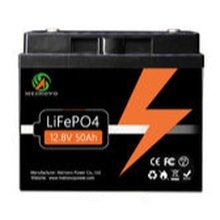
Company: Meinovo Power Co. Ltd
Meinovo’s model ICA650327-1357 is a LiFePO4 battery for energy storage systems. Its voltage is 12 or 12.8V. This 31.5kg product has a life span of more than 4,000 cycles at 25 C. It has a 10-year warranty.
MOQ: 10 units Price: $95.54 to $265.35 Lead time: 1 to 7 days
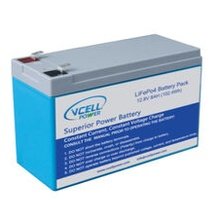
Company: Shenzhen Vcell Power Technology Co. Ltd
The VP-LF12 Series from Shenzhen Vcell consists of 100 and 150Ah LiFePO4 batteries, both with 12.8V nominal voltage and respectively with 50 and 70A maximum charge current. These IP55-rated batteries, with M8 terminals, can have a BMS. The 100Ah unit is 330x175x222mm and 13.2kg, while the 150Ah variant is 483x170x240mm and 19.2kg. Both can last ≥2,500 cycles.
MOQ: 100 units Price: $98 to $125 Lead time: 25 to 30 days
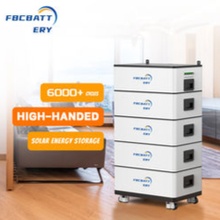
Company: Shenzhen Fubangcheng Electronics Co. Ltd
From Shenzhen Fubangcheng, the FBC-HV1 is a 51.2V LiFePO4 battery for solar energy storage systems. Its voltage range is 160 to 230V, rated voltage 204V, rated capacity 100Ah, output power 20kW, maximum discharge current 100A, instantaneous discharge current 200A/3sec, while standard and fast charge current ratings are 50 and 100A. This self-cooling IP21 unit can last 6,000 cycles or can be used in more than 15 years at 25 C. Size is 602x403x200mm and weight 55kg.
MOQ: 4 units Price: $630 to $700 Lead time: 15 to 30 days
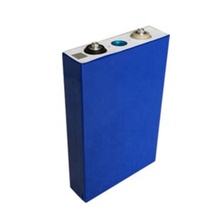
Company: Jinjiang Jiaxing Supply Management Co. Ltd
The Solar Batteries-092QY from Jinjiang Jiaxing Supply is available in 20, 60, 80 and 100Ah versions. This 3.2V LiFePO4 unit has a life span of 2,000 cycles.
MOQ: 1,000 units Price: $9.92 to $10 Lead time: 15 to 25 days
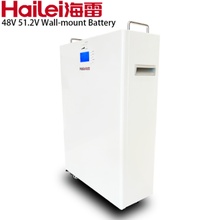
Company: Shenzhen Hailei New Energy Co. Ltd
Shenzhen Hailei’s HL-48200Powerwall-5893 consists of grade-A 48V, 200Ah LFP battery packs that can last 6,000 cycles and have a built-in BMS. Its maximum continuous discharge current is 100A and internal impedance ≤180mohms. This 92kg product supports customization to deliver 5, 10, 15 or 20kW. Dimensions are 675x485x190mm.
MOQ: 2 units Price: $3,300 to $3,400 Lead time: 15 to 45 days
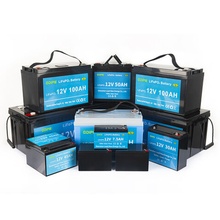
Company: Shenzhen Lead New Energy Co. Ltd
Shenzhen Lead’s model LD-12V-100-4741 is a grade-A 12V, 100Ah solar LiFePO4 battery that has a smart BMS with Bluetooth connectivity. This IP65-rated unit uses LiFePO4 batteries, each with 3.2V nominal voltage and ≤0.35mohm impedance. It meets FCC, RoHS and UN 38.3 standards. Battery size is 42.5x25x29.5cm.
MOQ: 2 units Price: $164 to $398 Lead time: 5 to 15 days
More Sourcing News
Read Also

关注 “环球资源外贸” 官方微信,获取实时外贸资讯
iOS & Android
iOS & Android(Mainland China)
Copyright © 2026 Publishers Representatives Limited. All rights reserved.




