Download App
Better Online and Trade Show Sourcing Experiences.Scan the QR code to download.
Learn More
Hot Topics
by Cecile de Veyra (Managing Editor)
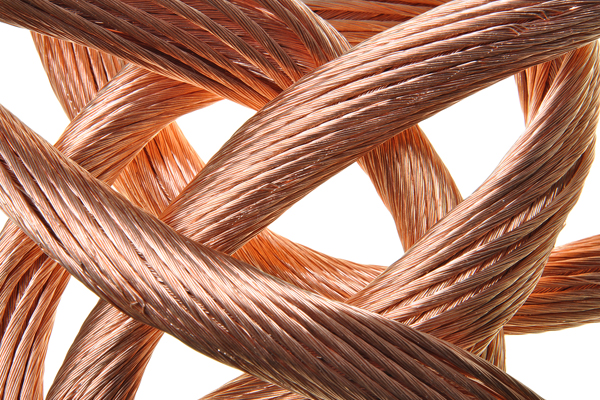
Copper wire has been around for so long that some may consider it outdated, but it is not retiring anytime soon. While copper cannot be compared to gold, as a conductor it is second to silver but is not as expensive as either of those two precious metals – and it has the highest electrical conductivity among base or nonprecious metals. It is still extensively used in telecommunications and electric power systems today.
In electronics, copper wire is employed in cables, connectors, coils and transformers, and as structured wiring that connects computers, taking some of the burden off wireless networks, and computers with other devices such as printers. It is easier and less costly to install and maintain than the much lighter and faster fiber-optic cable, its rival and likely successor. It is recyclable and has a high resale value, while fiber-optic cables require time-consuming and costly methods to separate parts that can be recycled.
Copper wire is also important where Power over Ethernet (PoE) is used because it can deliver data and power simultaneously. And despite the popularity of wireless technology, PoE cannot be deposed just yet because it is needed in applications such as IP cameras, network routers, digital signage on buildings and in-building networks. Advances over the years mean that this technology can also provide a reliable and inexpensive power source for IoT devices and smart buildings.
In interconnections in semiconductors, including LEDs, where the current gold standard is, literally, gold bonding wire, copper is a cost-effective substitute. Introduced by IBM in 1997 in its ICs, the use of copper bonding wire in lieu of aluminum was a breakthrough at the time. Years of advancements and new technologies such as flip chip aside, this has remained a viable option, especially in applications where silver or gold is an unnecessary cost.
Copper scraps come mainly from waste during copper production, as well as old wires and cables, household appliances, coils and pipes. It is estimated that one-third returns to the market as refined copper and two-thirds are as pure copper and copper alloy.
China is one of the largest production bases for copper scraps. However, at a 40 to 50 percent recycling ratio, it falls behind developed countries, which are in the 60 to 70 percent range. In the next two years, China is targeting up to 60 percent. By volume, it will churn out a total of 3.8 million tons of copper scrap in 2025, according to Sohu News.
More Sourcing News
Read Also

关注 “环球资源外贸” 官方微信,获取实时外贸资讯
iOS & Android
iOS & Android(Mainland China)
Copyright © 2026 Publishers Representatives Limited. All rights reserved.




