Download App
Better Online and Trade Show Sourcing Experiences.Scan the QR code to download.
Learn More
Hot Topics
The automotive world is undergoing a period of rapid change as tech developments approach a tipping point in electric vehicles (EVs), self-driving and AI-enabled driver aids and other systems. Here’s a look at some of the latest developments that sourcing professionals should stay on top of in anticipation of changing consumer demand.
– US President Joe Biden
“It used to be — used to be that to buy an electric car, you had to make all sorts of compromises, but not now.” So spoke US President Biden at the Detroit Auto Show on September 14, the largest auotomotive trade show in North America. As part of the United States’ new Infrastructure Law, the government is investing $7.5 billion to build electric vehicle charging stations across the country. “The great American road trip is going to be fully electrified,” said Biden. “Whether you’re driving coast to coast along the I-10 or on I-75 here in Michigan, charging stations will be up and as easy to find as gas stations are now.” The White House has also announced investment of $7 billion to ensure American car companies have the batteries and other critical materials needed to onshore the EV supply chain. The administration’s stated aim is to have half the vehicles sold in the United States be electric-powered by 2030.
White House National Climate Adviser Ali Zaidi told Reuters that automakers and battery firms in 2022 announced "$13 billion into EV manufacturing" as they “accelerate the pace of their investment into capital projects here in the United States."
The U.S. Energy Department plans to lend Ultium Cells LLC, a joint venture of GM and LG Energy Solution, $2.5 billion to help finance construction of new lithium-ion battery cell manufacturing facilities. Honda recently announced it will build a new $4.4 billion lithium-ion battery plant for U.S. EVs in partnership with Korean battery supplier LG Energy Solution, while Toyota has said it will increase its previously planned investment in a new U.S. battery plant from $1.29 billion to $3.8 billion.
GM and LG Energy Solution began production at their $2.3 billion joint-venture battery production plant in Ohio in August 2022. The companies are considering a site in New Carlisle, Indiana, for a fourth U.S. battery cell manufacturing plant expected to cost around $2.4 billion, Reuters reports.
Elsewhere, the Jakarta Post greeted President Joko Widodo’s new mandate for government officials across Indonesia to use EVS, promulgated in early September, called for a major EV switchover in Indonesia, as “higher gasoline prices coincide with excess supply of electricity in the Java-Bali grid.” At a business forum in August, Finance Minister Sri Mulyani Indrawati said Indonesians were getting more incentivized to use EVs as fuel oil prices rise. Making Indonesia a pivotal player in global EV supply chains by leveraging the country’s reserves of nickel, bauxite, copper and other important materials for the manufacture of batteries is important to the country’s wider development strategy, the Post stated.
Advanced driver assistance system (ADAS) technology is particularly gaining ground in the field of intermodal freight transport thanks to its potential for improving sustainability, safety and cost reduction, according to a September 2022 report by the Business Research Company. ADAS also has a built-in driver status monitoring (DSM) system. DSM is one of the options that monitors the behavior of the driver. In July 2022, CAF, a Spanish rail solutions company, and OTIV, a Belgium-based AI company, launched a joint project to test advanced driver assistance features for trams.
Whatever the application – be it freight, personal or public transport usage – one promising development in ADAS is the ability to recognize road signs and relay this information to drivers. Signs like “do not enter”, stop signs and speed limits can be delivered to the driver through the vehicle’s heads-up display, the infotainment console or instrument cluster, according to a report from J.D. Power. “If a driver misses a sign, the traffic-sign recognition (TSR) safety tech system would alert the driver so they can react accordingly. In other words, it can act as a second set of eyes to road signs,” Auto Service World reported.
AI is offering new levels of quality for in-car audio: artificial Intelligence algorithms can be included into audio designs and continuously improved via over-the-air updates to improve the driving experience. “What we’re seeing is the convergence of trends,” Josh Morris, DSP Concept’s Machine Learning Engineering Manager told Forbes in September 2022. “Audio is becoming a more dominant feature within automotive, but at the same time you’re seeing modern processors become stronger with more memory and capabilities.”
The most obvious way to use learning systems like this is to counteract ambient noise so that audio can be tailored and improved even though background sounds created inside and outside the car – having swapped to winter tires, for example – have changed. LG Electronics has developed algorithms running in the DSP Concept’s Audio Weaver platform, Forbes reports, “to allow voice enhancements of the movie’s dialogue during rear-seat entertainment to accentuate it versus in-movie explosions, thereby allowing the passenger to better hear the critical content.”
The automotive audio speakers market is expected to grow by $6.37 billion between 2020 and 2025, according to a September 2022 report from Technavio. The availability of cost-effective aftermarket speakers is driving the growth of the market – “In the last decade, macro-economic factors such as consistent demand for commercial vehicles in mature markets and the rise of potential buyers in emerging markets have led to record sales of passenger cars and commercial vehicles.”
Global automotive display shipments are expected to reach 197 million units in 2022, up 7.2% on year, and will continue to grow to 288 million units by 2027 with a CAGR of 7.9% over the five-year period, according to DIGITIMES Research's recent figures.
AR HUD is being used widely, with 35,000 vehicles so equipped in the first half of 2022. Since 2021, AR HUD has been installed in multiple new vehicle models, including the Mercedes-Benz S-Class and Volkswagen ID Series. Installations of AR HUD have been rising since mass production in early 2021, and began to surge in April 2022 after first outnumbering C-HUD in August 2021.
At CES 2022, Panasonic unveiled its AR HUD 2.0 system. Powered by Panasonic’s SkipGen2, its eCockpit infotainment controller, AR HUD 2.0 adds the eye tracking system (ETS), a patented technology that enables automatic driver height adjustment, dynamic parallax compensation, dynamic auto focus and driver monitoring capability. “The Panasonic AR HUD 2.0 continues the trend of up-integration of display domains, such as Cluster and HUD, into the central infotainment compute module,” said Andrew Poliak, CTO, Panasonic Automotive Systems Company of America.
The global vehicle tracking system market size is estimated to be valued at US$ 21.7 billion in 2022., according to Fact.MR. With growing demand for improved passenger safety and increasing use of intelligent transportation systems, the overall demand for vehicle tracking systems is projected to grow at a CAGR of 13.7% from 2022 to 2032, reaching US$ 78.35 billion.
Rise in traffic accidents across the world along with growing popularity of connected devices is likely to boost the demand for vehicle tracking systems during the forecast period, Fact.MR reports. “Vehicle tracking systems have the potential to reduce traffic crashes and save thousands of lives each year. As a result, numerous fleet management businesses and government agencies have made installing monitoring devices in all cars to track their location and speed essential.”
The research firm also identifies increasing acceptance of car leasing and rental services as a factor that will encourage rental companies to use vehicle tracking systems.
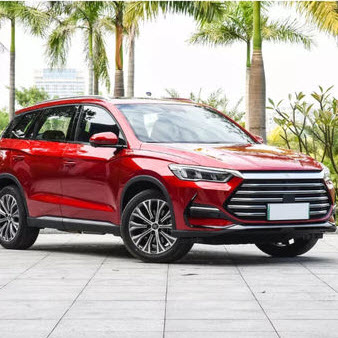
This battery-electric SUV from 3STRIPLE LLC, model number EC636335001, has a range of 600km and quick charges to 80% capacity is just half an hour. The five-door, five-seat vehicle's lithium phosphate battery-powered engine produces 150 kW of power and 310 N.m torque. The car features independent front and rear suspension, and automatic parking.MOQ is one unit and lead time three to 15 days.
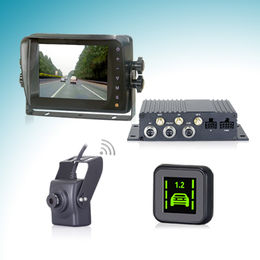
The STONKAM® Advanced Driver Assistance System (ADAS) features forward collision warning (FCW), lane departure warning (LDW), speed sign recognition (SSR) & speeding alarm, and pedestrian detection (PD). It has 1080P WDR camera input with a built-in FHD Video recorder (1080P/25fps), supporting up to 1x128GB micro SD card for recording.
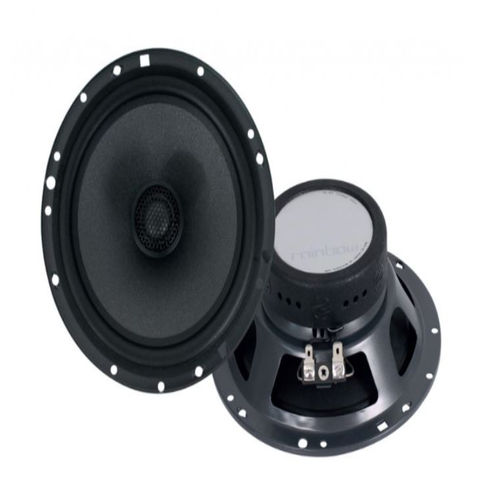
The Autorex 2 Bluetooth audio device for Twizy from Trading LAB Inc. allows drivers to listen to music from their smartphone or make hands-free phone calls. It comes with a pair of premium speakers that can be installed in the vehicle.
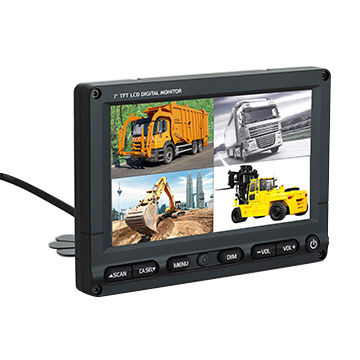
The MRM704Q rear-view monitor from Mirae Tech Co. Ltd provides a four-screen split view on a 7-inch anti-glare screen. It has menus in multiple languages and provides both mirror and normal display views as well as parking assistance. It has IP65-rated water resistance and 30g vibration-resistance.
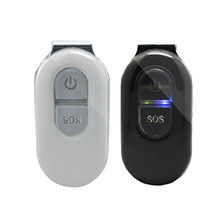
The model SPK-TRACKER-P001 from SPK is a waterproof GPS tracker designed for vehicle rentals, fleet management or personnel management. Working based on existing GSM/GPRS network and GPS satellites, this product can locate and monitor any remote targets by SMS or internet.
More Sourcing News
Read Also

关注 “环球资源外贸” 官方微信,获取实时外贸资讯
iOS & Android
iOS & Android(Mainland China)
Copyright © 2026 Publishers Representatives Limited. All rights reserved.




