Download App
Better Online and Trade Show Sourcing Experiences.Scan the QR code to download.
Learn More
Hot Topics
Reports have surfaced about Google testing an OS called Andromeda and that a Pixel 3 is due in 2017.
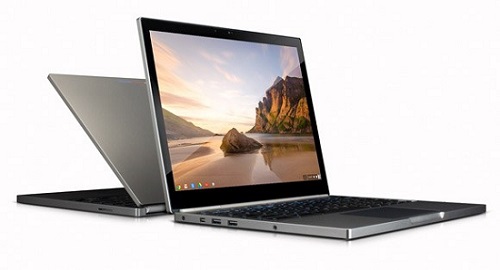
The Pixel 2 is now one of the few Chromebook models with support for the Google Play store and Android apps. (Source: Google)
The first signs of the Chrome and Android merger have been released in the form of a report from Android Police. The site said two independent sources have confirmed the development of a "Pixel 3" device that will run an OS currently being referred to as Andromeda. This product would be released in 2017 if rumors turn out to be true, and it could give Google a big boost in the laptop market. Google is also reportedly testing out the software on Huawei's Nexus 9 hardware, fueling rumors about a new Huawei tablet next year.
Chrome OS has been very successful recently with Chromebooks being widely used as companion devices for the home and becoming very popular in education markets. They were even outselling MacBooks at one point. Chrome OS, however, comes with some big limitations. When a Wall Street Journal report revealed Google was planning on merging it with Android, there was a lot of excitement about the possibilities. Google has since introduced support on Chromebooks for Google Play, allowing certain models to run full-Android apps. It is a bit of a half-measure so far, though, because some apps do not work well either because of bugs or because they simply were not made to be used on a laptop.
While Andromeda might be a year away, this could be good news for China makers, which are already looking for ways to separate themselves from Windows licensing fees. China's Jide has already proven with Remix OS that Android can actually function fairly well as a computer OS, even if it is not nearly as robust as Windows or even Linux. However, Android has the advantage of wider adoption than Linux, forcing companies to rely more on Google's Linux-based mobile OS.
There might be some complications that would prevent Andromeda from wide adoption on China hardware. If Google keeps a tight hold on it the way it has Chrome OS, it might be difficult for smaller makers to use it. Even with permission to use it, if they cannot switch out Google's services for third-party services, it could hamper adoption because those services are blocked in China and others might prefer to make deals with companies such as Microsoft. Still, if improvements in Android apps for laptop use are seen across both Android and Andromeda, that would benefit all manufacturers. It helps companies keep costs low for new products. Lenovo's new Yoga Book, for example, has Android and Windows versions priced at $500 and $550, respectively. It was made with Android in mind.
More Sourcing News
Read Also

关注 “环球资源外贸” 官方微信,获取实时外贸资讯
iOS & Android
iOS & Android(Mainland China)
Copyright © 2026 Publishers Representatives Limited. All rights reserved.




