




Die-casting enables the production of metal parts with excellent mechanical properties, tight tolerances and consistent dimensions. This includes complex geometries and intricate designs that would be challenging or impossible to achieve through other fabrication methods like sand casting and machining.
Being an automated process, die-casting also has a high degree of repeatability, allowing for faster production rates and higher output compared to manual or semiautomated methods. As such, it results in parts with a smooth, quality surface finish, reducing the need for post-processing such as additional machining or assembly steps. This, in turn, can save time and labor costs, especially for high-volume production.
Materials used in die-casting parts
Die-casting is compatible with a range of metal materials, including aluminum, zinc, magnesium and copper alloys.
Aluminum is the most commonly used material for die-cast parts due to its low density, corrosion resistance and excellent castability, while zinc is the usual choice for small, intricate parts with good dimensional accuracy and surface finish.
Magnesium, on the other hand, is preferred for applications where weight reduction is a priority. Die-cast parts made from this material are known for their high strength-to-weight ratio.
Copper-based alloys, such as brass and bronze, are also used for die-casting as they offer good thermal and electrical conductivity.
Surface treatments or finishes for die-cast parts
Die-cast parts can undergo various surface treatments and finishes to enhance their appearance, durability and functionality, such as:
Electroplating or electroless plating can be applied to die-cast parts to add a protective layer of materials like chrome, nickel or zinc. Die-cast parts can also be painted or coated with a variety of materials to improve corrosion resistance and aesthetics. The options include powder coating, liquid paint and anodizing.
Mechanical polishing and buffing processes can also be used to achieve a smooth, high-gloss finish. There is also laser engraving for adding intricate designs, logos or text directly onto the surface of die-cast parts.
Top 3 applications of die-cast parts
Die-cast parts are widely used in many industries, with some of the top applications including:
Automotive: Die-cast parts are extensively used in engine blocks, transmission housings and various other under-the-hood and interior components.
Electronics and telecommunications: They are employed in the production of electronic devices, including housings, brackets and heat sinks for computers, smartphones and other electronics.
Hardware and appliances: Die-cast parts are found in various household and industrial appliances, including door handles, hinges and other hardware components.
Will die-casting become obsolete?
These are some factors that suggest die-casting will remain a relevant and viable manufacturing solution despite the emergence of new manufacturing technologies. The equipment and processes used continue to be improved, with better die materials, injection systems and energy-saving technologies being developed. In applications, such as the automotive and electronics industries, the trend for weight reduction and energy efficiency is driving the requirement for die-cast parts, which offer a favorable strength-to-weight ratio. Die-casting has the advantage of adaptability as it can be used to produce a wide range of parts, from small and intricate components to large structural elements.
Here are some verified suppliers on GlobalSources.com that offer die-cast parts for various applications.
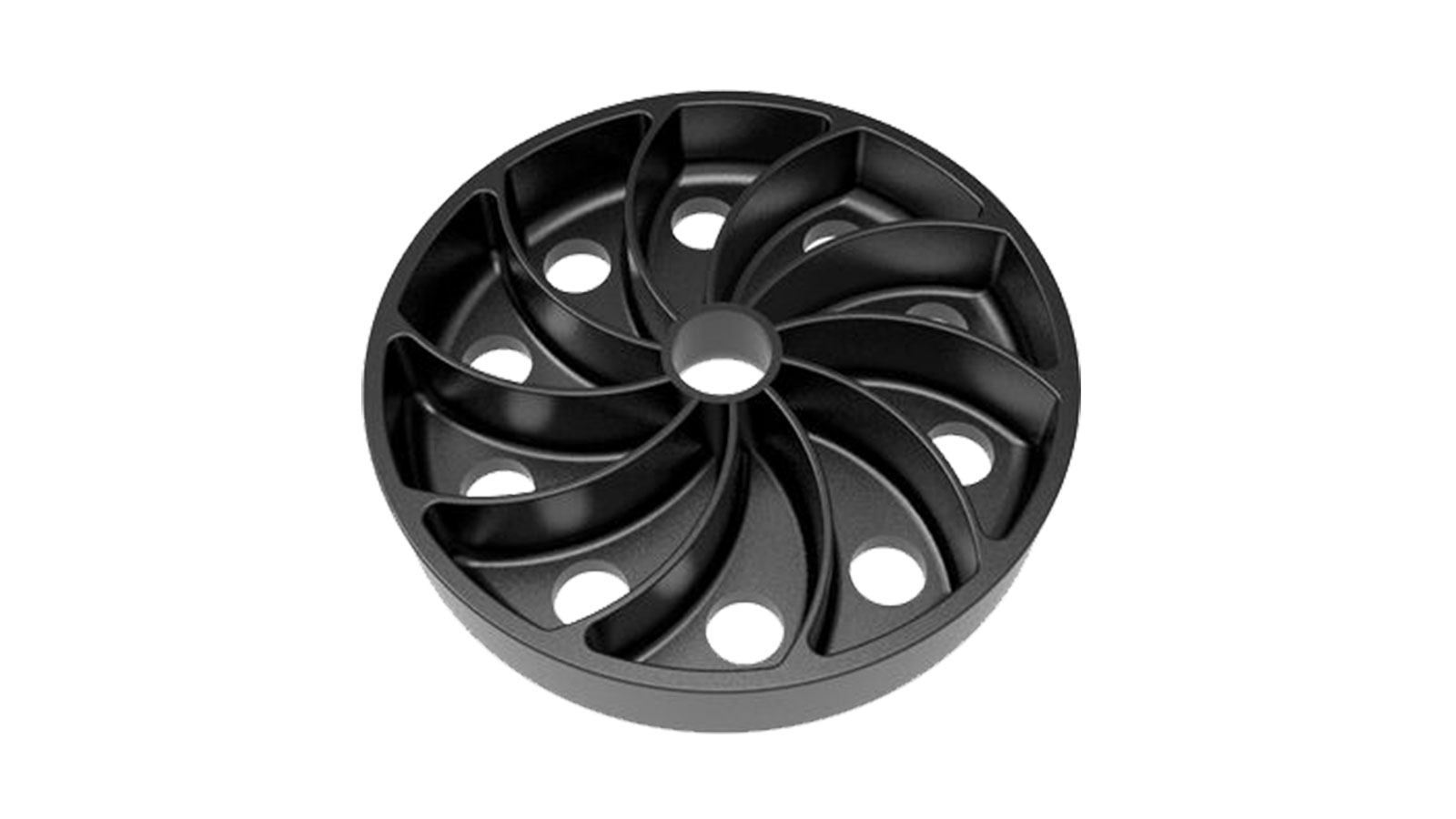
Die-cast aluminum alloy or magnesium alloy part
Company: Dongguan Huateng Metal Products Co. Ltd
The HYLL052238 from Dongguan Huateng is a die-cast part that may be made of aluminum alloy or magnesium alloy and come in custom dimensions. Versions made of ABS, POM, nylon 6A or PC can also be provided. The supplier’s products are RoHS-compliant.
MOQ: 100 pieces
Lead time: 20 to 30 days
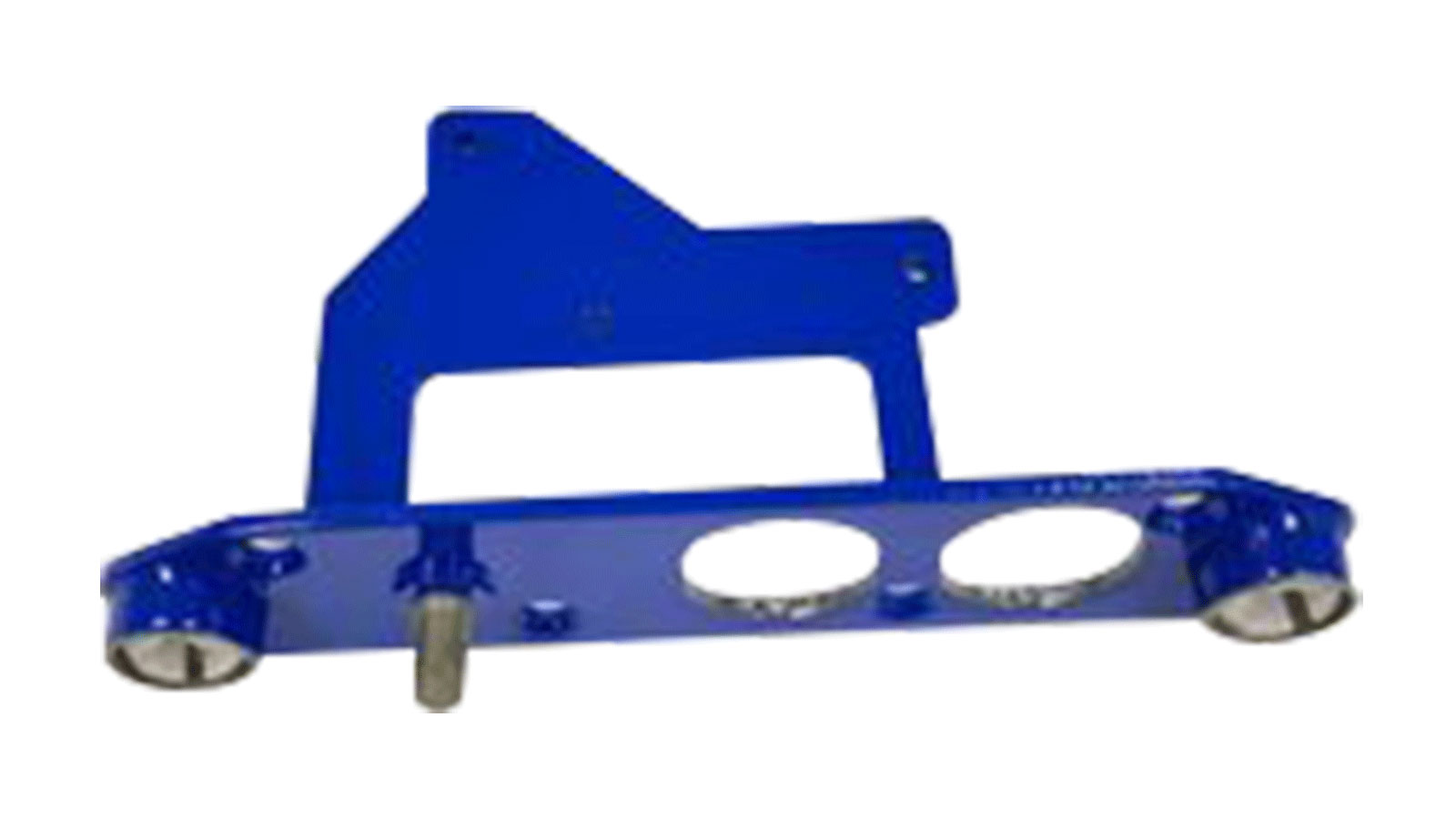
Powder-coated die-cast zinc part
Company: Dongguan Kinggold Industry Co. Ltd
Dongguan Kinggold offers die-cast parts such as the KGI-732G for base stations. This product is made of zinc alloy and has powder coating. It conforms to REACH and RoHS standards.
MOQ: 1,000 pieces
Lead time: 10 to 15 days
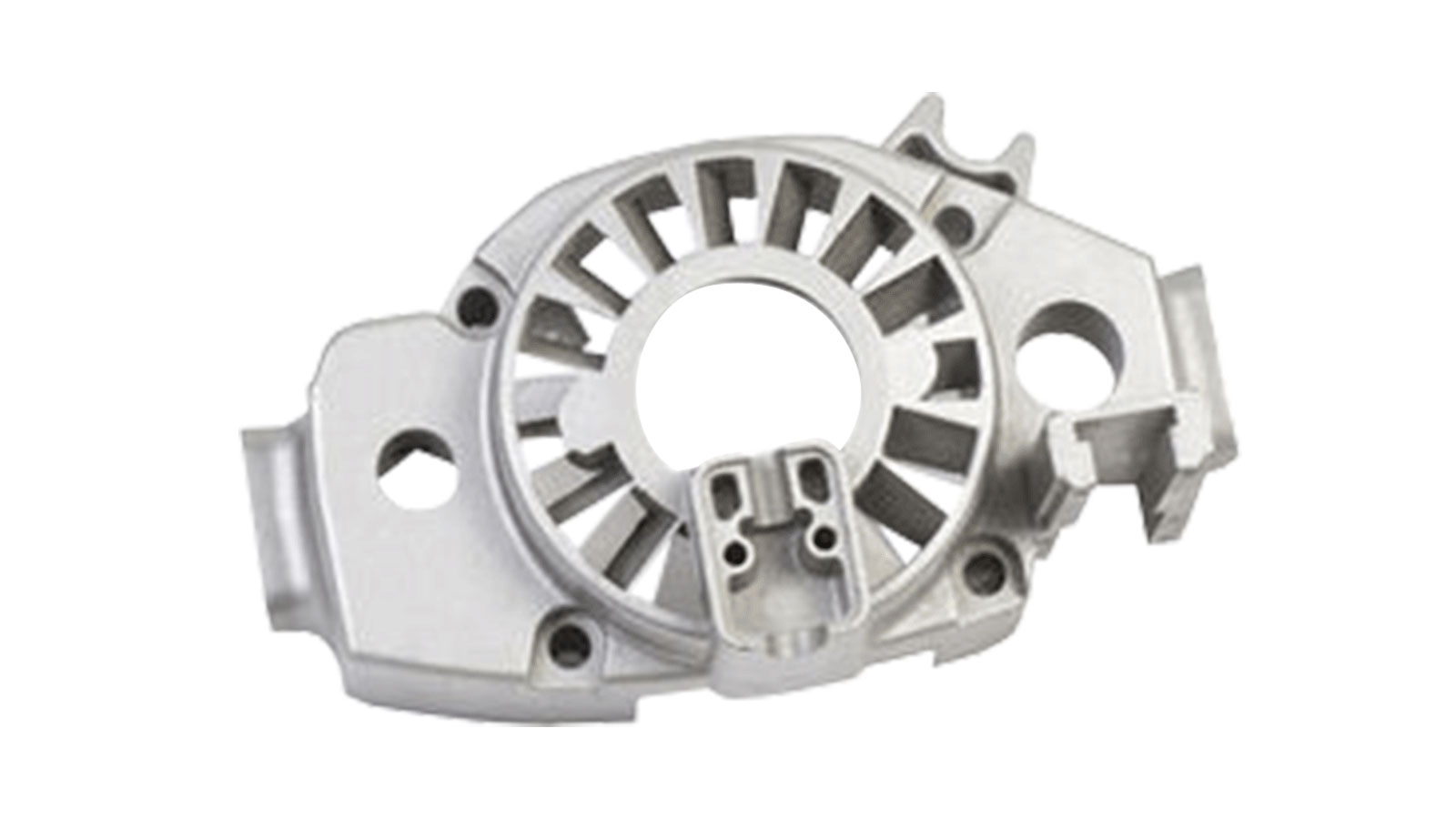
Die-cast aluminum alloy and zinc alloy part
Company: Dongguan Xinruida Precision Technology Co. Ltd
Dongguan Xinruida’s Aluminum Die Casting-08995-4705 is made of ADC10, ADC12, A360, A380, A413, A356, LM20 or LM24 aluminum alloy and zinc alloy 3, 5 or 8. It may have a polished, powder- or e-coated, lacquered, sandblasted, shot-blasted or anodized finish or polished with zinc, chrome, pearl chrome, nickel or copper plating. The tolerance is ±0.005mm. This part undergoes 100 percent QC before delivery.
MOQ: 1 piece
Lead time: 15 to 20 days
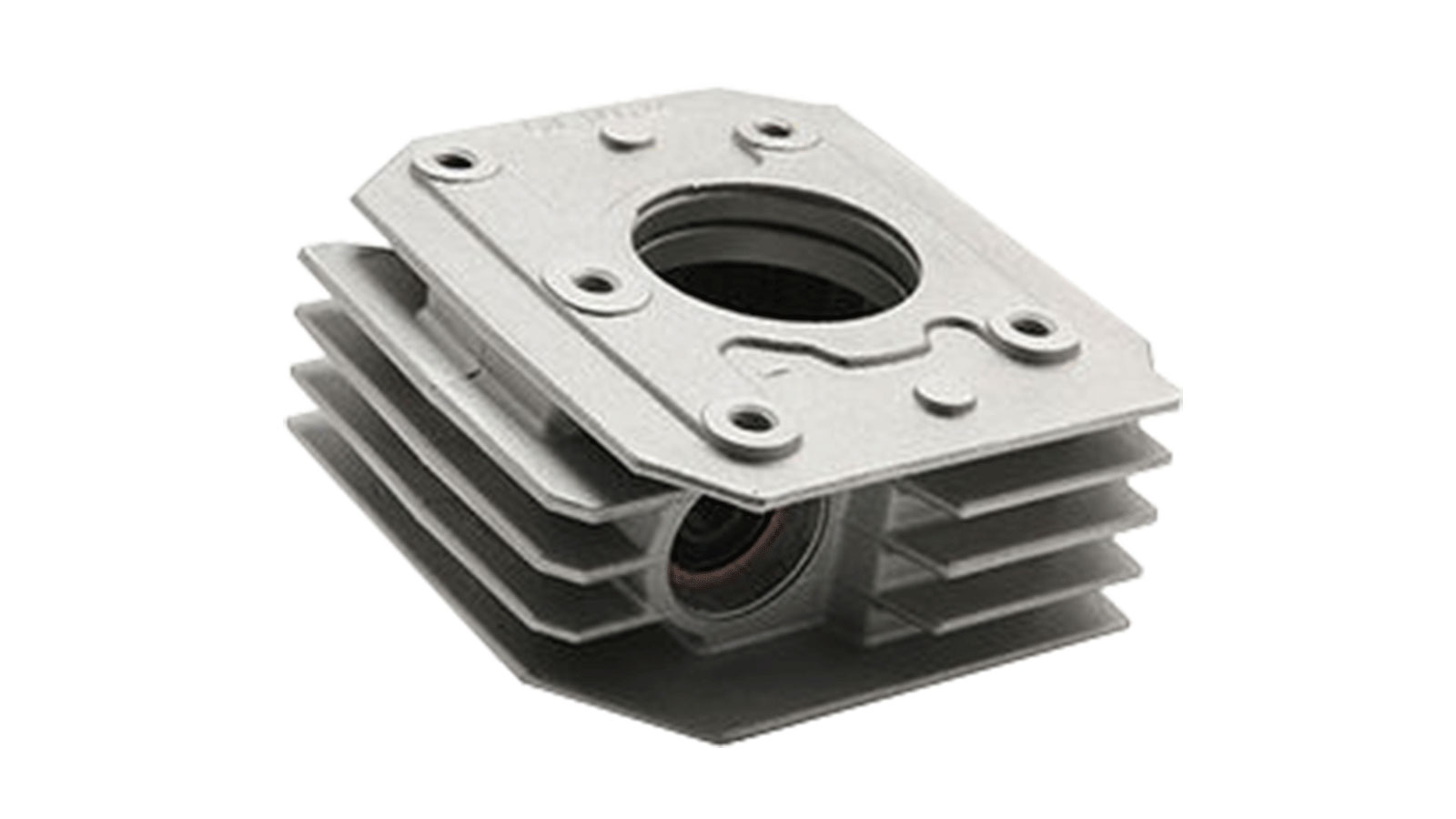
Die-cast aluminum alloy part
Company: Ningbo Noblefu Electromechanical Co. Ltd
Ningbo Noblefu’s model NBF-AP-007 is a heat sink made of die-cast aluminum alloy. It is impact-resistant.
MOQ: 1,000 pieces
Lead time: 25 to 35 days
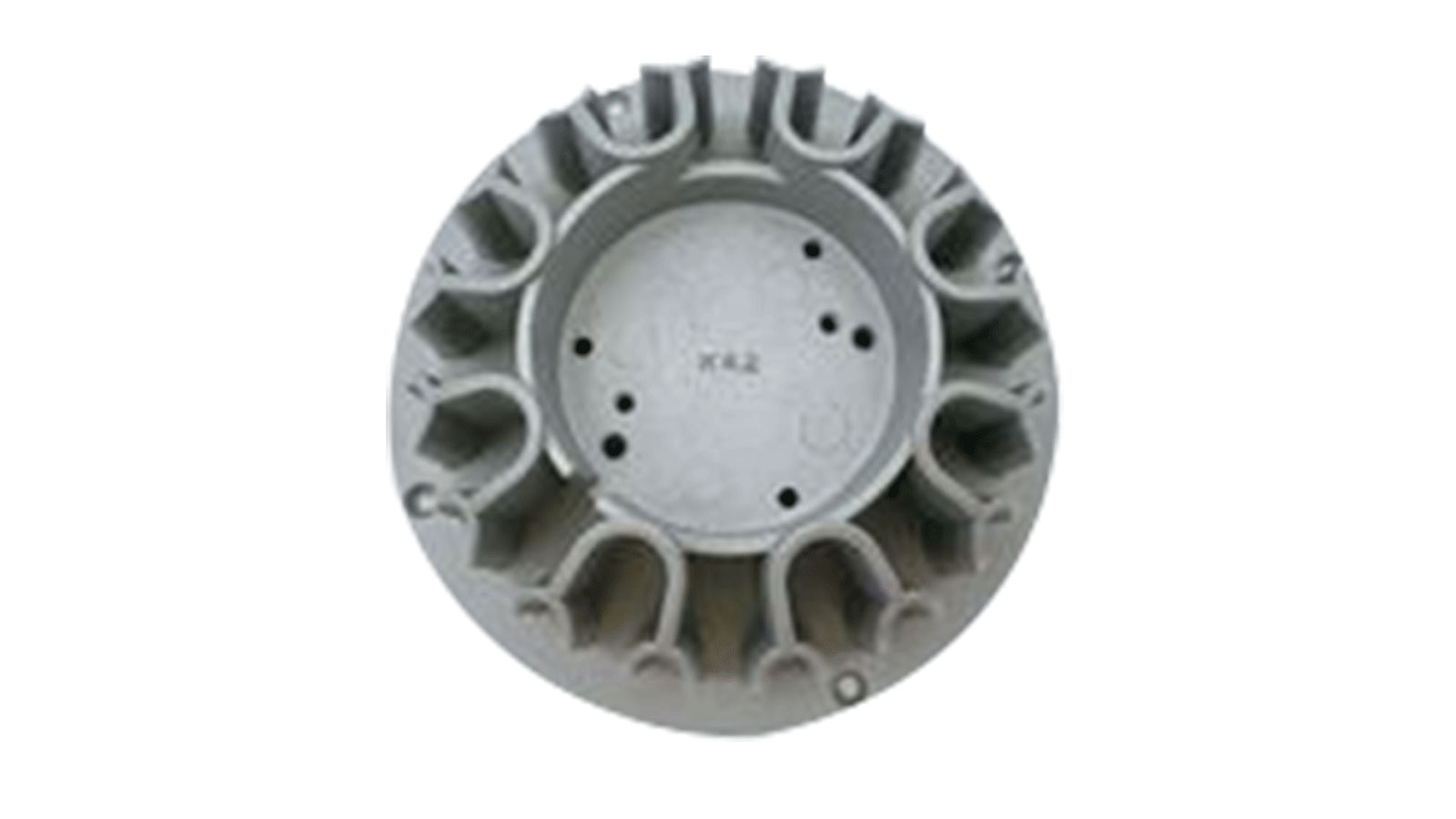
Die-cast aluminum alloy 6063 part
Company: Shenzhen Huafu Hardware Products Co. Ltd
Model HF010-002 from Shenzhen Huafu is a die-cast part made of aluminum alloy 6063. Dimensions are 95.6x95.6x38.8mm. Variants made of copper, zinc, aluminum or other aluminum alloys are also available.
MOQ: 100 pieces
Lead time: 7 to 10 days
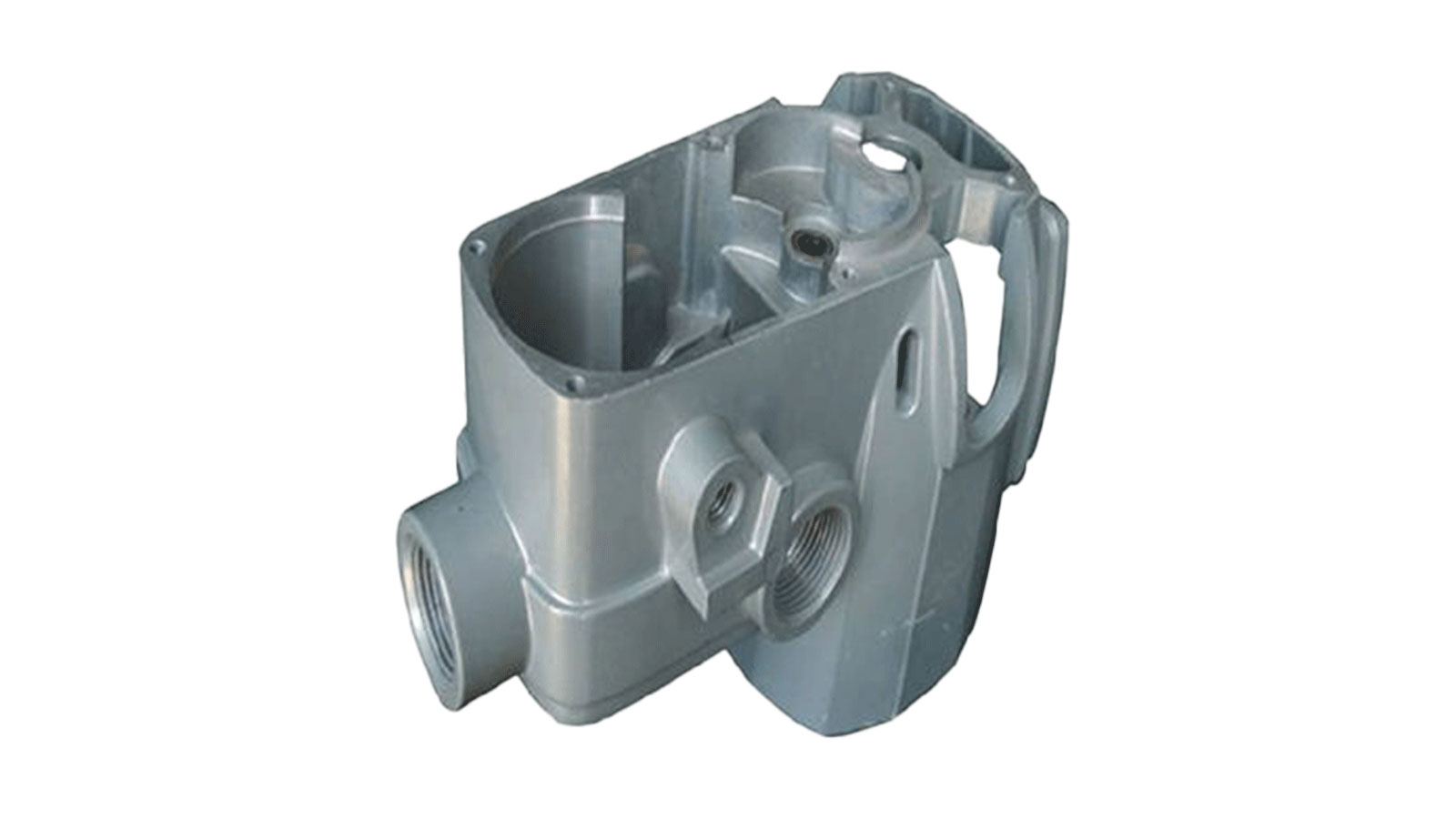
Die-cast zinc part
Company: YongShen Mould Co. Ltd
YongShen’s model y-101-65 is a die-cast zinc part with a polished, sandblasted, painted, powder-coated, galvanized or chrome-plated finish. It is also available in versions made of aluminum alloy.
MOQ: 1 set
Lead time: 25 to 35 days

