Download App
Better Online and Trade Show Sourcing Experiences.Scan the QR code to download.
Learn More
Hot Topics
DJI opened a store in Shenzhen in 2015 and now it is planning to expand to South Korea.
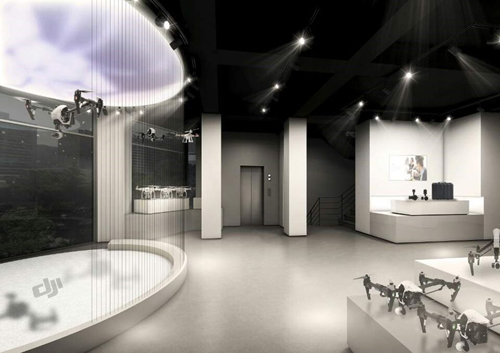
This rendered image of the upcoming Seoul DJI store shows a clean display layout
and an area for demonstrating drone flights (Image: DJI)
DJI really wants to be the Apple of drones. The company announced recently its second retail store, which will be in the Hongdae district of Seoul, South Korea. DJI's first shop opened in Shenzhen last December. Unlike at Apple’s, the public is not free to try the products inside the Shenzhen location. Instead, DJI fills its store with trained drone operators so they can show off what these products are capable of while avoiding damaging collisions from inexperienced users. The store in Seoul will be 870sqm, 70sqm larger than the Shenzhen location. Renderings suggest it will also contain an area for indoor flight demonstrations, as the store in Shenzhen does.
In spite of all the hullabaloo about e-commerce and selling directly to consumers like what Xiaomi and OnePlus do, physical presence still counts for a lot. Users want to be able to hold and try products. DJI said it does not currently have any plans for more stores, telling Fast Company that it wants to focus on "getting the retail experience right." Why put in effort if there are no expansion plans in the future? Companies have watched Apple's successful retail model with its own stores, which has proven effective at helping to build a brand. Microsoft has been trying to emulate this strategy as well, but there is nothing showing it has been a huge success. DJI is starting slow perhaps to make sure it properly adapts this strategy to sell drones.
Not every company has the luxury of opening their own flagship stores across the world, of course, and it is possible this might only be a successful strategy for big brands. Yet the importance of physical locations does highlight some key consumer attitudes about expensive electronics. Consumers like being able to try out products. E-commerce companies have traditionally used liberal return policies to get around this, enticing users to buy.
More Sourcing News
Read Also

关注 “环球资源外贸” 官方微信,获取实时外贸资讯
iOS & Android
iOS & Android(Mainland China)
Copyright © 2026 Publishers Representatives Limited. All rights reserved.