Download App
Better Online and Trade Show Sourcing Experiences.Scan the QR code to download.
Learn More
Hot Topics
The company will download information on restricted areas from a US government department and restrict drones from flying there.
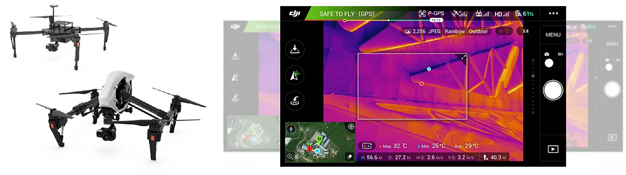
DJI allows authorities to override its restrictions, presumably so rescuers can use equipment such as the company’s Zenmuse XT thermal imaging camera and supporting drones (Source: DJI)
DJI is once again putting its geofencing technology to good use. The latest innovation from the China maker will recognize established wildfire areas and keep drones at a safe distance. While this is only a software update to the company's drones, the move shows how sophisticated UAVs are becoming and how consumers must deal with increasing limitations. DJI’s update will download information on temporarily restricted areas as published by the US Department of the Interior. While this new geospatial restriction will likely make drones safe from damage, it will also keep UAVs out of the way for firefighters and rescue workers. Engadget noted that last year aerial firefighters in California had to land when five drones were spotted nearby. Fortunately for first responders, DJI is including a way for authorities to override the restriction so drones can be used for official purposes.
This kind of feature would no doubt be useful in many markets, but the US is one of DJI's largest buyers and the country makes information concerning wildfires readily available. The US has also especially been affected in recent years by the increasing number of people moving to places likely to be affected by wildfires. Other large forested areas might also benefit from having this kind of information downloaded to their drones. However, at least one large market, the European Union, is still fighting to create universal drone regulations that apply to all member countries.
DJI introduced flying restrictions last December. In some ways, it gives the company a bigger competitive edge. It is a difficult feature for the myriad China drone companies to replicate because it requires some sophistical cloud architecture to keep things up to date. Some users might not like the limitations, but they do help keep users from breaking regulations and possibly getting their drones damaged as a result. As is typically the case, though, smaller makers maintain a big advantage on price. It does not cost much to get a standard quadcopter these days, even if the machine does not come with all the bells and whistles of a DJI drone.
More Sourcing News
Read Also

关注 “环球资源外贸” 官方微信,获取实时外贸资讯
iOS & Android
iOS & Android(Mainland China)
Copyright © 2026 Publishers Representatives Limited. All rights reserved.




