




Electric fuses are widely used in protecting electrical and electronic circuits from overcurrent conditions and potential damage. In automotive applications, they come in various voltage and current specifications, with low-voltage types more commonly found in traditional ICE vehicles and high-voltage kinds in modern as well as hybrid and electric vehicles.
For EVs and HEVs, electric fuses are specially designed to match their unique environment based on the high-power batteries and electric motors used. They have a higher operational voltage and current handling requirement than those used in ICE vehicles, typically between 400 and 800V or as high as 1,000V and up to 600A. However, this does not mean that EVs and HEVs do not need low-voltage fuses. They still do as they continue to have a 12V battery for electronic systems such as infotainment, power window and door locks, wipers, HVAC fans, ADAS and airbags.
In propulsion and related systems in EVs and HEVs, compatibility is the norm for greater reliability, efficiency and safety. This means fuses with high voltage and current ratings are recommended to be consistent with increased power demand of such vehicles.
To benefit from being in the largest EV and HEV market, manufacturers in China will build their capabilities for high-voltage fuses in the next one or two years. Most offer low-voltage types or those below 400V at present.
The few that can produce high-voltage fuses include Dongguan Shengruichi Electronic Co. Ltd, one of the suppliers interviewed for this report. Its latest release is the EVF series for EVs and HEVs. These fuses are available in 500 and 700V versions with a rated current of up to 1,600A and a breaking capacity of ≥30kA in DC mode. They have a body made of high-strength and -purity ceramic and comply with UL 2579, IEC 60269-6 and RoHS requirements. Shenzhen Victors Industrial Co. Ltd, another supplier contacted for this report, offers the VRP series. These fuses have voltage and current ratings of 700V and 5A to 1,200A, interrupting rating of 50 or 200kA in AC or 50kA in DC. They follow CE, cUL, UL and RoHS standards.
Growing EV fuse segment
Globally, electric fuses are expected to reach $4.745 billion by 2028 from $3.175 billion in 2022 and $3.33 billion in 2023, according to QY Research. This growth is fueled by the automotive industry, with the EV and HEV sector likely the main driver in the coming years.
In China, the electric fuse manufacturing sector is projected to realize $1.671 billion by 2028 from $1.108 billion in 2021, according to Global Info Research. This China-based market research site attributes the expansion to PV, EV and consumer electronics applications.
In IDC’s report on China’s new energy vehicle market, the increase will be from 5.225 million units in 2022 to 12.99 million units by 2025 or at a CAGR of 38 percent. This will spur further R&D on fuses for this application, which CNInfo reports will post two-digit growth in the next one or two years.
As such, Chinese suppliers, especially those that have started making EV and HEV fuses, are also expected to invest in production expansion. Dongguan Shengruichi has spent $138,000 for additional factory space, while more players venture into the category. Wuhan Dibiao, for instance, began mass manufacturing circuit breakers and fuses for EVs and HEVs in 2022 and now boasts an annual capacity for 10 million units. The company said that it is ready to adjust this to meet further increases in demand.
China’s electric fuse suppliers
Although there are a thousand manufacturers of fuses in China, less than half can offer products for EV and HEV applications. Only foreign suppliers based there have the capability and they include Littelfuse, Eaton, Mersen, PEC and Schurter. These top companies accounted for 46.56 percent of the market worldwide in 2021, according to Global Info Research.
More than half of fuse suppliers in China are located in the Yangtze River Delta region, specifically in Yueqing, Ningbo, Hangzhou, Suzhou and Changzhou. Others are found in the Pearl River Delta region, with many in Shenzhen, Dongguan, Zhongshan and Xiamen.
Mainstream EV fuses
Commonly available fuses for EVs from some Chinese manufacturers are 500 and 700V variants with a rated current of 6 to 600A, breaking capacity of 1,500 to 2,000A and operating temperature of -35 to 80 C. They conform to CE, cUL, UL, TÜV and RoHS standards.
All materials used in the production of fuses, such as copper, silver, zinc alloy and ceramic, come from domestic sources. Their costs rose in the past 12 months, which led some companies to increase fuse prices by 5 to 10 percent.
In 2024, no significant changes in the outlay for manufacturing inputs are expected and this will keep product quotes unchanged.
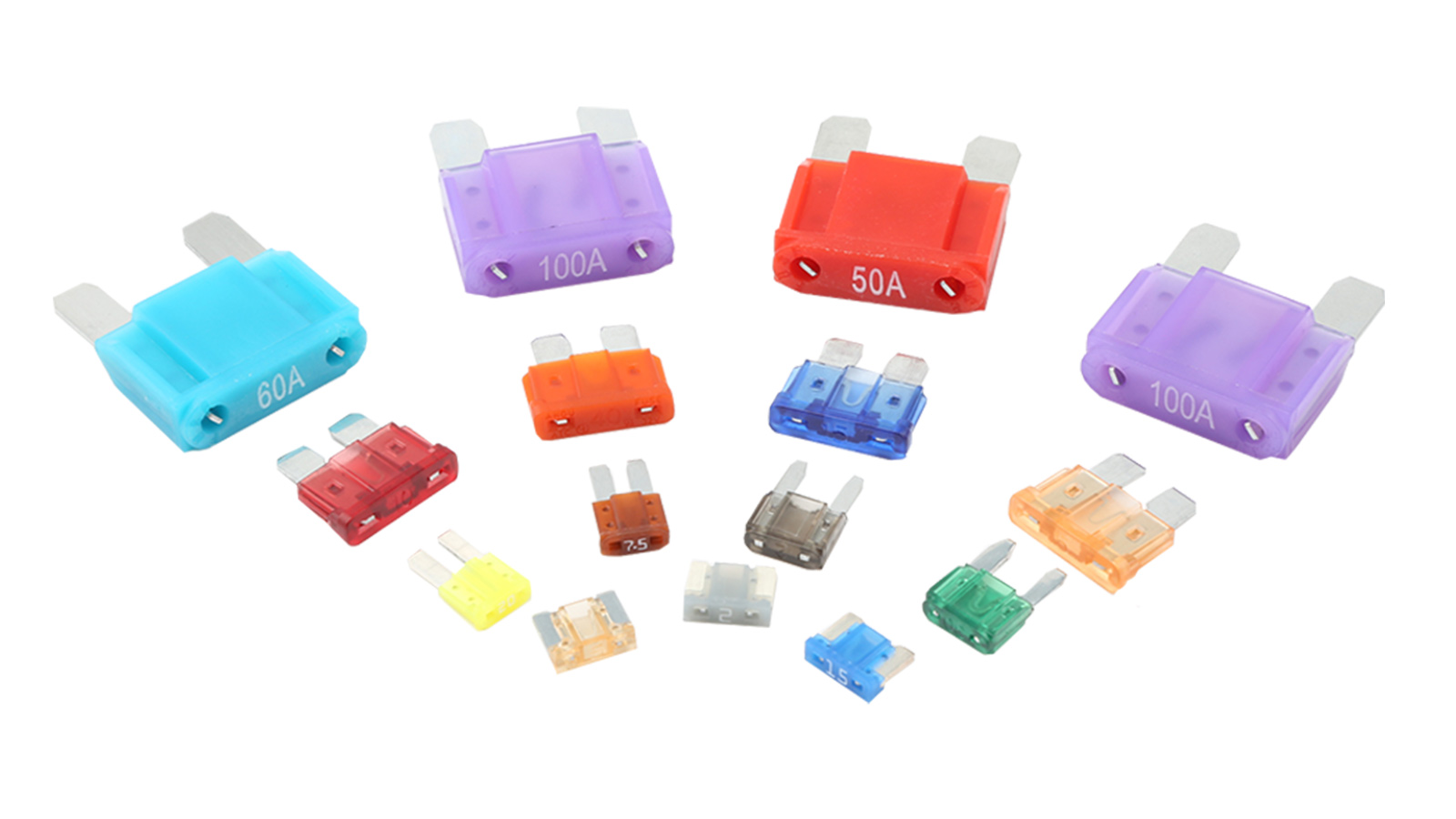
Fuse, 1,000A interrupting rating at 58VDC
Company: Dongguan Shengruichi Electronic Co. Ltd
Model ATY from Dongguan Shengruichi is an electric fuse with 32VDC voltage rating, 1,000A interrupting rating at 58VDC and -40 to 125 C operating temperature. It has zinc alloy terminals and conforms to SAE J2077 standards.
MOQ: 100 units
Lead time: 7 days
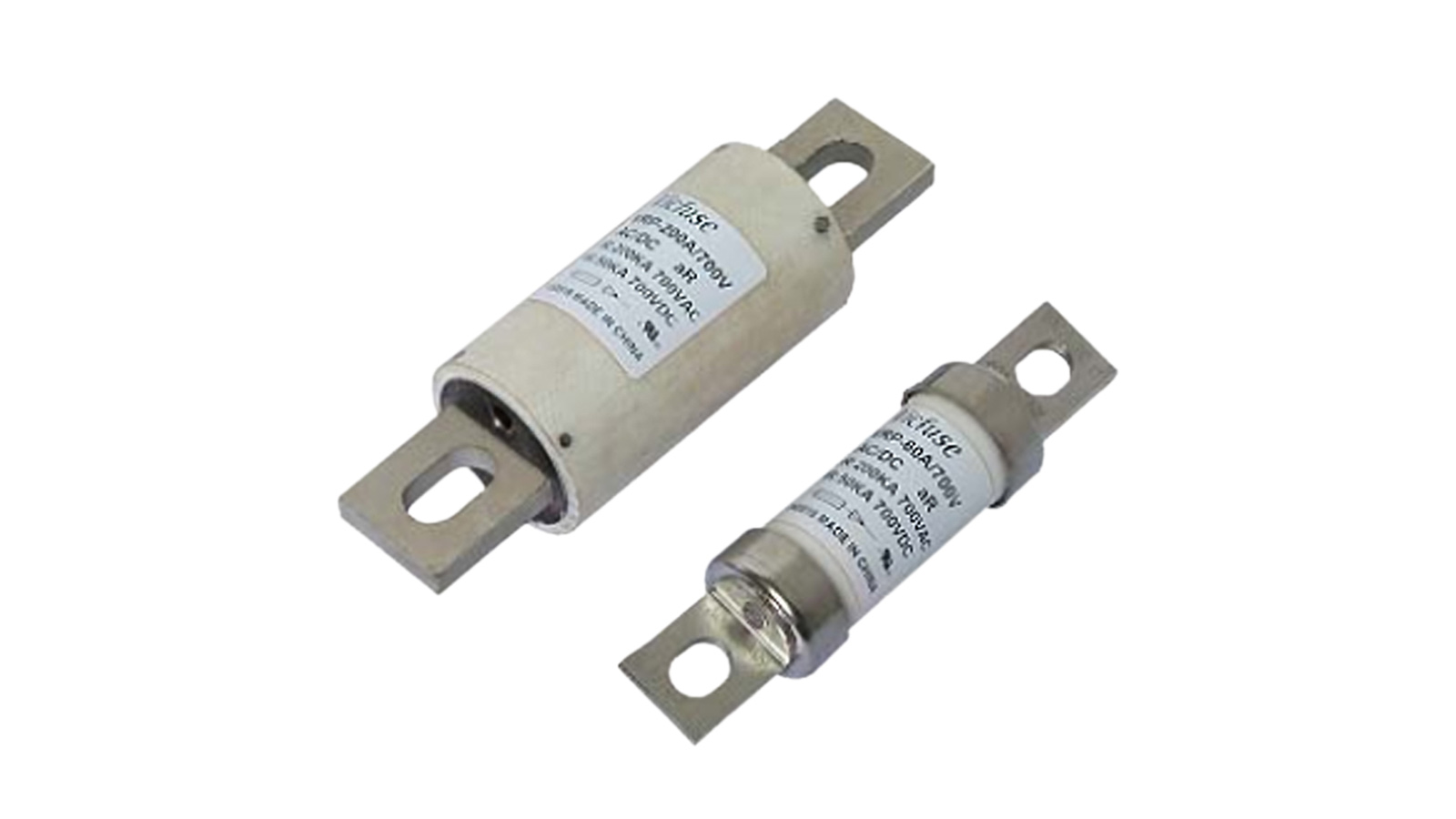
Fuse, 700VAC/DC, 5 to 1,200A rating
Company: Shenzhen Victors Industrial Co. Ltd
The VRP Series from Shenzhen Victors is an electric fuse with 700VAC/DC voltage, 5 to 1,200A current and 200kA in AC or 50kA in AC/DC interrupting ratings. It meets UL, cUL, CE and RoHS requirements.
MOQ: 1,000 units
Lead time: 7 days
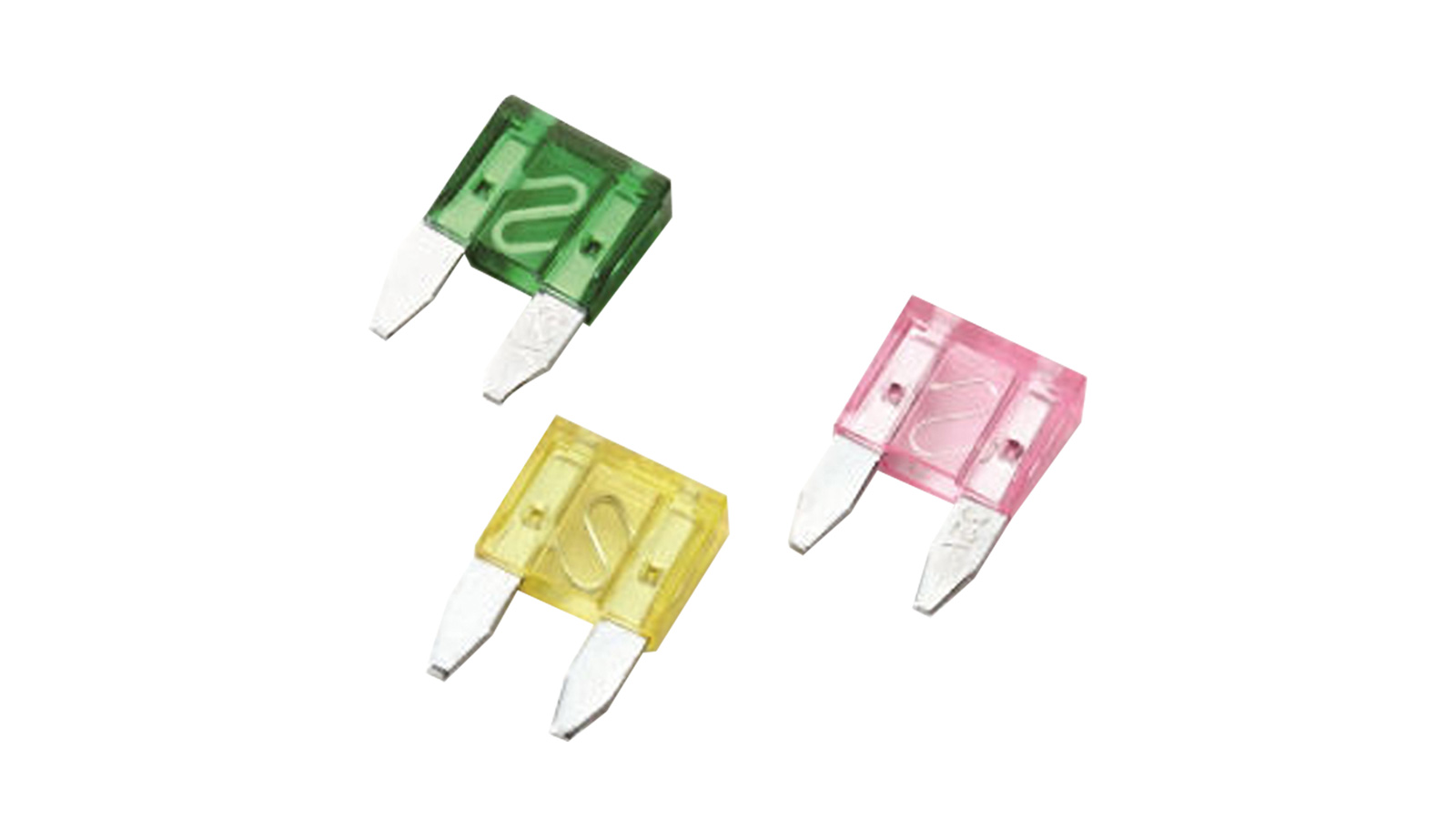
Fuse, rated at 32V, 2 to 30A
Company: XC Electronics (Shenzhen) Corp. Ltd
This electric fuse from XC, the 9C-1, has 32V and 2 to 30A rated voltage and current. Its operating temperature is -40 to 125 C.
MOQ: Negotiable
Lead time: 7 days
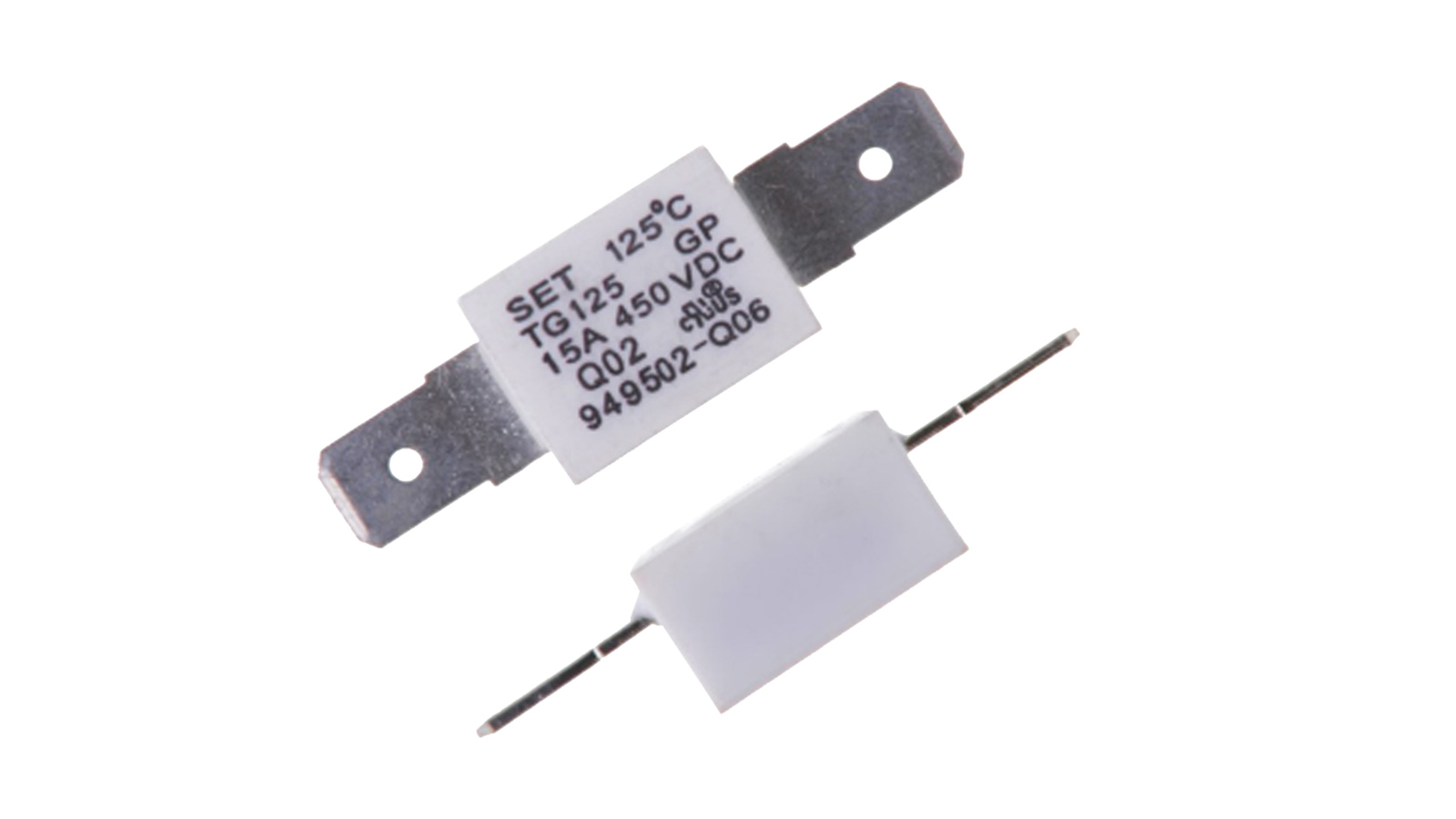
Fuse, rated at 400/450V, 15/20A
Company: Xiamen SET Electronics Co. Ltd
Xiamen SET’s electric fuse, the TG Series, has 400 or 450V and 15 or 20A rated voltage and current, 86 to 150 C rated operating temperature and 250 C maximum melting temperature. It meets UL and cUL requirements.
MOQ: Negotiable
Lead time: 7 days

