Download App
Better Online and Trade Show Sourcing Experiences.Scan the QR code to download.
Learn More
Hot Topics
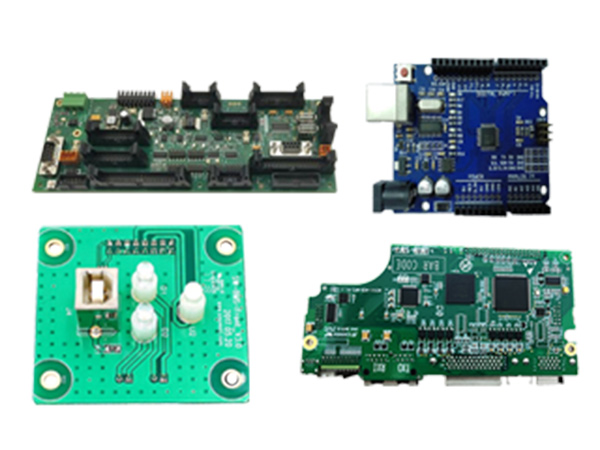
Electronics manufacturing services remain a viable option for OEMs looking to outsource design, assembly, testing, packaging and distribution processes. A thriving industry, its market size is expected to reach $797.94 billion by 2029 at CAGR of 6.8 percent from $504.22 billion in 2022, according to Fortune Business Insights. This continued growth is driven by the consumer electronics, automotive, heavy industrial manufacturing, aerospace and defense, healthcare, IT and telecom fields.
The Asia-Pacific region has the largest market share, owing to the number of EMS companies there, particularly in China, Japan and India, and will continue to expand in the coming years. New Venture Research’s forecast for the region is a 74.3 percent stake globally.
Despite the rethinking of supply chain strategies due to the disruption of the pandemic and ongoing economic and sociopolitical issues, China will still have a significant presence. This is because China and the Asia-Pacific region “remain valued as both supply bases and end markets,” according to Gartner.
In a report based on a survey of 403 supply chain leaders, released in August 2022, Gartner noted that there are no “strong signs of large-scale nearshoring to developed markets” even if diversification is underway. Instead, “supply chain organizations are examining A China Plus One approach that leaves most of the China-based network intact and places net new additions in other markets.”
The EMS industry in China is projected to stay strong based on forecasts for continued growth in 2023 through 2024. It has been performing well, having realized $260.32 billion in 2021 or 7 percent CAGR from 20217 and increasing to $275.94 billion in 2022, according to Hua’on Information Network, a market research portal in China.
There are more than a thousand EMS companies in China. They include major international players such as Jabil, Flex, Sanmina, Celestica, Foxconn, Pegatron, Wistron and New Kinpo, as well as homegrown suppliers BYD and USI. USI has 28 production bases scattered around the world, covering Asia, Europe, North America and Africa. DBG and Shenzhen Zowee are also among the larger Chinese EMS providers.
Taiwan-based GBM, Pan-International, 3CEMS and Orient Semiconductor also have EMS manufacturing operations, as do Vtech and WKK from Hong Kong SAR.
The rest are small and midsize domestically owned enterprises.
Over 80 percent of these suppliers are found in Shenzhen, Dongguan, Zhongshan, Suzhou, Kunshan, Changzhou, Tianjin and Dalian, with others based in central areas of China.
EMS providers with production bases in China cover a range of products, from consumer electronics and communications devices to automotive, medical and industrial electronics.
Consumer electronics account for 20 to 50 percent of shipments, according to companies interviewed by Global Sources. They include smartphones, tablets, AR/VR devices and wearables.
To continue thriving in the EMS market, China-based suppliers will improve their capabilities to meet specific requirements. Most allocate resources every year for the upgrade of production and testing equipment.
DBG, for instance, spent $22 million in the past three years to introduce new equipment or modernize existing facilities. It has SMT equipment, reflow solders and X-ray testing machines that are imported from the US, Japan, South Korea and Germany. DBG’s SMT equipment use an advanced PoP technique for precision and simultaneous double-sided surface mounting.
Other companies have been undertaking expansion to meet rising demand. Etron began mass production at its second-phase project in Suzhou in late 2021. The facility has a total area of 667,000sqm and can turn out 100 million products every year.
ICs, PCBs, passive components and connectors are the key components used in PCB assemblies. Where they are sourced depends on the preferences of customers.
Chinese EMS companies usually use ICs from foreign suppliers, with the other parts either obtained domestically or imported as well.
The cost of most components rose slightly in the past 12 months, resulting in higher quotes for EMS projects. It’s possible this trend will change in the coming months.
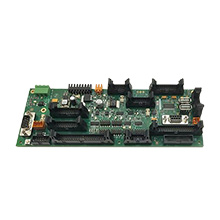
Company: Shenzhen Grandtop Electronics Co. Ltd
Shenzhen Grandtop produces the GT-IP670713 PCB assembly using a PCB with up to 20 layers and SMT and DIP processes.
MOQ: 10 units
Lead time: 7 days
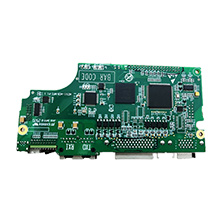
Company: Shenzhen Victoriously Technology Co. Ltd
The Servo Motor Controller Board from Shenzhen Victoriously uses an FR-4 PCB with six layers, 1oz copper thickness and a green solder mask.
MOQ: 10 units
Lead time: 5 days
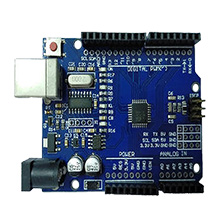
Company: Tecoo Electronics Co. Ltd
The TE-10-89 PCB assembly from Tecoo is based on a PCB with up to 22 layers. The minimum BGA and IC holes are 0.5 and 0.4mm.
MOQ: 100 units
Lead time: 7 days
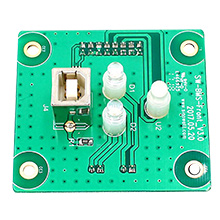
Company: Tortai Technologies Co. Ltd
Tortai’s GS-400 PCB assembly is based on an RoHS-compliant high-Tg PCB with impedance control, conformal coating and a lead-free soldering mask. The board has buried and blind holes, with as small as 0201 passive and fine-pitch BGA and QFN components mounted using wave or THT and reflow or SMT soldering. The supplier provides IC programming services.
MOQ: Negotiable
Lead time: 12 days
More Sourcing News
Read Also

关注 “环球资源外贸” 官方微信,获取实时外贸资讯
iOS & Android
iOS & Android(Mainland China)
Copyright © 2026 Publishers Representatives Limited. All rights reserved.




