Download App
Better Online and Trade Show Sourcing Experiences.Scan the QR code to download.
Learn More
Hot Topics
by Cecile de Veyra (Managing Editor)
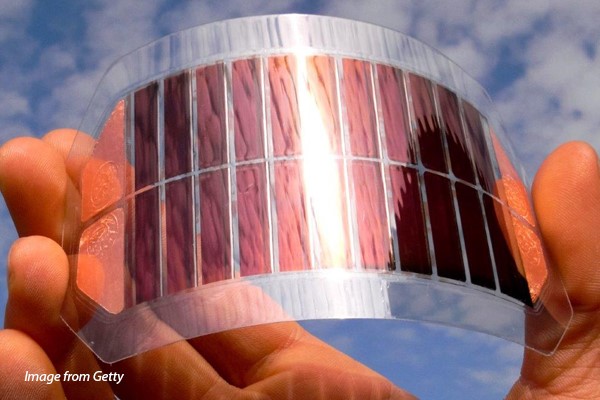
The search for new design and fabrication strategies to make flexible Li-ion batteries (FLIBs) for wearable devices has been ongoing for years. It has led to innovations in electrode design and options in compatible electrolytes. Breakthroughs notwithstanding, this category remains at an early stage of development but will continue to flourish as development and adoption of wearable technology gather pace.
Driving FLIB R&D efforts are the opportunities that abound in this application, which include smart jewelry such as rings, wristbands, watches and pins, as well as body-mounted sensors, fitness trackers and smart clothing.
IDC reported that 444.7 million wearable devices shipped worldwide in 2020, increasing by 28 percent YoY despite the COVID-19 pandemic. This upsurge is attributed to the availability of disposable income as sheltering in place has limited access to most leisure activities. “The pandemic has also been good for the market as it has put health and fitness at the forefront of many consumers' minds,” said Jitesh Ubrani, research manager for IDC mobile device trackers.
There is market confidence that 5G developments and heightened health awareness will ensure a significant increase in the coming years. Indeed, going by the projections, it is almost certain. According to IDTechEx, the global market for wearable devices will be valued at $100 billion and $150 billion in 2023 and 2026, from $40 billion in 2018.
This bodes well for the flexible batteries segment. Markets and Markets estimates growth will lead to $296 million in 2025 from $98 million in 2020 at a CAGR of nearly 25 percent.
In the area of research and development, this means great impetus to come up with more creative solutions, especially for FLIBs to withstand deformation yet deliver high capacity efficiently and safely.
An example is the spine-like battery designed by a research team led by Yuan Yang of Columbia University's engineering school. It has an energy density of 242Wh/L, shows a stable voltage when flexed and twisted, and maintains 94 percent of capacity even after 100 charge cycles. However, there is no available data on this breakthrough, that is, if it has gone past the prototype stage.
Li-ion batteries are small, lightweight and have a long operating life, making them the de-facto power source for wearable electronics. Their development continues to trend toward thinner and more flexible configurations that offer a bigger capacity for longer device use.
More Sourcing News
Read Also

关注 “环球资源外贸” 官方微信,获取实时外贸资讯
iOS & Android
iOS & Android(Mainland China)
Copyright © 2026 Publishers Representatives Limited. All rights reserved.




