Download App
Better Online and Trade Show Sourcing Experiences.Scan the QR code to download.
Learn More
Hot Topics
As software becomes more important, Google has started to unify the Android experience.
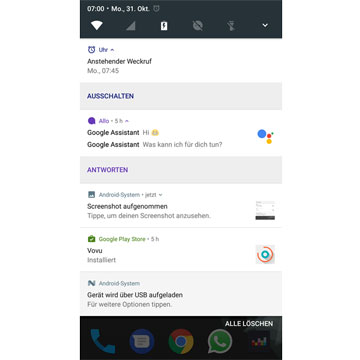
Google is cracking down on Android changes that
alter how notifications work in Android 7.0
(Source: Wikimedia Commons)
Ever since Android emerged as the main competitor to Apple's iPhone, the Google operating system has been plagued by fragmentation. Critics said there were too many companies with their own take on Android and it was causing software compatibility issues. Over the years, things have improved greatly for Android, and Google is now doing even more to unify the OS through software. Software is now the defining characteristic of new phones, so Google is taking its claim with Android, an open-source operating system that others are free to modify however they like as long as they do not care about Google services. With the exception of the China market, however, handset makers do care about Google services.
Software has become so critical to smartphone advancement that the Wall Street Journal is now calling it "the next big thing in smartphones." The claim almost has to be true given how much hardware advances have slowed down. This has led to Qualcomm looking for new opportunities outside smartphones by acquiring NXP Semiconductors. It is also why China handset makers have been able to catch up to the rest of the world. Huawei is now the third-largest smartphone brand and others such as Xiaomi, Oppo and Vivo have captured more market share and headlines with hardware that rivals larger competitors.
Now that software is the center of smartphone advancement, Google is working hard to defend its turf. Companies such as Amazon and Xiaomi have been successful with their own forked version of Android that do not net Google any profit through Google's own services, which are stripped out of those companies' devices. For most manufacturers, which still rely on Google services, the tech giant is working hard to unify the user experience. The latest move is barring makers from changing how Android notifications are displayed. Stock Android, as it behaved on Google's own-branded Pixel phones, bundles notifications and has certain features such as replying to messages from within notifications.
A unified user experience is good for Google, which wants users to be able to move from one Android device to another without any problems. It should also be good news for many smaller China suppliers. Only some of the larger companies invest in developing their own custom Android software. That software also tends to only do well in China, where Google is blocked. Outside China, most consumers want Android to behave in a predictable fashion, just as Microsoft Windows is hardware agnostic. Many small China suppliers shipping Android smartphones overseas already have software that is close to stock Android.
More Sourcing News
Read Also

关注 “环球资源外贸” 官方微信,获取实时外贸资讯
iOS & Android
iOS & Android(Mainland China)
Copyright © 2026 Publishers Representatives Limited. All rights reserved.




