Download App
Better Online and Trade Show Sourcing Experiences.Scan the QR code to download.
Learn More
Hot Topics
Google's Android One program is finally making headway in developing markets as modified versions of Android become less popular.
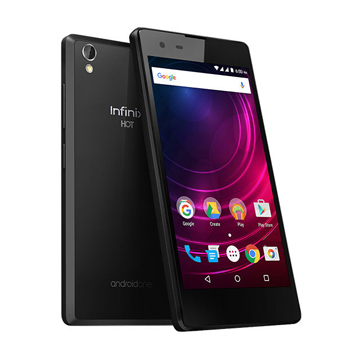
The Infinix Hot 2 is an Android One smartphone made for specific markets in Africa (Source: Google)
Not long ago, Google's Android One project had to refocus after poor performance in India led to speculation over whether the project had failed. However, Android One might be too important for Google to give up easily. A new report from ABI Research shows that Android Open Source Project devices have stagnated while Android One has grown. ABI essentially defines AOSP devices as those with heavily modified versions of Android that largely remove Google's services in favor of those from another company. Amazon's Fire tablets and Xiaomi smartphones would be included in this category. Android One smartphone makers work with Google to install stock Android on affordable phones for developing markets.
ABI estimates that AOSP smartphone market share fell to 14 percent in 2015 while Android grew to 67 percent. Android devices, in this case, are those shipped with the more traditional, Google-approved version of the OS installed, complete with Google's app store and other services. This is an important distinction because many companies have built business models using modified versions of Android to sell their own services. Xiaomi has been the most successful at this by selling its hardware at relatively low prices. However, all China smartphone companies have to strip out Google's services because they are blocked in the country.
Ironically, China suppliers have had some of the most success amid Google's resurgence in the Android market. ABI noted that "Huawei, Xiaomi and ZTE all showed notable volume growth in the fourth quarter." In fact, many China smartphone companies did well in 2015. According to Digitimes, domestic vendors shipped 128.6 million smartphones in the first quarter of 2016, increasing 33.3 percent year-over-year and accounting for 41.5 percent of the global market.
Still, even China companies tend to include Google services when targeting global consumers. The decline of AOSP devices will likely be felt in the developing markets, where smartphones are tailored for local needs. This is what has kept Indian handset makers afloat. Depending on the market, though, Google services might become an important inclusion, which means companies will have to make sure they are still making money off the hardware.
More Sourcing News
Read Also

关注 “环球资源外贸” 官方微信,获取实时外贸资讯
iOS & Android
iOS & Android(Mainland China)
Copyright © 2026 Publishers Representatives Limited. All rights reserved.