




Introduction: The AI Revolution in Electronics Manufacturing
How to Implement AI in Electronics Manufacturing (2026 Step-by-Step Guide)
6 Practical AI Applications in Electronics Manufacturing
The Future and Challenge of AI in electronics Manufacturing
Getting Started with AI on Your Line in 2026
The electronics manufacturing industry stands at a critical turning point where traditional methods can no longer meet escalating demand for microscopic precision, near-perfect quality, and accelerated production cycles. Artificial intelligence has emerged as a popular solution, offering manufacturers a strategic path to transform their operations from manual-dependent processes to data-driven ecosystems.
This guide provides a complete framework to implement AI in electronics manufacturing, detailing how AI delivers measurable improvements – from improved defect detection accuracy to significant reductions in unplanned downtime.
Introduction: The AI Revolution in Electronics Manufacturing
Electronics manufacturing is under growing pressure as products become more complex, tolerances tighten, and customers expect high quality, fast turnaround, and greater supply-chain resilience. In this environment, AI is becoming an increasingly practical tool for improving inspection, maintenance, planning, and process control across production operations.
Rather than replacing engineering expertise, AI helps manufacturers act on production data more quickly and consistently. Common use cases include machine-vision inspection, predictive maintenance, yield analysis, demand planning, and scheduling optimization, all of which support faster decisions and better operational visibility.
From a business standpoint, the value of AI lies in reducing avoidable losses and improving process stability. In the right applications, manufacturers may see gains in uptime, quality performance, and responsiveness, but results depend heavily on data quality, process maturity, and integration with existing systems.
AI adoption in electronics manufacturing is therefore less about adding a single tool and more about building a connected, data-driven operating model. The strongest results usually come when manufacturers combine domain expertise, digitized workflows, and targeted AI deployment rather than treating AI as a standalone fix.
- From the engineering perspective, AI provides precise solutions to persistent technical challenges. Machine learning algorithms detect microscopic defects human inspectors might miss, while computer vision systems perform real-time component verification at production-line speeds. Engineers transition from manual monitoring to overseeing intelligent systems that predict equipment failures before they occur and optimize processes continuously through data analysis.
- From the business perspective, AI delivers measurable operational and financial value. Predictive maintenance reduces unplanned downtime, protecting production schedules. Automated quality control decreases rework costs and prevents expensive recalls. AI-driven demand forecasting optimizes inventory, while intelligent scheduling maximizes equipment utilization – transforming production data into actionable business intelligence.
This integration represents more than a technological upgrade; it signifies a fundamental shift toward manufacturing where human expertise and machine intelligence combine to create more resilient, efficient, and competitive operations.
How to Implement AI in Electronics Manufacturing (2026 Step-by-Step Guide)
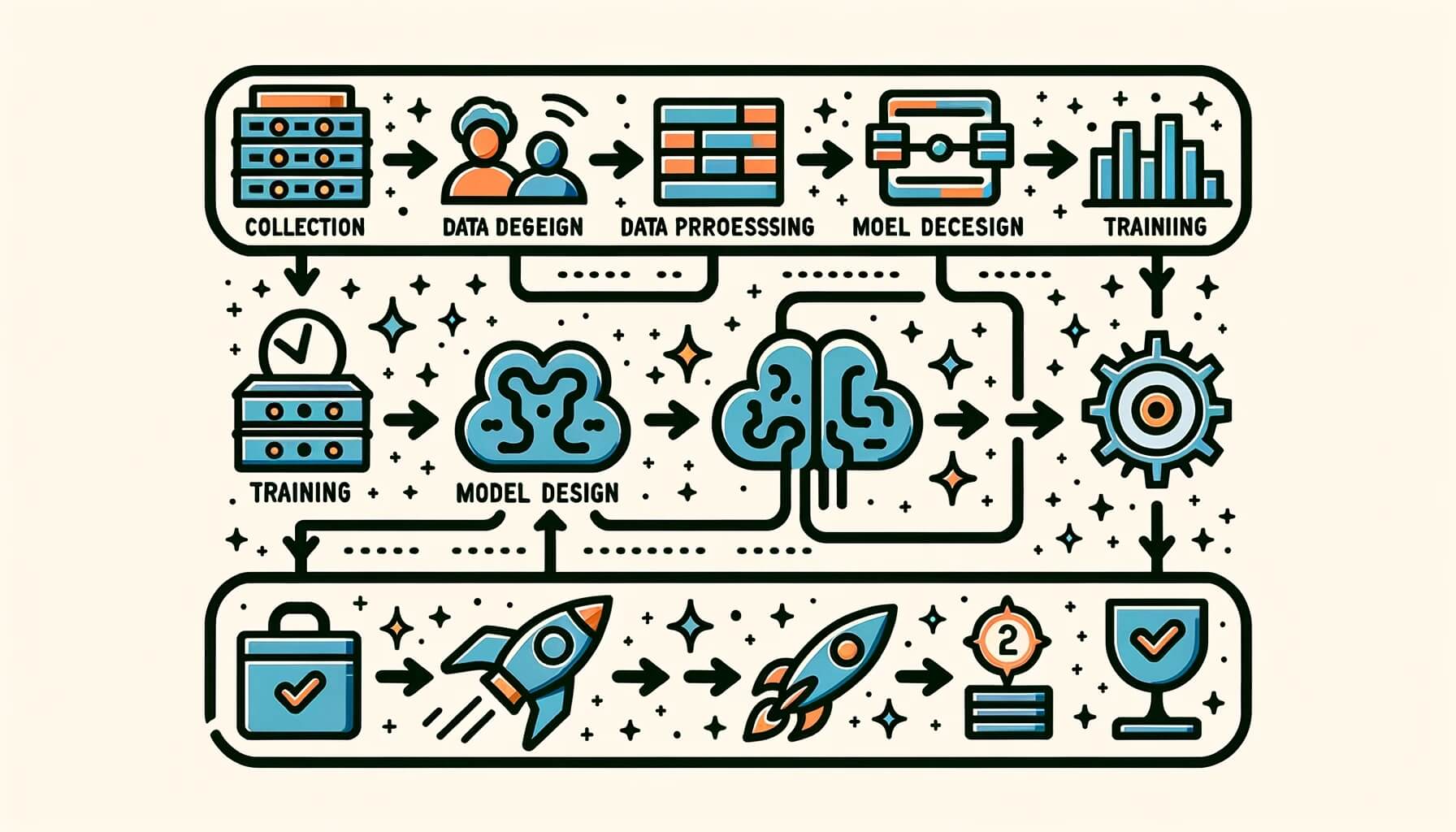
Successful AI implementation requires a deliberate progression from foundational digitization to cognitive automation. This structured approach ensures each phase builds upon proven results, minimizing risk while maximizing return on investment across contract manufacturing, and electronics manufacturing services (EMS).
1. AI Manufacturing Workflow Automation
Before introducing AI, manufacturers must establish digitized, connected workflows. This phase creates the structured data environment essential for effective AI operation.
- Automate Core Process Data Capture: Deploy Industrial IoT sensors across SMT lines, test stations, and assembly areas to continuously collect data on machine states, process parameters (temperature, pressure, speed), and environmental conditions.
- Integrate Enterprise Systems: Establish bidirectional connectivity between Manufacturing Execution Systems (MES), Enterprise Resource Planning (ERP) software, and equipment controllers to unify production, inventory, and quality data.
- Digitize Manual Procedures: Convert paper-based traveler cards, inspection checklists, and maintenance logs into digital work instructions that guide operators and automatically record execution data with timestamps.
Strategic Outcome: This transforms operations from document-centric to data-centric, providing the clean, contextualized data stream required to train and deploy effective AI models, while simultaneously improving baseline visibility and control.
2. Tracking AI Performance in Electronics Manufacturing
To accurately assess the impact of AI implementation on manufacturing operations, establish clear baseline measurements before deployment and systematically track improvements across these key performance indicators.
Key Metrics to Monitor
- First Pass Yield (FPY): Percentage of products passing initial inspection without rework. AI-enhanced quality control typically increases FPY through early defect detection and process optimization.
- Overall Equipment Effectiveness (OEE): Comprehensive measure of equipment productivity combining availability, performance, and quality rates. AI-driven predictive maintenance and process optimization generally improve OEE.
- Defect Escape Rate: Number of defective units reaching downstream processes or customers. AI vision systems reduce escape rates through continuous, high-precision inspection.
- Mean Time Between Failures (MTBF): Average operational duration between equipment breakdowns. AI predictive analytics extend MTBF through timely maintenance interventions.
- Cycle Time Efficiency: Production time per unit compared to optimal benchmarks. AI workflow optimization reduces cycle time variance through intelligent scheduling.
- Energy Consumption per Unit: Power usage relative to production output. AI process optimization decreases energy intensity through intelligent equipment management.
- Cost of Poor Quality (COPQ): Total expenses related to defects, rework, and quality issues. AI implementation typically reduces COPQ through improved process control.
3. Implementation Phases
Implementing artificial intelligence in electronics manufacturing requires a structured methodology that balances technological capability with operational readiness. The following phased approach ensures sustainable integration while maximizing return on investment across design, production, and quality control workflows.
Phase 1: Assessment and Foundation Building
Begin with a comprehensive evaluation of existing processes and infrastructure to identify optimal AI entry points.
- Conduct Process Intelligence Mapping
- Document critical workflows from PCB design through final assembly
- Identify data collection points and existing automation gaps
- Quantify pain points in defect rates, downtime, and throughput limitations
- Establish Data Infrastructure Requirements
- Audit data quality, availability, and accessibility across systems
- Implement necessary IoT sensors for real-time process monitoring
- Develop data pipelines connecting MES, ERP, and equipment systems
- Build Cross-Functional Implementation Team
- Assemble representatives from engineering, operations, IT, and quality
- Define clear roles, responsibilities, and success metrics
- Establish governance structure for AI project management
Phase 2: Pilot Project Selection and Design
Initiate AI implementation through controlled, measurable pilot programs that demonstrate clear value.
- Prioritize High-Impact, Low-Risk Applications
- Select use cases with defined ROI parameters and technical feasibility
- Common starting points: AI-powered optical inspection, predictive maintenance, or automated test optimization
- Define success metrics aligned with operational KPIs (OEE, FPY, MTTR)
- Develop Technical Implementation Plan
- Determine build vs. buy strategy for AI solutions
- Design system architecture with integration points to existing infrastructure
- Establish data collection protocols and model training requirements
Phase 3: Solution Development and Integration
Translate planning into practical implementation through careful development and testing.
- Implement and Train AI Models
- Collect and prepare historical and real-time production data
- Develop and validate machine learning algorithms for target applications
- Conduct iterative testing to refine model accuracy and reliability
- Integrate with Manufacturing Systems
- Connect AI solutions to existing MES/ERP platforms
- Implement APIs for seamless data exchange between systems
- Configure automated triggers for AI-driven actions and alerts
- Establish Monitoring and Validation Framework
- Develop dashboards for real-time performance tracking
- Create protocols for ongoing model validation and recalibration
- Document integration procedures for future scalability
Phase 4: Deployment and Scaling
Systematically expand successful pilots across the manufacturing ecosystem while building internal capabilities.
- Execute Controlled Pilot Deployment
- Implement on designated production lines with parallel manual oversight
- Monitor performance against established baselines
- Gather feedback and make iterative improvements
- Develop Scaling Strategy
- Create replication templates for successful implementations
- Prioritize expansion based on demonstrated ROI and technical readiness
- Plan infrastructure upgrades to support expanded AI deployment
- Build Organizational AI Competency
- Implement comprehensive training programs for engineering and operations teams
- Develop internal support structures for ongoing AI system maintenance
- Establish continuous improvement processes for AI optimization
This structured implementation approach enables electronics manufacturers to progressively transform operations through AI, beginning with focused proofs of concept and evolving toward enterprise-wide intelligent manufacturing systems. Each phase builds upon validated outcomes while systematically developing the technical and organizational capabilities necessary for sustainable AI adoption.
6 Practical AI Applications in Electronics Manufacturing
- Automated Visual Quality Inspection
AI-powered optical systems perform real-time PCB and component inspection with 99.9% accuracy. These systems detect microscopic defects – including soldering anomalies, component misalignment, and trace imperfections – that escape human visual checks, reducing defect escape rates while operating continuously across shifts.
- Predictive Equipment Maintenance
Machine learning algorithms analyze sensor data from SMT equipment to forecast maintenance needs weeks in advance. By identifying patterns indicative of bearing wear, motor degradation, or calibration drift, manufacturers reduce unplanned downtime and extend equipment lifespan.
- Dynamic Production Optimization
AI algorithms process real-time data from ERP, MES, and shop floor systems to generate adaptive production schedules. This intelligent scheduling minimizes changeover time, improves equipment utilization, and maintains on-time delivery rates despite supply chain variability.
- Process Parameter Intelligence
Through correlation analysis of historical production data, AI identifies optimal process settings for different product configurations. This capability reduces new product introduction time, decreases trial production cycles, and improves first-pass yield through data-driven parameter optimization.
- Supply Chain Resilience
AI models simulate multiple supply chain scenarios, enabling proactive response to material shortages and logistical disruptions. By optimizing inventory levels and identifying alternative sourcing options, manufacturers reduce inventory carrying costs while maintaining production continuity during market volatility.
- Continuous Yield Improvement
Advanced analytics platforms identify subtle correlations between process variables and final product quality. This enables root cause analysis of yield issues in hours rather than days, driving continuous improvement in manufacturing processes and reducing quality-related costs.
These applications demonstrate how AI delivers measurable operational improvements – transforming electronics manufacturing from experience-based operations to data-driven enterprises where quality, efficiency, and adaptability are systematically enhanced through intelligent automation.
The Future and Challenge of AI in electronics Manufacturing
AI is rapidly evolving from a productivity tool into the central nervous system of smart factories, enabling autonomous optimization and unprecedented flexibility. However, implementation faces significant barriers in data infrastructure, technical integration, and workforce adaptation that must be strategically overcome.
Future Developments: The Next 3–5 Years
- Edge AI Dominance – Real-time AI processing directly on factory equipment for instant quality control and predictive maintenance decisions.
- Generative AI Integration – AI-assisted design optimization that automatically suggests manufacturability improvements.
- Self-Configuring Production Lines – Autonomous systems that dynamically reconfigure workflows for customized orders without human intervention. Plausible in limited high-end settings, but unlikely for mainstream adoption in the near term
- Closed-Loop Sustainability – AI-driven resource optimization achieving measurable reductions in energy consumption and material waste.
- Cognitive Supply Networks – Fully integrated AI systems that predict disruptions and auto-adjust procurement, logistics, and production planning.
Key Implementation Challenges
- Legacy System Integration – the vast majority of manufacturing equipment lacks native IoT connectivity, requiring costly retrofitting for data collection.
- Data Quality & Standardization – Inconsistent data formats across machines and facilities create "data silos" that undermine AI model accuracy.
- Specialized Talent Shortage – There is a critical shortage of professionals who understand both manufacturing operations and AI/ML implementation.
- ROI Uncertainty – Difficulty quantifying returns on AI investments beyond pilot projects, particularly for small-to-medium manufacturers.
- Change Management Resistance – Workforce concerns about job displacement and skepticism toward data-driven decision-making processes.
- Cybersecurity Vulnerabilities – Expanded attack surfaces as AI systems connect previously isolated production networks to enterprise systems.
Getting Started with AI on Your Line in 2026
Launch your AI implementation with a focused pilot project to validate technology and measure ROI in a controlled environment.
Discover AI Solutions at Hong Kong's Premier Exhibition

Join us at the AI+ Products Hall (April 18–21, Hong Kong Shows Phase 2) to experience cutting-edge AI technologies transforming manufacturing. Explore industrial AI devices, smart wearables, and automation systems directly applicable to electronics production through live demonstrations and expert networking.
[Register Now →] to connect with innovators and accelerate your smart manufacturing journey.
Summary
Implementing AI in electronics manufacturing is increasingly important for competitiveness, quality, and resilience. By following the structured approach outlined in this guide, manufacturers can systematically transform their operations, achieving higher levels of quality control, production efficiency, and supply chain resilience.

