




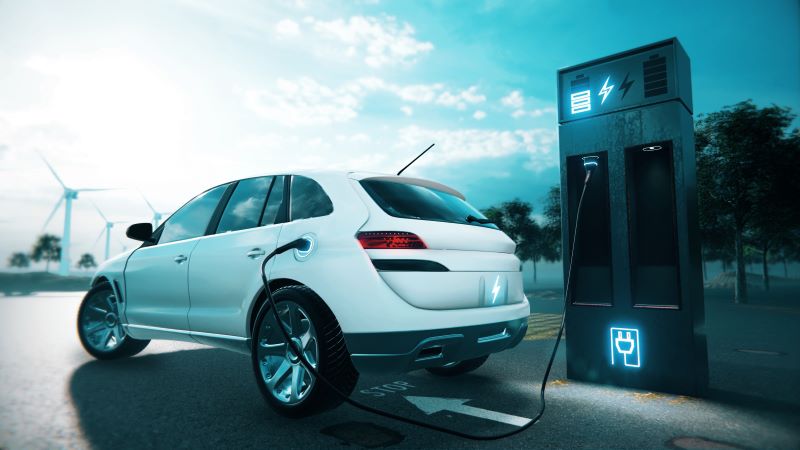
Image source: Getty/UniqueMotionGraphics
Hybrid and electric cars have been gaining traction in recent years as consumers, companies and governments worldwide take steps to reduce pollution that causes global warming by choosing modes of transportation that rely on fossil fuels less. It is important for sourcing professionals in the automotive and adjacent sectors to understand the characteristics of these vehicles and features they have that make them attractive to different kinds of end-users for different applications, in order to effectively forecast and meet demand in their markets.
In 2022, according to the International Energy Agency (IEA), global sales of electric cars -- including battery electric vehicles and plug-in hybrids – reached at least 10 million units. The Paris-based IEA is an independent intergovernmental organization that provides countries worldwide with policy advice on sustainability.
Last year’s electric car sales figures were an “explosive growth,” as it was a 55 percent increase from the level in 2021, according to the IEA. As of 2022, at least 26 million electric cars now ply the world’s roads. China, which accounted for 50 percent of total sales, is the top market for electric cars. Europe is the second largest market.
Electric cars are the gamechanger, challenging the dominance of cars with internal combustion engines. since the late 19th century. And with the growing popularity of electric cars, the world’s daily fossil fuel demand could decrease by at least five million barrels of oil a day, according to the IEA.
The global electric vehicle market is on a double-digit growth trajectory, driven by increasing environmental consciousness, technological advancements (such as electric motor design, battery technology, charging infrastructure) and supportive government policies (like subsidies, tax rebates, incentives). According to Markets and Markets, the market is poised to expand at a CAGR of 13.7 percent from its projected 2023 value of $388.1 billion to reach $951.9 billion by 2030.
The most popular electric car models available in the market today include Kia’s EV6, Tesla’s Model 3 and Model Y, Hyundai’s Ioniq 5, Lucid’s Air, Ford’s F-150 Lightning and Maverick Hybrid, Audi’s e-tron GT and Porsche’s Taycan.
For hybrid models, today’s most popular include Honda’s Accord Hybrid and Sonata Hybrid, Toyota’s Prius, Lexus’ ES Hybrid, Hyundai’s Tucson Plug-in Hybrid, Chrysler’s Pacific Plug-in Hybrid, Ford’s F-150 Powerboost and BMW’s 3303 and X5 xDrive45e.
Electric cars: pros and cons
Electric cars are vehicles powered by an electric motor and a rechargeable battery pack, instead of an internal combustion engine (ICE) that runs on gasoline or diesel fuel.
Pros:
Energy efficient: Electric cars are more energy-efficient than gasoline-powered cars, meaning they use less energy to travel the same distance
Environmentally friendly: Electric cars produce zero tailpipe emissions, meaning they do not release pollutants or greenhouse gases like carbon dioxide (CO2) and nitrogen oxides (NOx). This is better for the environment and helps to reduce air pollution.
Low-maintenance: Electric cars have fewer moving parts than gasoline-powered cars, which means they require less maintenance and have lower operating costs
Instant torque: Electric cars have instant torque, which means they can accelerate quickly and smoothly
Quiet: Electric cars are much quieter than gasoline-powered cars, which can make for a more pleasant driving experience
Cons:
Limited range: Electric cars have a limited range and require recharging, which can be inconvenient for long trips
Long charging times: Charging an electric car can take longer than filling up a gasoline-powered car at a gas station
Expensive: Electric cars can be more expensive than gasoline-powered cars, although prices are coming down as technology improves and production scales up
Limited charging infrastructure: The public charging infrastructure for electric cars is still limited in some areas, which can make it difficult to find a charging station when needed
Battery degradation: Over time, the battery pack in an electric car can degrade, which can reduce the car's range and require expensive repairs or replacement
In summary, electric cars are energy-efficient, environmentally friendly, low-maintenance, and offer instant torque and a quiet driving experience. However, they also have a limited range, long charging times, can be expensive, have a limited charging infrastructure, and can be affected by battery degradation.
Hybrid cars: pros and cons
A hybrid car is a vehicle that uses both an internal combustion engine and an electric motor to power the car. It can operate on gasoline, electric power, or a combination of both.
Pros:
Improved fuel economy: Hybrid cars use less fuel than traditional gasoline-powered cars, which allow users to save money on gas
Environmentally friendly: Hybrid cars produce fewer emissions than traditional gasoline-powered cars. One of the ways they reduce emissions is by using electric power at lower speeds and when idling.
Low maintenance: Hybrid cars have fewer moving parts than traditional gasoline-powered cars, which means they require less maintenance and have lower operating costs
Regenerative braking: Hybrid cars use regenerative braking to capture energy that is normally lost during braking and use it to recharge the battery, which can improve fuel economy
Quiet: Hybrid cars are much quieter than traditional gasoline-powered cars, which can make for a more pleasant driving experience
Cons:
Higher upfront costs: Hybrid cars can be more expensive to purchase than traditional gasoline-powered cars, although prices are coming down as technology improves and production scales up
Less horsepower: Hybrid cars may not have the same overall horsepower as traditional gasoline-powered cars, which can affect performance
More expensive maintenance: When maintenance is needed, it can be more expensive for hybrid cars than traditional gasoline-powered cars
Limited charging infrastructure: Hybrid cars still rely on gasoline, which means they need to be refueled at gas stations. This can be inconvenient in areas with limited access to gas stations
They still produce fossil fuel emissions: While hybrid cars produce fewer emissions than traditional gasoline-powered cars, they still produce some emissions
In summary, hybrid cars are more fuel-efficient, environmentally friendly, low-maintenance, and offer regenerative braking and quiet driving experience. However, they can be more expensive upfront, have less horsepower, more expensive maintenance, limited charging infrastructure, and still produce some emissions.
How do electric cars work?
Electric cars work by using an electric motor powered by a battery pack instead of an internal combustion engine that runs on gasoline or diesel fuel.
The battery pack is made up of many individual cells that are connected to provide the necessary voltage and current to power the electric motor.
Electric cars receive energy from a charging station and store the energy in a rechargeable battery that powers an electric motor, which turns the wheels.
The power electronics controller manages the flow of electrical energy delivered by the battery pack, controlling the speed of the electric motor.
The regenerative braking system captures energy that is normally lost during braking and uses it to recharge the battery, which can improve fuel economy.
Electric cars must be plugged in to a wall outlet or charging equipment, also called electric vehicle supply equipment (EVSE), to recharge the battery pack.
How do hybrid cars work?
Hybrid cars work by combining an internal combustion engine with one or more electric motors, which use energy stored in batteries.
The electric motor drives the car at low speeds or under low power demands, while the gas engine kicks in at higher speeds where it’s more efficient and makes the most of its power, or when the car needs to accelerate quickly or climb hills.
The battery pack is made up of many individual cells that are connected to provide the necessary voltage and current to power the electric motor.
The battery is charged through regenerative braking and by the internal combustion engine.
Hybrid cars cannot be plugged in to charge the battery. Instead, the battery is charged through regenerative braking and by the internal combustion engine.
The extra power provided by the electric motor can potentially allow for a smaller engine. The battery can also power auxiliary loads and reduce engine idling when stopped.
Together, these features result in better fuel economy without sacrificing performance.
Conclusion
The key difference between these cars is that electric cars are fully electric and rely solely on electricity, while hybrid cars combine both an internal combustion engine and an electric motor to enhance fuel efficiency and reduce emissions.
Electric cars are generally considered more eco-friendly than hybrid cars when it comes to reducing greenhouse gas emissions and minimizing environmental impact. Here's why:
- Zero Tailpipe Emissions: Electric cars produce zero tailpipe emissions since they are powered solely by electricity.
- Lower Carbon Footprint: The environmental impact of an electric car depends on the source of the electricity used for charging. If the electricity comes from renewable sources like wind or solar, the carbon footprint of an EV is very low. Even if the electricity is generated from fossil fuels, EVs tend to produce fewer emissions compared to internal combustion engine vehicles.
- Reduced Dependency on Fossil Fuels: Electric cars reduce the world’s reliance on fossil fuels, which are a finite and polluting energy source. By transitioning to electricity, which can be generated from a variety of sources, we can move towards a more sustainable energy future.
Hybrid cars, while more fuel-efficient than traditional gasoline cars, still rely on gasoline and produce tailpipe emissions. They are a transitional technology that helps improve efficiency but does not eliminate the use of fossil fuels entirely.
It's important to note that the environmental impact of any vehicle also depends on factors like the production of the vehicle, battery manufacturing, and end-of-life disposal. However, overall, electric cars have a stronger potential to be more eco-friendly, especially as the electricity grid becomes cleaner and more renewable sources are integrated.
Frequently asked questions about hybrid and electric cars
Do hybrid cars last longer than electric cars?
There is no definite answer to this based on available information, but here are some relevant points:
- A well-maintained hybrid vehicle should last well past its first decade and 100,000 miles. With proven long-term reliability, hybrid cars generally last as long as their gas-powered counterparts
- The major factors that contribute to how an internal combustion engine (ICE) car ages — engine wear and tear, corrosion, fluid leakage, and suspension lifespan — also impact how a hybrid will age.
- The lithium-ion batteries in hybrid electric vehicles (HEVs), plug-in hybrid electric vehicles (PHEVs), and all-electric cars are the same types of batteries that power cellphones. So, just as cellphones eventually fail to hold a charge and slowly lose power over time, the same is true for hybrid vehicle batteries.
- Electric cars have a lower range of travel than gasoline or hybrid vehicles.
- Most electric vehicles (EVs) can last between 10 and 20, while hybrid cars can last between five and 15 years.
In summary, there is no clear answer to whether hybrid cars last longer than electric cars. However, hybrid cars generally last as long as their gas-powered counterparts, and the major factors that contribute to how an ICE car ages also impact how a hybrid will age.
Can an EV user charge their car at home? What equipment is needed?
Yes, electric vehicle (EV) users can typically charge their cars at home, and it's one of the convenient aspects of owning an EV. To charge an EV at home, a user needs the following equipment:
- Electric Vehicle Charging Station (EVSE): This is often called a "home charger" or "charging station." It is a dedicated unit that connects to the home's electrical supply and provides a safe and efficient way to charge an EV. EVSE units come in various power levels (measured in kilowatts) to accommodate different charging speeds. A user can choose one that suits the car’s needs and their budget.
- Access to a Power Outlet: A user will need access to a standard power outlet, typically a 120-volt (Level 1) outlet, or a 240-volt (Level 2) outlet. Level 2 outlets are faster and more common for home charging. If a Level 2 outlet is not available near the user’s parking space, the user may need to have one installed by a qualified electrician.
- EV Charging Cable (usually supplied with the vehicle): The EV should come with a charging cable that connects the vehicle to the EVSE or power outlet. Some EVs come with portable Level 1 charging cables, while others require a Level 2 cable.
- Professional Installation (for Level 2 charging): If a user is installing a Level 2 EVSE at home or upgrading their electrical service, it's advisable to have a qualified electrician perform the installation to ensure safety and compliance with local electrical codes.
- Appropriate Electrical Capacity: The home's electrical service must have the capacity to handle the charging equipment an EV user plans to install. This may involve upgrading the electrical panel and circuitry, which an electrician can assess and address if needed.
Once the necessary equipment and infrastructure are in place, charging an EV at home is as simple as plugging it in. A user can set up charging schedules, monitor charging status, and track energy consumption through smartphone apps or the EV's onboard computer, depending on the make and model of the vehicle.
Charging times vary depending on the EV's battery size, the power level of the EVSE, and the state of charge when charging begins. Level 2 chargers are significantly faster than Level 1, making them more practical for daily charging needs.
Does electricity for EV charging cost less than gasoline?
The cost of electricity for charging an electric vehicle (EV) is generally lower than the cost of gasoline for a traditional internal combustion engine (ICE) vehicle. Several factors contribute to this cost difference:
- Energy Efficiency: Electric vehicles are more energy-efficient than gasoline vehicles. They can convert a higher percentage of the energy from electricity into actual vehicle movement. This means you get more miles per unit of energy compared to gasoline.
- Electricity Rates: The cost of electricity varies by location and can depend on factors like local utility rates, time of use, and even the source of the electricity (e.g., renewable energy). In many places, electricity rates for charging an EV are lower per kilometer compared to the cost of gasoline.
- Maintenance Costs: EVs typically have lower maintenance costs than gasoline vehicles. They have fewer moving parts, and there's no need for oil changes or exhaust system repairs.
- Incentives and Subsidies: Some governments offer incentives, rebates, or tax credits to encourage EV adoption, further reducing the overall cost of owning and charging an EV.
- Home Charging: Charging an EV at home using residential electricity rates is often more cost-effective than using public charging stations. Many EV owners take advantage of this convenience.
While electricity for EVs is generally cheaper, the total cost of ownership can vary depending on factors like the initial purchase price of the EV, the availability of charging infrastructure, and individual driving habits. However, for many drivers, the long-term savings on fuel and maintenance make EVs a cost-effective choice, especially as technology becomes more mainstream and prices continue to decrease.
How far does an average EV car go on average with a full battery charge?
The range of an average electric vehicle (EV) on a full battery charge can vary widely depending on several factors, including the EV's make and model, battery size, driving conditions, and driving habits. Here are general range estimates:
- Short-Range EVs: Some smaller and more affordable electric cars offer a range of around 100 to 150 miles (160 to 240 kilometers) on a full charge. These EVs are typically designed for urban or commuter use and are suitable for shorter daily trips.
- Mid-Range EVs: Many mid-priced electric cars offer a range of approximately 200 to 300 miles (320 to 480 kilometers) on a full charge. These EVs are versatile and can cover longer distances between charges, making them suitable for various driving needs.
- Long-Range EVs: High-end and premium electric vehicles often provide ranges of 300 miles (480 kilometers) or more on a single charge. Some of these EVs can even exceed 400 miles (640 kilometers) per charge. Long-range EVs are designed for drivers who frequently travel longer distances.
EV technology is rapidly advancing, and newer models tend to offer improved range performance. Additionally, factors like weather conditions, driving speed, terrain, and the use of climate control systems can impact an EV's actual range.
How long does it take to fully charge an EV on average?
The time it takes to fully charge an electric vehicle (EV) can vary significantly based on several factors, including the following:
- Charging Speed: Charging speed is typically measured in kilowatts (kW). EVs can charge at different speeds, depending on the available charging infrastructure and the vehicle's compatibility. Charging speeds can range from as low as 3 kW (Level 1) to over 150 kW (DC fast charging).
- Battery Capacity: The size of the EV's battery pack, measured in kilowatt-hours (kWh), affects the charging time. A larger battery takes longer to charge fully than a smaller one.
- Current State of Charge: If the battery is completely depleted, it will take longer to charge compared to a partially charged battery.
- Charging Station Type: There are different types of charging stations, including Level 1, Level 2, and DC fast chargers. Level 1 chargers, which use a standard household outlet, are the slowest, while DC fast chargers provide rapid charging.
- Charging Infrastructure: The availability of charging infrastructure in your area plays a role. Faster charging stations may be less common, and you may need to plan your route accordingly.
- EV Make and Model: Different EVs have varying charging capabilities. Some can accept higher charging speeds than others.
Here are some general estimates:
- Level 1 charging (120 volts, typical household outlet): This is the slowest option, and it can take 8 to 20 hours or more to fully charge an EV, depending on the battery size.
- Level 2 charging (240 volts, dedicated charging station): This is the most common option for home charging. It can typically provide a full charge in 4 to 8 hours, depending on the EV and charger's specifications.
- DC fast charging: DC fast chargers can provide a significant charge in a short amount of time. They can add around 60 to 80 miles (100-130 kilometers) of range in about 20 to 30 minutes, depending on the charger and EV compatibility.
It's important for the user to check the charging capabilities of the specific EV model and the charging infrastructure available in their area to get a more accurate estimate of charging times. Many newer EVs also come with features that allow a user to schedule charging during off-peak hours to take advantage of lower electricity rates and ensure a full charge when they need it.
Below is a gallery of products chosen by our market analyst as representing trends in electric vehicles and hybrids available from verified suppliers on Global Sources.
Gallery View of Popular Hybrid and Electric Cars
1. Hybrid SUV
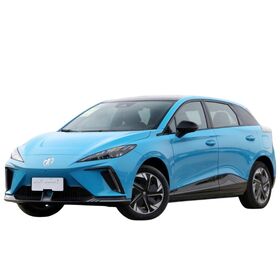
Company: Free Market Co. Ltd
The MG Mulan from Free Market is a five-seater, rear-wheel drive hybrid offroad SUV. It has a four-cylinder turbocharged engine with a displacement range of 1.5L to 2L. It is equipped with a tire pressure monitoring system, antilock braking system and electronic stability control. Free Market offers OEM/ODM services and has more than 20 years of export experience.
MOQ: 1 unit Price: $15,000 per unit Lead time: 60 to 180 days
2. Electric luxury car
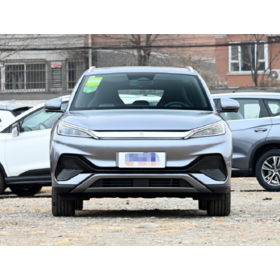
Company: Zhejiang NAC Hardware & Auto Parts Dept.
Zhejiang NAC’s model LEW-Yuan is a luxury car with a maximum range of 510km under China Light-Duty Vehicle Test Cycle (CLTC) standards. Its dimensions are 4455x1875x1645mm. The unit’s colors can be customized. Zhejiang NAC was established in 1975. It accepts OEM/ODM orders. Zhejiang NAC was established in 1975 and offers OEM/ODM services.
MOQ: 1 unit Price: $20,500 Lead time: 15 to 30 days
3. Plug-in hybrid sedan
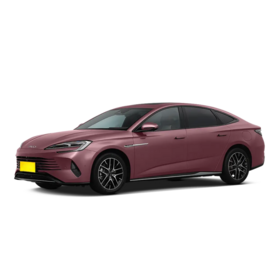
Company: Chongqing Mustang International Commerce Co. Ltd
Model BYD Seal DM-i 2023 from Chongqing Mustang is a four-door, five-seat plug-in hybrid sedan. It has two powertrain options, namely a four-cylinder 1.5L engine with 110hp power output and a four-cylinder 1.5 turbocharged engine with 139hp power output. It has a cruising range of 121km/200km based on China Light-Duty Vehicle Test Cycle (CLTC) standards. Its battery has a capacity of 17kWh. Chongqing Mustang, founded in 2022 as a car export enterprise specially approved by the Ministry of Commerce of China, has worked with more than 20 car brands.
MOQ: 1 unit Price: $24,690 per unit Lead time: 20 to 30 days
4. Rear-drive electric family car
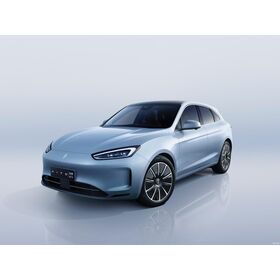
Company: RO-authon Chengdu International Trade Co. Ltd
The AION M5 2023 from RO-authon Chengdu is a rear-drive electric car with a maximum range of 620km (CLTC) and speed of up to 200kph. It has a 272hp front motor and a rear motor with 200kW power output. It is powered by a LiFePO4 battery. RO-authon was established in 2017 and is an exporter of cars.
MOQ: 1 container Price: $25,980 per container Lead time: Please inquire
5. Electric pickup truck

Company: Shenzhen Guangyuan Household Co. Ltd
Shenzhen Guangyuan’s model Geely Radar RDY 400S is an electric pickup truck with a range of 400km and speed up to 185kph. Its motor 272hp maximum power and 384Nm torque. It is powered by a ternary lithium battery. Shenzhen Guangyan is a trading company that accepts OEM/ODM orders.
MOQ: 1 unit Price: $19,980 to $26,780 Lead time: 7 to 15 days
6. Electric cargo van
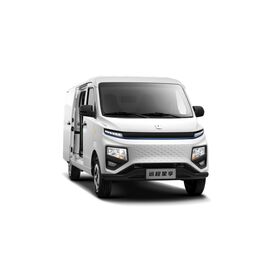
Company: Autotec International Corp.
Model "16000122.A Xingxiang Van V6E E-mark" from Autotec International is a two-seater electric cargo van with a cruising range of 260km (CLTC) or 210km (Worldwide Harmonized Light Vehicles Test Cycle) and maximum speed of 90kph. Its front and rear rated load capacities are 1T and 2T, respectively. It has a 41.86kWh CATL LiFePO4 battery and is capable of DC and optional 3.3kW AC charging. Autotec is ISO 9001:2008 and QS 9000:1998-certified .
MOQ: 1 unit Price: $22,800 to $24,600 Lead time: 30 to 60 days

