Fiber is said to be the partner technology of 5G, providing backbone support for networks to deliver promised higher bandwidth, faster data transmission and greater connectivity with low latency. With ongoing 5G deployments, a fiber-based infrastructure is critical to expanding these networks and widening their coverage areas.
Based on forecasts made by GSMA Intelligence at the recent MWC Barcelona 2023, 5G connections will double in the next two years. The expected new deployments as early as 2023 will be in over 30 countries and will likely include 15 stand-alone networks. “Consumer connections surpassed one billion at the end of 2022 and will increase to around 1.5 billion this year – before reaching two billion by the end 2025,” as reported by the association.
Projections for fiber technology are positive. Covering glass and plastic cables used for underground, underwater and aerial deployments, this market reached $4.9 billion in 2022 and will possibly hit $8.2 billion by 2027, at 10.9 percent CAGR, according to Research and Markets. The report notes that the Asia-Pacific region will realize the fastest growth thanks to FTTH penetration, especially in China, India and Japan.
In China alone, the total length of fiber-optic cable lines was 57.91 million kilometers as of June 2022, according to the China Internet Network Information Center in its “The 50th Statistical Report on China’s Internet Development.” This is an 8.2 percent increase year on year. As for its 5G base stations, China will have a total of 2.9 million by the end of 2023, as reported by Xinhua News Agency.
China’s fiber-optics industry
Encouraged by these projections, Chinese suppliers of fiber-optic cables and assemblies are intensifying product development efforts. One leading optical fiber and cable manufacturer, Yangtze Optical Fiber and Cable (YOFC), has announced a breakthrough in long-range transmission of 800Gbps over a distance of 2,000km and 400G at 200km. The company will be working with China Mobile to set up a next-generation superhigh-speed communications network. Other enterprises will be focusing on improving cable performance to boost market penetration.
China’s optical fiber and cables market posted an annual increase of 9 percent in 2021 and 2022. It is expected to maintain this growth rate through 2024, according to the Qianzhan Industry Research Institute.
This, in turn, is pushing manufacturers to raise output levels. Zhejiang Lianfei, for instance, invested $16.17 million in the installation of eight production lines in 2022, boosting its annual capacity by 70 percent to realize 20 million kilometers. The company has plans for further increases in the next two years.
Multinational supplier pool
The fiber-optics sector in China has almost 100 manufacturers, some specializing in cables or cable assemblies only and others supplying both products.
The majority are domestic enterprises, including global players YOFC, Hengtong, FiberHome, ZTT and Futong. These four companies ranked among the top 10 worldwide in 2021, with YOFC in sixth spot, according to the Qianzhan Industry Research Institute.
Foreign companies with manufacturing sites in China include Furukawa, Sumitomo, Yazaki, Corning, Huber+Suhner and Senko.
Many factories are found in the coastal cities of Ningbo, Hangzhou, Changzhou, Nantong, Suzhou, Shenzhen and Dongguan. There are also suppliers in the inland provinces of Hubei, Sichuan and Shaanxi.
China-made cables & cable assemblies
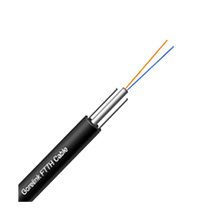
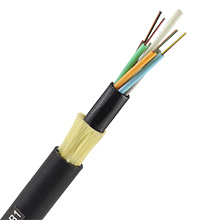
Cables and cable assemblies that can be easily sourced from Chinese suppliers are single-, multimode, shielded and unshielded types with four, six, eight, 12 and 24 cores and an IP65 to IP68 rating.
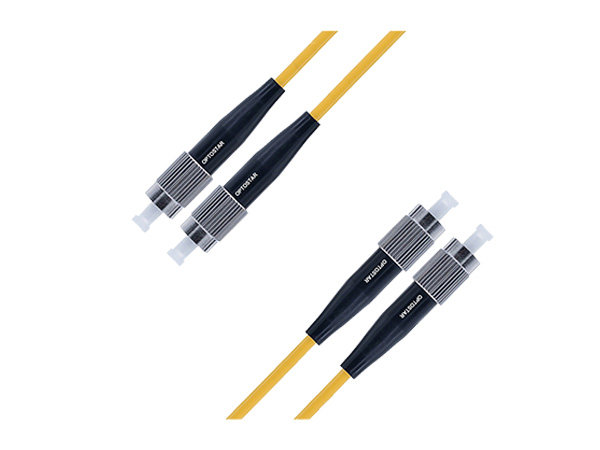
Typical plugs in cable assemblies are SC, FC, LC, ST, MTRJ, E2000, Toslink, HDMI and DisplayPort. Based on fiber endface, PC, UPC or APC connectors are used.
For enhanced mechanical strength and corrosion resistance, fiber-optic cables with phosphated steel wires are also available from some Chinese companies.
Generally, suppliers accommodate buyers’ specifications on wire, and cable length and outer sheath color.
Optical fibers, connectors, filling gel, steel tapes and outer jackets are the main materials and components used in the production of fiber-optic cables and cable assemblies. There are companies that make their own optical fibers and connectors for better control over product quality, but the majority outsource them domestically or overseas as required.
Input costs and product prices have been stable and are expected to stay so until the end of 2023.
The products in this gallery have been handpicked by our China-based market analyst for representing current trends in fiber-optic cables and assemblies from Chinese companies.
Fiber-optic cable assembly, 1, 2, 3m, custom lengths
Company: Zhejiang Wanma Tianyi Communication Wire & Cable Co. Ltd
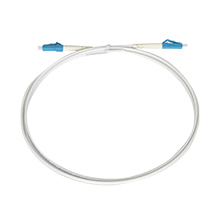
Zhejiang Wanma’s fiber-optic cable assembly, the ZQ-Patch Cable-8-9544, uses FC, SC, LC, ST, MTRJ, MU, E2000, MPO, DIN, D4 or SMA connectors, a PC or APC ferrule end-face, 9/125µm single-mode or 50/125µm or 62.5/125µm multimode fiber, and PVC or LSZH jacket. It has 0.9, 2 or 3mm cable diameter and 1, 2, 3m or custom length.
MOQ: 20km
Lead time: 10 days
Inquire now